The Rise of iRonCub: A Revolutionary Humanoid Robot
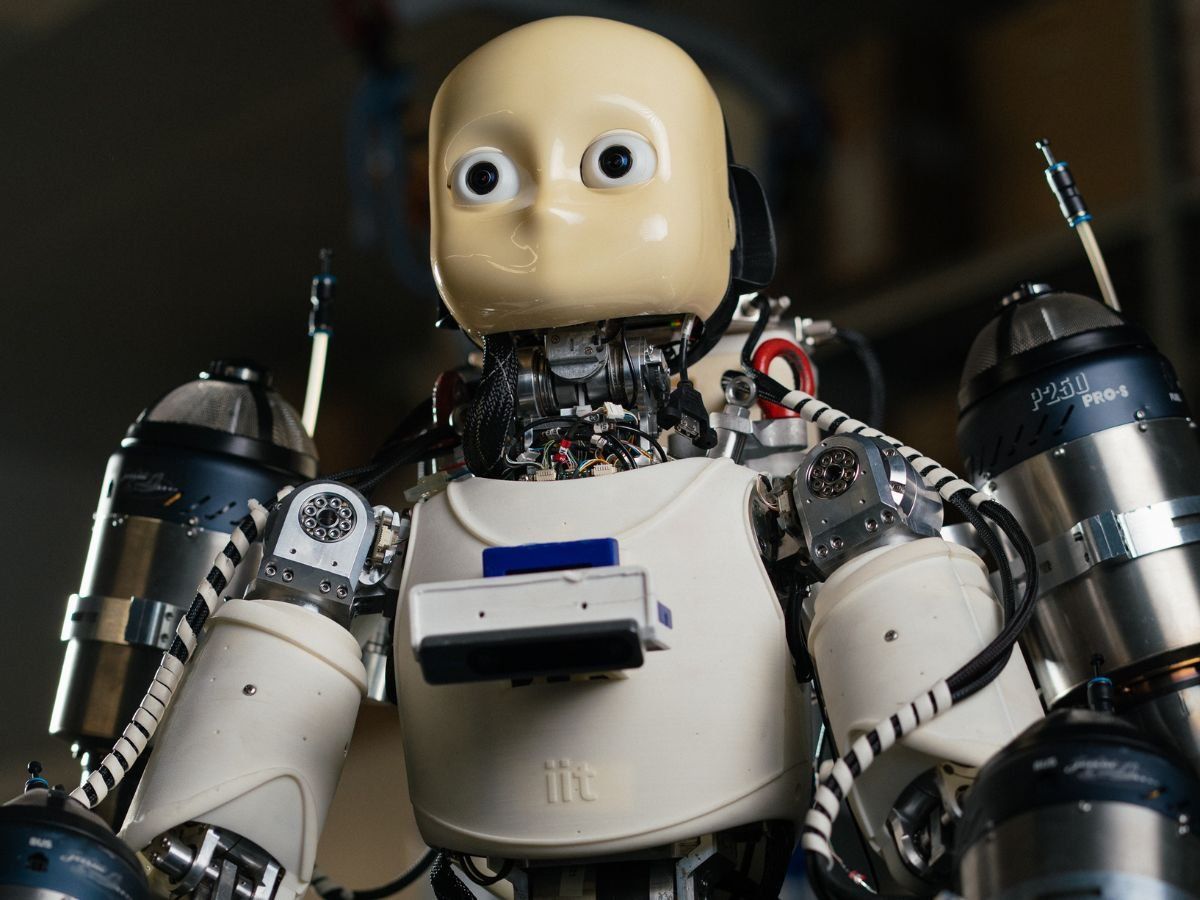
One of the most captivating robotics projects I’ve followed for years is iRonCub, developed by Daniele Pucci’s Artificial and Mechanical Intelligence Lab at the Italian Institute of Technology (IIT) in Genoa, Italy. This ambitious project aims to equip an iCub robot—resembling a child around five years old—with jet propulsion capabilities, essentially creating a robotic Iron Man.
Recently, after nearly ten years of intensive development, iRonCub3 achieved a significant milestone: stable flight. The robot lifted off the ground and remained airborne for several seconds, propelled by its four jet engines. Daniele Pucci envisions that robots like iRonCub could revolutionize disaster response, quickly navigating obstacles and then transitioning to energy-efficient walking while utilizing their arms to clear debris—a truly remarkable concept.
Furthermore, this project isn’t simply about building a cool robot; it’s about pushing the boundaries of robotics innovation. The practical experimentation involved is significant, requiring expertise in numerous areas, making iRonCub a particularly interesting case study.
Challenges and Innovations in Flying Humanoid Robotics
Controlling Thrust and Stability
Getting a humanoid robot to fly presents unique engineering challenges. While the four jet turbines mounted on iRonCub’s back and arms generate over 1000 N of thrust, controlling this power requires sophisticated techniques. Because engine spooling takes time, stability must be actively maintained through robotic arm movements—a complex feedback loop that demands precise control algorithms.


Managing Extreme Temperatures
Notably, the exhaust gas from these turbines reaches temperatures of 800 °C and supersonic speeds. To prevent damage to the robot itself, Pucci’s team had to develop innovative methods to manage this extreme heat and ensure it doesn’t impact the structure. As a result, they published a paper in Nature Engineering Communications detailing their approach to modeling and controlling aerodynamic forces, a crucial step for advancing humanoid robotics.
Understanding Aerodynamic Forces
Moreover, the aerodynamic forces involved in flight hadn’t been previously considered for humanoid robots. Consequently, Pucci’s group had to develop new techniques to understand and compensate for these forces, a crucial development with broader implications for robotic design.
Future Directions and Applications of iRonCub
Attracting Talent & Expanding Capabilities
Beyond the technical challenges, iRonCub serves as an inspirational project. It attracts talented students and researchers, fostering a passion for robotics—a phenomenon witnessed by many involved in projects like the DARPA Robotics Challenge and SubT. The “cool factor” is undeniably important; it drives engagement and fuels innovation.
Looking ahead, enhancements to iRonCub include a new jetpack with an additional degree of freedom for easier yaw control and the addition of wings to improve flight efficiency over longer distances. However, testing logistics are becoming increasingly complex, potentially requiring coordination with Genoa airport.
Industrial Synergies
Interestingly, Pucci’s team discovered unexpected synergies between iRonCub research and industrial applications. For example, algorithms developed for thrust estimation were adapted for controlling pneumatic grippers in collaboration with an industrial company—an unforeseen but valuable outcome. This illustrates how tackling seemingly “crazy” projects can lead to the development of versatile tools applicable to diverse industries.
Conclusion: Paving the Way for Future Robotics
The iRonCub project represents a significant leap forward in robotics, demonstrating that flying humanoid robots are not merely science fiction but a tangible possibility. Furthermore, it highlights the importance of pursuing ambitious goals and fostering innovation through collaborative research. As Daniele Pucci aptly puts it, “This is not a joke.” The work with this iRonCub robot represents just the beginning of what’s possible in future robotics advancements and disaster response capabilities.
Source: Read the original article here.
Discover more tech insights on ByteTrending.
Discover more from ByteTrending
Subscribe to get the latest posts sent to your email.