


Revolutionizing Genome Editing with Engineered Precision
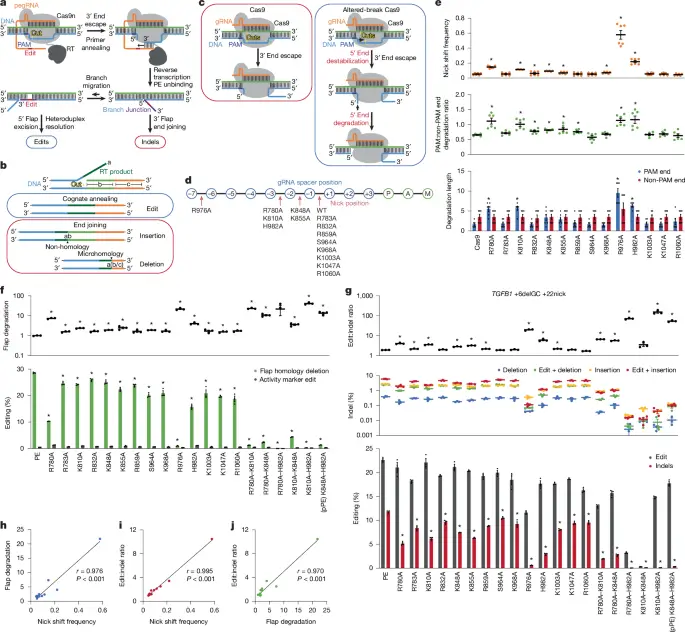
The landscape of gene editing continues to evolve at a rapid pace, and recent research signals a significant advancement in primeediting technology. A new study, published in Nature, details the engineering of prime editor systems that dramatically reduce unintended insertions or deletions (indels), a persistent challenge impacting broader application of this powerful tool. Consequently, these improvements bring us closer to developing safer and more reliable gene therapies.
Understanding Prime Editing: A Novel Approach
Primeediting, pioneered by David Liu’s lab at Harvard University, presents an innovative alternative to the widely recognized CRISPR-Cas9 system. While CRISPR typically relies on cutting DNA strands, primeediting leverages a modified Cas protein fused with a reverse transcriptase. This sophisticated system guides the enzyme precisely to a target location within the genome and then utilizes a “prime editing guide RNA” (pegRNA) to directly write new genetic information into that site. This approach, often termed ‘write-without-cut,’ theoretically minimizes off-target effects and unwanted mutations.
However, initial versions of primeediting still exhibited occasional indels—small insertions or deletions of DNA bases—which could compromise both therapeutic effectiveness and safety. The recent research directly addresses this critical limitation.
Key Strategies for Error Reduction
- Modified Cas Enzyme: Researchers engineered the Cas enzyme component of the prime editor to significantly decrease its ‘nickase’ activity, effectively reducing the propensity for single-strand breaks. This strategic modification substantially lowered indel formation.
- Optimized pegRNA Design: Crucially, alterations in the design and sequence of pegRNAs proved pivotal. Specific modifications facilitated more accurate guidance of the reverse transcriptase, further minimizing errors.
- Reaction Condition Refinement: Meticulous optimization of reaction conditions – including magnesium concentration and incubation times – also played a vital role in enhancing precision and ensuring reliable results.
The Broad Impact Across Diverse Applications
The substantial reduction in indels has far-reaching implications across several key areas. For example, the enhanced accuracy of primeediting significantly improves its suitability for various applications.
- Gene Therapy Advancements: Safer and more effective gene therapies targeting a wide range of genetic diseases are now increasingly feasible. The diminished error rate translates to a considerably reduced risk of unintended consequences within a patient’s genome.
- Enhanced Disease Modeling Capabilities: Researchers can now create cellular models that more accurately mimic human disease, facilitating improved study of disease mechanisms and the testing of potential treatment strategies.
- Revolutionizing Agricultural Biotechnology: Precise gene editing in crops offers exciting possibilities for improving yields, enhancing nutritional content, and bolstering resistance to pests and diseases—all while minimizing the risk of unintended genetic alterations.
The study demonstrably showed a significant decrease in indel frequency across various genomic targets utilizing these optimized primeediting systems. While ongoing refinement remains essential, this constitutes a major step forward in precision gene editing.
Looking to the Future: Continued Refinement of Prime Editing
This research underscores the iterative nature of scientific advancement; by systematically addressing limitations and refining existing technologies, researchers continually push the boundaries of what’s achievable. Furthermore, future endeavors will likely concentrate on further minimizing off-target effects and broadening the range of genomic sequences that can be accurately edited using primeediting. The engineered prime editors offer a promising pathway towards precision medicine and breakthroughs across various scientific disciplines.
Source: Read the original article here.
Discover more tech insights on ByteTrending.
Discover more from ByteTrending
Subscribe to get the latest posts sent to your email.