ByteTrending
  • Home
    • About ByteTrending
    • Contact us
    • Privacy Policy
    • Terms of Service
  • Tech
  • Science
  • Review
  • Popular
  • Curiosity
Donate
No Result
View All Result
ByteTrending
No Result
View All Result
Home Science
Related image for mars

NASA Rover Finds ‘Potential Biosignature’ on Mars

ByteTrending by ByteTrending
September 14, 2025
in Science
Reading Time: 3 mins read
0
Share on FacebookShare on ThreadsShare on BlueskyShare on Twitter

Exploring the Potential for Life Beyond Earth

Welcome to a fascinating look at recent scientific breakthroughs! This week’s discoveries span from remarkable adaptations of life on our own planet to tantalizing hints of past life on Mars. Notably, we’ve recently covered an incredible advancement in our comprehension of black holes this amazing breakthrough, which highlights humanity’s remarkable ingenuity alongside the wonders of the cosmos.

Arctic Algae Thrive in Extreme Cold

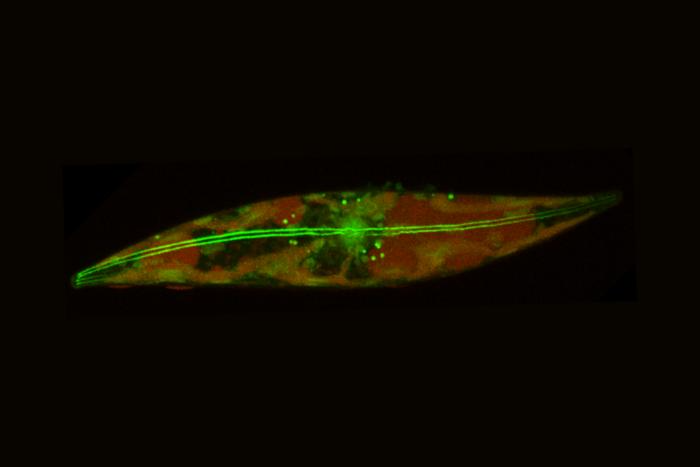
Scientists have recently uncovered an extraordinary phenomenon: Arctic algae exhibiting motility – movement – at temperatures as low as -15°C (5°F). This marks the lowest temperature ever recorded for a eukaryotic organism, which are lifeforms with complex cells containing a nucleus. While some simple microbes can endure even lower temperatures, this discovery demonstrates that more intricate life can not only survive but also flourish and move in such frigid conditions. Zhang, Qing et al. “Ice gliding diatoms establish record-low temperature limits for motility in a eukaryotic cell.” Proceedings of the National Academy of Sciences.

The Secret to Their Skating Ability

What’s truly remarkable is the mechanism these ‘ice diatoms’ employ to move – a gliding ability researchers describe as “skating.” They utilize mucus threads, or ‘mucilage,’ acting like anchors to propel themselves through frozen substrates. Furthermore, this unique adaptation allows them to thrive in conditions that immobilize other marine diatoms, according to researchers led by Qing Zhang of Stanford University.

Intriguing ‘Leopard Spots’ on Mars: A Potential Biosignature?

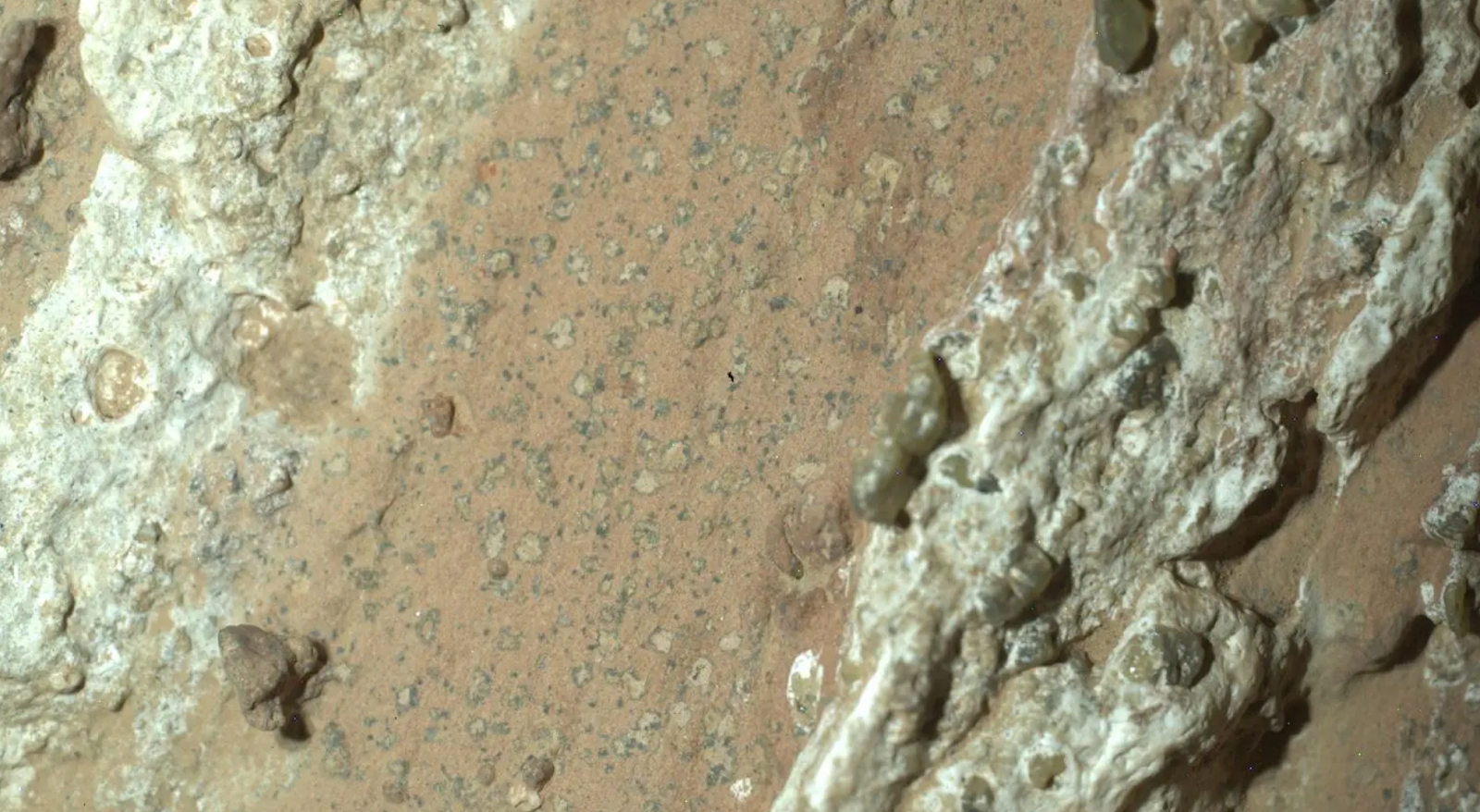
The search for life beyond Earth naturally leads us to consider whether organisms may have once existed elsewhere. This week brought an exciting development in that quest: scientists announced the discovery of organic carbon-bearing mudstones preserving past redox reactions – processes involving electron transfer – within Jezero Crater on Mars. These mudstones display distinctive “leopard spots,” which are believed to be a result of mineral precipitation and the preservation of organic material, potentially indicating ancient microbial activity. Hurowitz, Joel et al. “Redox-driven mineral and organic associations in Jezero Crater, Mars.” Nature.

Related Post

Related image for nanostructure fabrication

3D Nanostructures: A New Era of Fabrication

March 11, 2026
Related image for physics-aware deep learning

Physics-Aware Deep Learning: Beyond Bigger Models

March 10, 2026

AI Predicts Metal Surface Wettability

March 10, 2026

MorphoChrome: Painting Objects with Light

March 9, 2026
Leopard spots on Mars revealed by Perseverance rover.
An illustration depicting the ‘leopard spot’ formations observed in Jezero Crater, Mars, potentially indicating past microbial activity. Image: Prakash Lab

Understanding the Significance of the Findings

“These leopard spots aren’t necessarily proof of life,” clarified Joel Hurowitz, a planetary scientist at Stony Brook University and lead author of the study. However, they strongly suggest that conditions within Jezero Crater were once conducive to supporting it. The team hypothesizes these patterns could represent remnants of ancient microbial mats or other organic structures. This discovery reinforces the importance of continued exploration of Mars and sample return missions.

The Future of Martian Exploration

Perseverance’s discoveries enhance our understanding of Mars’ history and its potential for past habitability. For example, NASA is currently planning a mission to retrieve samples collected by Perseverance and bring them back to Earth for more in-depth analysis. This ambitious project promises to revolutionize our comprehension of Mars and potentially provide conclusive evidence regarding past or present life. Similarly, further investigation into the geological processes that might mimic biosignatures will be essential.


While these findings are undoubtedly exciting, it’s crucial to remember their preliminary nature. Geological processes can sometimes create patterns resembling signs of life; therefore, additional investigation is vital before any definitive conclusions about potential life on Mars can be drawn. Nevertheless, the discovery of “leopard spots” and ongoing exploration continue to inspire hope in our quest for understanding our place within the universe.


Source: Read the original article here.

Discover more tech insights on ByteTrending.

Share this:

  • Share on Facebook (Opens in new window) Facebook
  • Share on Threads (Opens in new window) Threads
  • Share on WhatsApp (Opens in new window) WhatsApp
  • Share on X (Opens in new window) X
  • Share on Bluesky (Opens in new window) Bluesky

Like this:

Like Loading...

Discover more from ByteTrending

Subscribe to get the latest posts sent to your email.

Tags: ArcticMarsScience

Related Posts

Related image for nanostructure fabrication
Popular

3D Nanostructures: A New Era of Fabrication

by ByteTrending
March 11, 2026
Related image for physics-aware deep learning
Popular

Physics-Aware Deep Learning: Beyond Bigger Models

by ByteTrending
March 10, 2026
Related image for surface wettability prediction
Popular

AI Predicts Metal Surface Wettability

by ByteTrending
March 10, 2026
Next Post
Related image for Amazon Bedrock

How Skello Uses Amazon Bedrock for Data Queries

Leave a ReplyCancel reply

Recommended

Related image for PuzzlePlex

PuzzlePlex: Evaluating AI Reasoning with Complex Games

October 11, 2025
Related image for Ray-Ban hack

Ray-Ban Hack: Disabling the Recording Light

October 24, 2025
Related image for Ray-Ban hack

Ray-Ban Hack: Disabling the Recording Light

October 28, 2025
Kubernetes v1.35 supporting coverage of Kubernetes v1.35

How Kubernetes v1.35 Streamlines Container Management

March 26, 2026
data-centric AI supporting coverage of data-centric AI

How Data-Centric AI is Reshaping Machine Learning

April 3, 2026
SpaceX rideshare supporting coverage of SpaceX rideshare

SpaceX rideshare Why SpaceX’s Rideshare Mission Matters for

April 2, 2026
robotics supporting coverage of robotics

How CES 2026 Showcased Robotics’ Shifting Priorities

April 2, 2026
Kubernetes v1.35 supporting coverage of Kubernetes v1.35

How Kubernetes v1.35 Streamlines Container Management

March 26, 2026
ByteTrending

ByteTrending is your hub for technology, gaming, science, and digital culture, bringing readers the latest news, insights, and stories that matter. Our goal is to deliver engaging, accessible, and trustworthy content that keeps you informed and inspired. From groundbreaking innovations to everyday trends, we connect curious minds with the ideas shaping the future, ensuring you stay ahead in a fast-moving digital world.
Read more »

Pages

  • Contact us
  • Privacy Policy
  • Terms of Service
  • About ByteTrending
  • Home
  • Authors
  • AI Models and Releases
  • Consumer Tech and Devices
  • Space and Science Breakthroughs
  • Cybersecurity and Developer Tools
  • Engineering and How Things Work

Categories

  • AI
  • Curiosity
  • Popular
  • Review
  • Science
  • Tech

Follow us

Advertise

Reach a tech-savvy audience passionate about technology, gaming, science, and digital culture.
Promote your brand with us and connect directly with readers looking for the latest trends and innovations.

Get in touch today to discuss advertising opportunities: Click Here

© 2025 ByteTrending. All rights reserved.

No Result
View All Result
  • Home
    • About ByteTrending
    • Contact us
    • Privacy Policy
    • Terms of Service
  • Tech
  • Science
  • Review
  • Popular
  • Curiosity

© 2025 ByteTrending. All rights reserved.

%d