
The escalating complexity and frequency of cyberattacks are pushing traditional security measures to their limits. Reactive defenses simply aren’t enough anymore; we need a proactive, adaptive approach. Enter Multi-Agent Systems (MAS), an emerging field within Artificial Intelligence that promises to revolutionize cybersecurity. This article explores what Multi-Agent Systems are, how they work, and why they represent the next frontier in AI-driven cyber defense.
Understanding Multi-Agent Systems
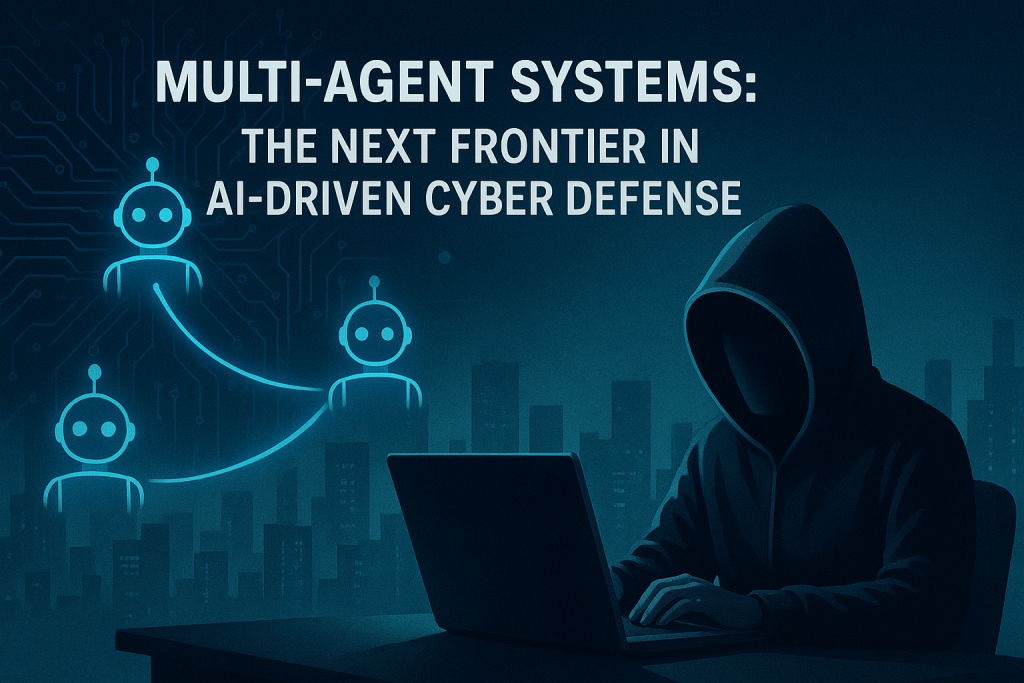
At its core, a Multi-Agent System involves multiple intelligent agents working together to solve a problem. These agents are autonomous entities capable of perceiving their environment, making decisions, and taking actions. In the context of cybersecurity, these agents could represent various security tools or functions – intrusion detection systems, firewalls, vulnerability scanners, threat intelligence platforms, even automated incident response teams. For example, one agent might monitor network traffic while another analyzes system logs.
Unlike traditional centralized AI systems, Multi-Agent Systems operate on a decentralized model. Each agent possesses limited knowledge but can communicate and collaborate with others to collectively achieve a greater goal: securing the network. This distributed nature offers significant advantages in resilience and adaptability; therefore, if one agent fails or is compromised, the system as a whole can continue functioning. Furthermore, this decentralization reduces the single point of failure inherent in centralized systems.
Key Components of a Cyber Defense MAS
- Agents: Autonomous entities with specific roles and responsibilities (e.g., malware detection, network anomaly identification).
- Environment: The cyber landscape being protected – networks, systems, data.
- Communication Protocol: Standardized methods for agents to exchange information and coordinate actions.
- Coordination Mechanisms: Rules or algorithms that govern how agents collaborate (e.g., negotiation, voting).
- Learning Capabilities: Agents can adapt their behavior based on experience and new threat intelligence.
How MAS Enhances Cyber Defense
The benefits of employing Multi-Agent Systems in cybersecurity are substantial. Traditional security solutions often rely on static rules and signatures, making them vulnerable to novel attacks. MAS offers several key improvements: adaptive threat response, automated incident handling, improved threat detection, resilience against attacks, and proactive threat hunting.


- Adaptive Threat Response: Agents can dynamically adjust defenses based on real-time threat intelligence and network behavior.
- Automated Incident Handling: MAS can automate repetitive tasks like incident triage, containment, and remediation, freeing up human analysts to focus on more complex issues.
- Improved Threat Detection: Combining the perspectives of multiple agents leads to more accurate and comprehensive threat detection than any single tool could provide.
- Resilience Against Attacks: Decentralization makes MAS inherently more resilient to targeted attacks or system failures; as a result, a compromised agent doesn’t necessarily bring down the entire defense.
- Proactive Threat Hunting: Agents can actively search for vulnerabilities and indicators of compromise, rather than simply reacting to alerts.
Consider a scenario where an unknown malware variant attempts to infiltrate a network. A traditional antivirus solution might fail to detect it based on its signature; however, in a Multi-Agent System environment, multiple agents – one monitoring network traffic, another analyzing file behavior, and yet another checking system integrity – could collectively identify the threat by observing unusual patterns and anomalies.
Challenges and Future Directions
Despite their promise, implementing Multi-Agent Systems for cybersecurity isn’t without challenges. Developing robust communication protocols, ensuring agent coordination, and managing complexity are all significant hurdles. Furthermore, training agents to make accurate decisions in dynamic environments requires vast amounts of data and sophisticated machine learning algorithms. On the other hand, these challenges drive innovation within the field.
Looking ahead, we can expect to see increased adoption of federated learning, allowing agents to learn from decentralized data sources without sharing sensitive information; integration with blockchain technology, enhancing the security and transparency of agent communication; development of explainable AI (XAI) techniques, making it easier for human analysts to understand how MAS makes decisions; and greater use of reinforcement learning, enabling agents to learn optimal defense strategies through trial and error. Notably, these advancements will further solidify the role of Multi-Agent Systems in securing our digital world.
Multi-Agent Systems represent a paradigm shift in cybersecurity, moving from reactive defenses to proactive, adaptive protection. While challenges remain, the potential benefits are too significant to ignore.
Source: Read the original article here.
Discover more tech insights on ByteTrending.
Discover more from ByteTrending
Subscribe to get the latest posts sent to your email.