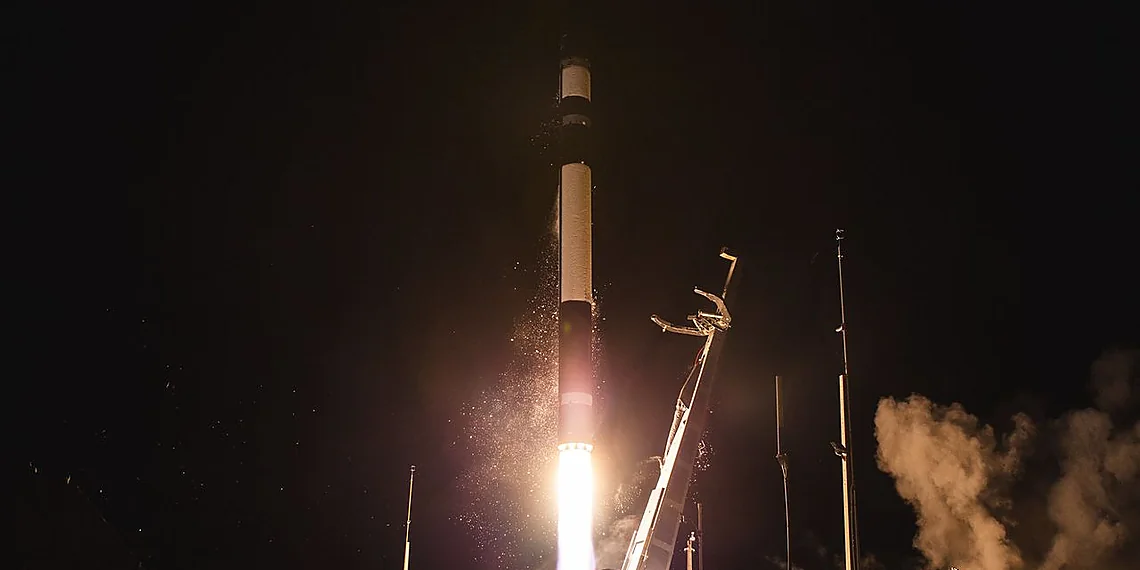
A significant advancement in Brazilian rocketry has recently been achieved! The University of Brasília (UnB), through its Chemical Propulsion Laboratory, successfully completed a hot-fire test of a 1 kN hybrid rocket engine. What makes this accomplishment particularly noteworthy is the engine’s construction: it was entirely manufactured using laser powder bed fusion additive manufacturing with Inconel 718. This marks an important step forward for both UnB and Brazilian space exploration.
Understanding Additive Manufacturing in Rocketry
Additive manufacturing, frequently recognized as 3D printing, is revolutionizing industries worldwide, and the field of rocket technology is no exception. Traditionally, fabricating rocket engine components involves complex machining processes, which often present limitations regarding design intricacy. Therefore, additive manufacturing offers unparalleled freedom in design, enabling intricate geometries and integrated features that are simply unattainable through conventional methods. As a result, engineers can explore innovative approaches to propulsion systems.
The Advantages of 3D Printing for Rocket Components
Several key advantages distinguish additive manufacturing from traditional methods when it comes to producing rocket engine components. Firstly, design freedom is significantly enhanced, allowing for complex internal channels and optimized shapes that improve performance. Furthermore, material efficiency is considerably improved; additive processes minimize waste compared to subtractive techniques like milling or turning. In addition, rapid prototyping becomes possible, accelerating the crucial design and testing cycles needed for rocket development. Lastly, integrated designs allow for combining multiple components into a single part, thereby reducing assembly complexity and potential failure points.
Material Selection: Why Inconel 718?
The selection of Inconel 718 is critical to this project’s success. This nickel-based superalloy boasts exceptional high-temperature strength, impressive creep resistance, and excellent oxidation resistance – all essential properties for components subjected to the extreme conditions within a rocket engine’s combustion chamber. Consequently, producing such complex shapes from this demanding material using additive manufacturing represents a considerable engineering accomplishment and validates the process’s robustness.
The Significance of the Hot-Fire Test
A hot-fire test is an indispensable validation step in rocket engine development. It meticulously simulates actual operating conditions, allowing engineers to thoroughly assess performance characteristics such as thrust, combustion stability, and structural integrity under intense heat and pressure. Successfully completing this test provides compelling evidence that the design, materials, and manufacturing processes are viable and reliable.
The UnB team’s accomplishment isn’t merely about demonstrating functionality; it validates their entire additive manufacturing process for rocket engine components. This paves the way for more complex and efficient rocket engines in the future, potentially reducing costs and lead times compared to traditional methods, which is a considerable benefit.
Looking Ahead: UnB’s Contributions to Brazilian Space Exploration
This successful hot-fire test underscores Brazil’s growing capabilities in space technology and advanced manufacturing. The Chemical Propulsion Laboratory at UnB is playing a vital role in advancing domestic rocket expertise, contributing significantly to the nation’s technological advancement.
Professor Olexiy Shynkarenko, whose LinkedIn post announced this achievement, leads this important research effort. His team’s work contributes directly to Brazil’s ambitions for independent space exploration and further technological innovation; therefore, their contributions are invaluable.
The future likely holds further development and refinement of additive manufacturing techniques for rocket propulsion systems at UnB, potentially exploring new materials and even more complex designs. This milestone firmly establishes the university as a key player in Brazil’s burgeoning space sector.
Source: Read the original article here.
Discover more tech insights on ByteTrending.
Discover more from ByteTrending
Subscribe to get the latest posts sent to your email.