


Unveiling the Brainmap: A New Era in Neuroscience
Researchers are making remarkable strides in understanding how our brains work, and a recent breakthrough has yielded a comprehensive brain map—or brainmap—that promises to revolutionize neuroscience. This innovative project, born from an unprecedented collaboration between twelve laboratories as part of the International Brain Laboratory (IBL), offers unparalleled insights into cognitive architecture and potentially holds significant implications for artificial intelligence development. The creation of this detailed brainmap represents a monumental achievement in our quest to understand complex thought processes.
The Power of Collaborative Brain Mapping
Pooling Data: A Novel Approach
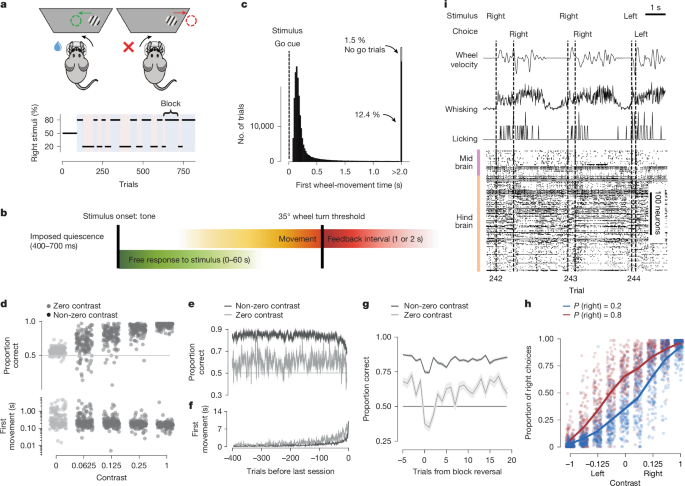
Historically, neuroscience research has been constrained by the limitations of individual laboratories. Each lab’s resources and methodologies restrict the scope of investigation. However, the IBL’s approach elegantly overcomes these constraints through a powerful ‘big science’ methodology – pooling data from multiple sources to create this intricate brainmap. As a result, scientists can diminish noise and variability inherent in single-lab studies, revealing patterns that would otherwise remain elusive. To ensure comparability across datasets, the researchers implemented a standardized perceptual decision-making task for mice.
The standardized task involved presenting mice with visual stimuli and requiring them to make choices based on those inputs. Electrophysiological recordings captured the electrical activity of neurons throughout the brain as the mice performed this task. Furthermore, meticulous data compilation and analysis revealed synchronized neural patterns associated with different stages of decision-making. Notably, this collaborative effort highlights how shared resources can lead to groundbreaking discoveries.
Understanding Neural Activity
One of the most exciting prospects of this research is its potential to decode the ‘neural code’ – the language by which neurons communicate. By observing how populations of neurons fire together during specific tasks, scientists can begin to decipher what information different brain regions process and how they contribute to behavior. For example, sensory areas display detailed activity as mice process visual stimuli, while key decision-making circuits—such as the prefrontal cortex and parietal cortex—exhibit coordinated activity patterns. Simultaneously, neural signals leading to motor output are clearly visualized, linking perception and action.
Challenges and Future Directions for Brainmap Research
Scaling Up: Addressing Technical Hurdles
While the creation of this brainmap represents a significant step forward, scaling up the approach to other species—potentially including humans—presents substantial challenges. The sheer volume of human brain data would be orders of magnitude greater than what was used in the mouse study. In addition, achieving consistent experimental protocols across multiple human labs is considerably more complex; therefore, careful standardization becomes paramount.
- Data Volume: Human datasets will involve vastly larger quantities of information.
- Standardization: Maintaining consistency across diverse research environments is crucial.
- Ethical Considerations: Research involving human subjects demands rigorous ethical oversight.
On the other hand, despite these hurdles, the IBL’s success demonstrates the immense power of collaborative neuroscience and opens up new avenues for understanding the brain – from its fundamental building blocks to its role in complex behaviors. This initial brainmap is just the beginning.
The International Brain Laboratory’s initiative underscores a promising future where large-scale data sharing and standardized methodologies become essential components of neurological research. Ultimately, further refinements in neuroimaging techniques and computational analysis will undoubtedly enhance our ability to decipher the intricacies of brain function, paving the way for novel treatments for neurological disorders.
Source: Read the original article here.
Discover more from ByteTrending
Subscribe to get the latest posts sent to your email.