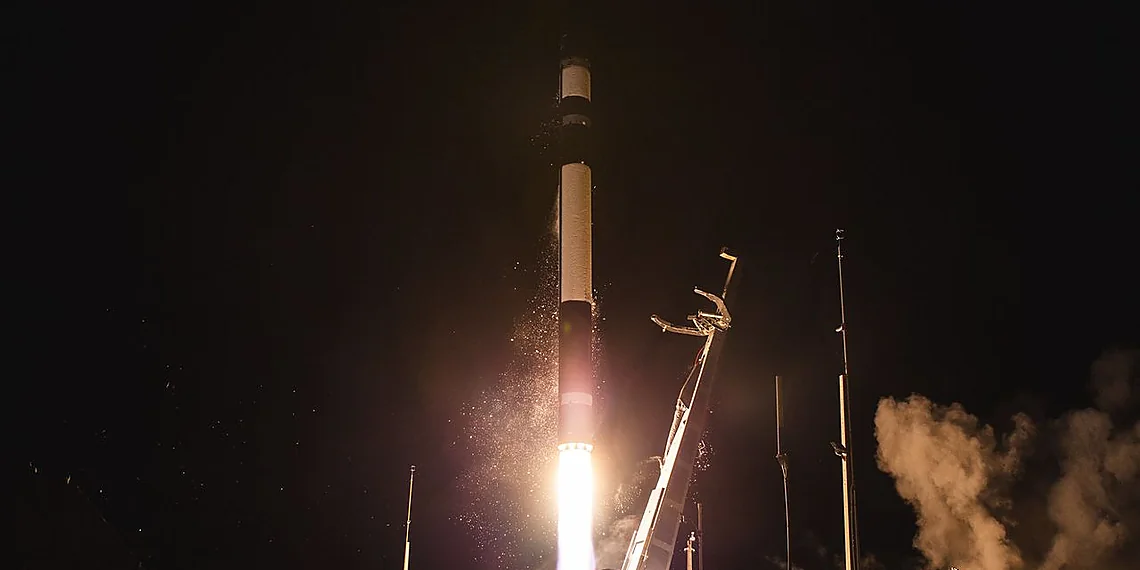
NASA’s dedication to scientific innovation has consistently yielded benefits beyond space exploration, impacting numerous commercial sectors—from memory foam mattresses to cochlear implants. Continuing this trend, a groundbreaking atmospheric sounder initially developed for NASA’s TROPICS mission is now playing a crucial role in enhancing the capabilities of commercial weather satellites. This integration represents a significant step forward in weather forecasting and atmospheric analysis.
Understanding Atmospheric Sounders and Their Significance
Atmospheric sounders are specialized instruments designed to gather critical data about our atmosphere, including humidity levels, temperature profiles, and wind speeds. These measurements are foundational for accurate weather prediction, climate modeling, and a variety of applications ranging from safer air travel to more efficient shipping routes. Importantly, satellites equipped with atmospheric sounders provide a vantage point above the Earth’s surface, allowing researchers to monitor these parameters on a global scale.
The Evolution of Atmospheric Sounding Technology
Historically, atmospheric sounding instruments were bulky and complex, often requiring large platforms like school buses to operate. However, meteorologists recognized the need for more frequent observations of rapidly changing storm systems. This led to the emergence of CubeSat constellations—groupings of small satellites (no larger than a shoebox)—as promising, cost-effective solutions. The challenge then became miniaturizing these instruments without sacrificing their performance.
NASA’s Role in Advancing Sounder Technology
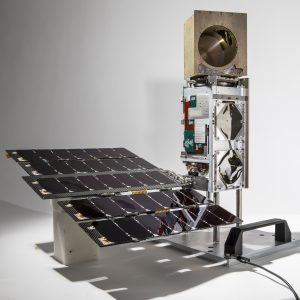
Through initiatives like the Earth Science Technology Office (ESTO), NASA has actively supported research aimed at developing innovative technologies for Earth observation. William Blackwell and his team at MIT Lincoln Laboratory accepted this challenge, striving to shrink atmospheric sounding components from the size of a washing machine down to that of a coffee mug. Their work resulted in an ultra-compact microwave receiver—a key component for sensing radiation within storm systems—that weighed just about a pound.
The TROPICS Mission and its Impact
NASA’s Time-Resolved Observations of Precipitation structure and storm Intensity with a Constellation of SmallSats (TROPICS) mission, launched in 2023, was instrumental in pioneering this miniaturization effort. The mission’s primary goal was to improve observations of tropical cyclones and other weather phenomena using a constellation of CubeSat satellites. Furthermore, the compact atmospheric sounder developed for TROPICS demonstrated its versatility by being successfully integrated into commercial weather satellites operated by Tomorrow.io.
From Research to Commercial Application
The successful adaptation of NASA’s TROPICS-derived technology into Tomorrow.io’s satellites showcases the power of public-private partnerships in driving innovation. This integration allows for more frequent and detailed atmospheric observations, leading to improved weather forecasts and enhanced understanding of storm systems. On the other hand, this also exemplifies how NASA’s investment in fundamental research can lead to tangible benefits across diverse industries.
The Future of Commercial Weather Satellites
The integration of advanced instrumentation like the atmospheric sounder from TROPICS signals a new era for commercial weather satellites. As technology continues to advance, we can expect even smaller, more capable satellites to be deployed, providing unprecedented insights into our planet’s atmosphere. In addition, this collaborative approach between NASA and private companies promises to accelerate the development of innovative solutions for monitoring Earth’s climate and weather patterns.
Ultimately, the synergy between scientific research and commercial application holds immense potential for improving lives around the globe through more accurate forecasting, safer travel, and a better understanding of our ever-changing world.
Source: Read the original article here.
Discover more tech insights on ByteTrending.
Discover more from ByteTrending
Subscribe to get the latest posts sent to your email.