

– See how a new mini-dog-bot is mastering the art of the dog paddle – and why it’s a game changer for underwater robotics!
The world of robotics is constantly evolving, pushing the boundaries of what machines can do. While many robot dogs excel at terrestrial locomotion, mimicking their canine counterparts on land, they often struggle with aquatic environments. However, a recent development from researchers at the German Aerospace Center (DLR) is changing that. Their newly designed mini-dog-bot, dubbed ARD, isn’t just capable of swimming; it’s an expert at executing the classic dog paddle – and doing so with remarkable efficiency.
**Mimicking Nature: Biomimicry in Action**
The key to ARD’s impressive swimming abilities lies in its biomimetic design. The team drew inspiration from marine animals, specifically seals and sea otters, known for their graceful and powerful dog-paddle movements. Unlike previous attempts at underwater robot locomotion which often relied on complex mechanical designs, the ARD utilizes a simple, four-legged paddling system. This approach significantly reduces drag and allows the robot to move through water with minimal energy expenditure.
**How Does it Work?** The robot’s design incorporates several key features. Firstly, its legs are equipped with flexible paddles that generate thrust by pushing against the water. Secondly, the robot’s body is streamlined to reduce turbulence. Thirdly, a sophisticated control system allows the robot to adjust its paddling rhythm and angle in real-time, optimizing propulsion and stability. The team achieved this through a combination of sensors and algorithms which analyze the water’s resistance and adjusts accordingly. This dynamic adaptation ensures that ARD can maintain its course and speed effectively.
**Beyond Dog Paddling: Applications for Underwater Exploration**
The potential applications of ARD are vast, particularly in areas like underwater exploration and environmental monitoring. Imagine deploying these robots to map the ocean floor, assess damage to submerged infrastructure, or even conduct scientific research in remote marine environments. The robot’s compact size and efficient swimming capabilities make it ideal for navigating tight spaces and operating in challenging conditions. Furthermore, its biomimetic design offers a sustainable solution for underwater robotics, reducing reliance on complex and energy-intensive mechanical systems. This technology could also be used to develop search and rescue robots capable of operating in flooded areas.
**Summary:**
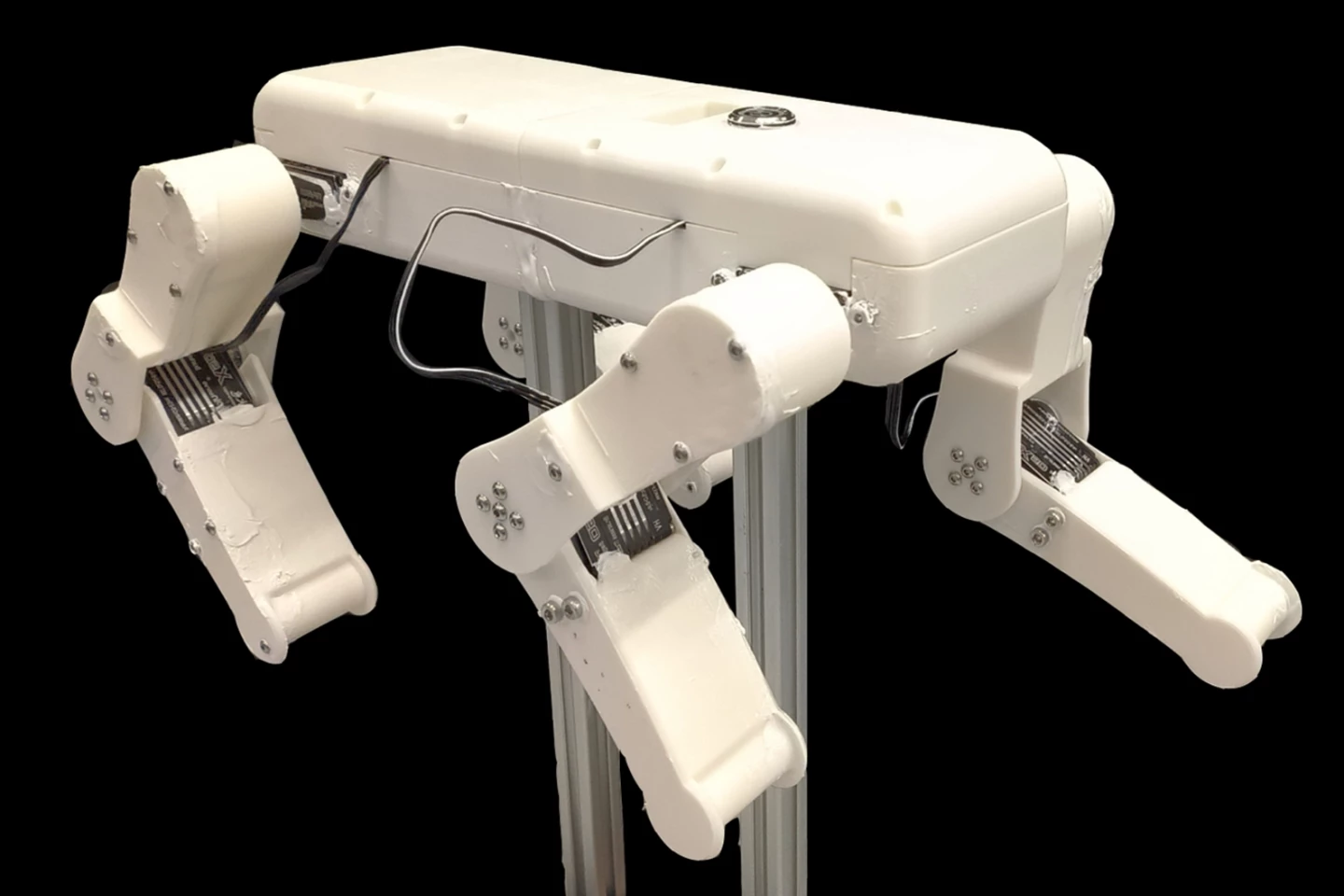
Quadruped “robot dogs” may move quite a bit like their canine counterparts on land, but they’re not nearly as good at swimming (although some can walk underwater). Such is not the case with a new mini-dog-bot, however, which is an expert at doing the dog-paddle.
Continue Reading
Category: Robotics, Technology
Tags: Quadruped, Biomimicry, Swimming, Amphibious, locomotion
Source: Read the original article here.
Discover more tech insights on ByteTrending.
Discover more from ByteTrending
Subscribe to get the latest posts sent to your email.