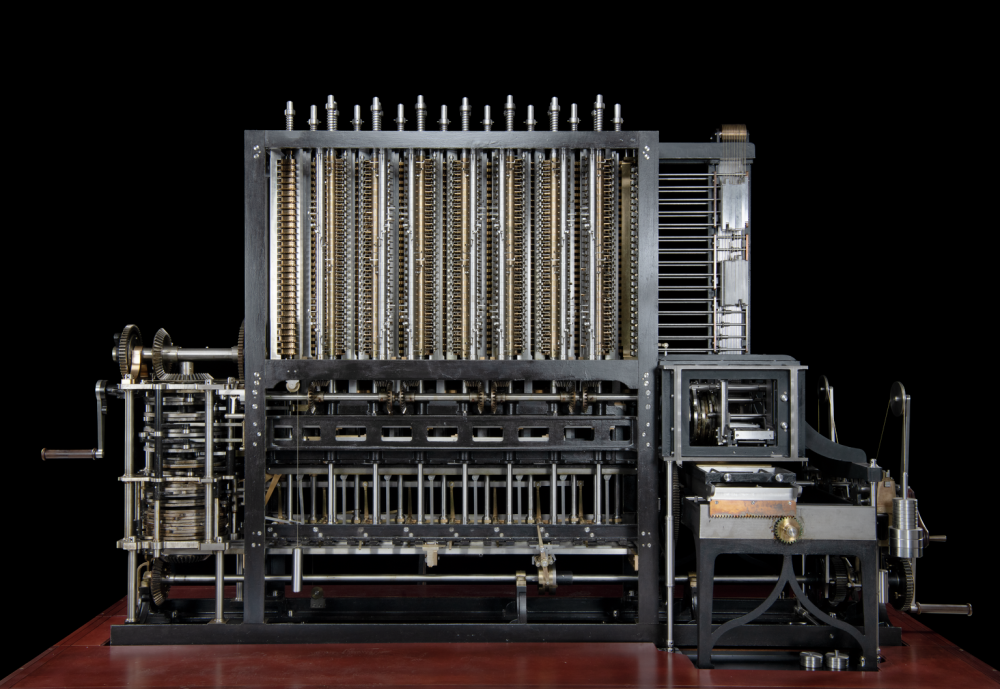

The Analytical Engine represents a pivotal moment in the history of computing and laid the foundations for many of the technologies we rely on today. Understanding its significance requires delving into the context of 19th-century mathematics and navigation. As Tim Danton’s ‘The Computers That Made the World’ eloquently explains, Charles Babbage’s ambition stemmed from a deep frustration with the limitations of existing calculation methods. Before the Analytical Engine, mathematicians and navigators relied heavily on meticulously produced printed tables – tables that, despite immense effort, were inherently prone to error. These errors, however subtle, could have devastating consequences in areas like naval calculations or engineering projects. Therefore, Babbage’s vision wasn’t just about building a faster calculator; it was fundamentally about eliminating human fallibility, a principle central to his design philosophy. The need for accurate tables was paramount – particularly those used in celestial navigation where even minor errors could lead to significant deviations from the true course. Furthermore, Babbage’s work directly responded to the demands of the time, driven by the growing complexity of calculations required across various scientific and commercial fields. His ultimate goal was a machine capable of automating this process entirely, fundamentally changing how information was processed and disseminated. This engine’s potential was recognized by figures like Ada Lovelace, who is widely considered the first computer programmer for her notes on the Analytical Engine’s capabilities – demonstrating an understanding of its potential far beyond mere numerical calculation. The Analytical Engine, therefore, wasn’t just a machine; it was a bold proposition that anticipated the future of computation. The engine itself comprised several key components: a store to hold numbers, a mill (the computational unit), and control mechanisms to direct operations. It was designed to accept input data, perform calculations according to a predetermined sequence, and produce an output result – a remarkable feat for its time. The Analytical Engine is frequently referenced as the precursor to modern computers, showcasing Babbage’s ingenuity in conceiving of a general-purpose calculating machine. Consequently, the legacy of the Analytical Engine continues to resonate today, inspiring innovation in areas such as programming languages and computer architecture. It remains a significant milestone in the development of computing, solidifying its place as a cornerstone of technological progress. The concept of an automated calculator, first realized through Babbage’s design, dramatically shifted the landscape of computation. This Analytical Engine represents a crucial step towards the digital age we inhabit now. The influence of this pioneering work is undeniable – even considering how closely aligned our modern Raspberry Pi mascot is with Babbage’s original vision! It’s important to recognize that Babbage never fully realized his ambitious design due to technological limitations and funding constraints, but his conceptual framework was remarkably prescient. The Analytical Engine stands as a testament to Babbage’s intellect and foresight, illustrating the enduring power of innovative thinking. The impact of this machine is still felt today, making it an essential part of our understanding of how computers evolved from basic calculation tools to powerful information processing systems. This engine represents a critical stage in the development of computer science, setting the groundwork for future advancements.
Source: Read the original article here.
Discover more tech insights on ByteTrending.
Discover more from ByteTrending
Subscribe to get the latest posts sent to your email.