


AgentCore Identity represents a significant advancement in securing AI agents and streamlining operations for organizations leveraging artificial intelligence. This comprehensive identity and access management service is purpose-built to address the unique security challenges associated with deploying AI agents in production environments. With AgentCore Identity, developers and administrators can confidently secure access to AWS resources and third-party tools – including GitHub, Salesforce, or Slack – ensuring a robust and compliant agentic ecosystem. The ability to manage identities at scale dramatically reduces the complexity of securing AI agent workflows, allowing teams to focus on innovation rather than infrastructure overhead. AgentCore Identity provides robust identity and access management at scale so that agents can access your resources or tools either on behalf of users or themselves with pre-authorized user consent to minimize the need for custom access controls and identity infrastructure development. This solution directly tackles the core problem: how to securely manage identity and access at scale when applying AI, a critical requirement as organizations deploy AI agents into production environments.
The increasing adoption of AI agents necessitates a more sophisticated approach to security than traditional application models. The inherent complexity arises from the need for agents to authenticate users, access multiple tools, maintain audit trails, and integrate with existing enterprise identity systems – all while preventing data leakage and adhering to organizational regulations. These demands are amplified when agents operate across disparate systems and require access to resources in both AWS and external services. AgentCore Identity simplifies this landscape by providing a centralized platform for managing agent identities and credentials, significantly reducing the burden on development teams and improving overall security posture. The AgentCore Identity service is designed to mitigate these risks, offering a scalable and secure foundation for building intelligent applications. Furthermore, its integration capabilities streamline workflows and enhance productivity.
## Agentic AI Security at Scale
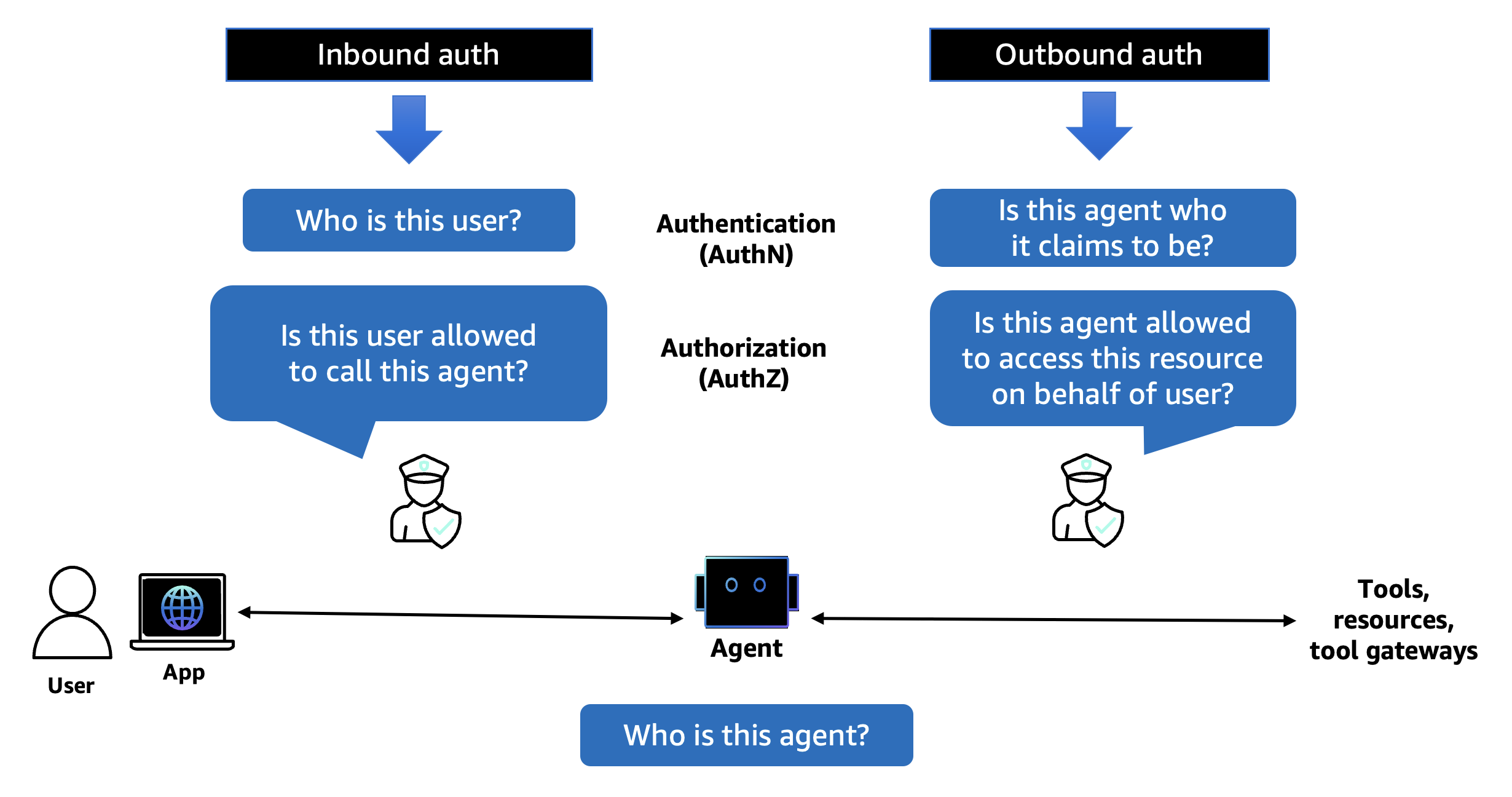
Building secure AI agents for enterprise deployment presents unique identity and access management challenges that traditional application security models weren’t designed to handle. The following diagram illustrates the areas where access control through authentication and authorization is required in a typical agentic workflow.
Let’s examine the specific security requirements that make agentic AI systems particularly complex:
### Inbound Authentication: Who Can Access the Agent?
When users or applications invoke an AI agent, you need to verify their identity and determine what they’re authorized to do. This inbound authentication must support multiple patterns:
- User authentication: Verifying human users accessing agents through web applications or APIs
- Service authentication: Validating other services or agents that need to communicate with your agent
- Multi-tenant isolation: Blocking users from different organizations from accessing each other’s data
### Outbound Authentication: What Can the Agent Access?
The AI agents need to interact with various resources and tools to accomplish tasks. This outbound authentication presents its own challenges:
- Acting on behalf of users: Agents often need to access user-specific resources (such as their Google Drive or Slack workspace) with appropriate permissions
- Service-to-service authentication: Agents might need their own credentials to access shared resources or APIs
- Token management: Securely storing and managing OAuth access tokens, API keys, and other sensitive credentials is crucial for agent security.
Source: Read the original article here.
Discover more tech insights on ByteTrending.
Discover more from ByteTrending
Subscribe to get the latest posts sent to your email.