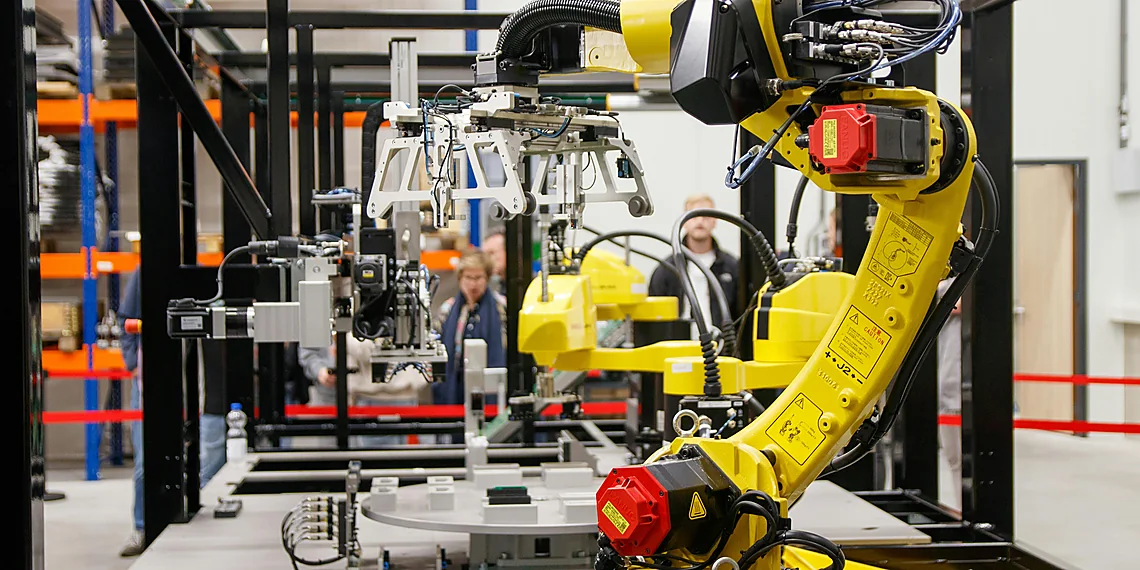


The quest for new alloys suitable for additive manufacturing (AM), also known as 3D printing, is a notoriously complex undertaking. It demands deep expertise across materials science, thermodynamics, and experimental analysis. Now, researchers are leveraging the power of artificial intelligence – specifically Large Language Models (LLMs) – to revolutionize this process. This article explores how agentic AI systems are poised to dramatically accelerate alloydiscovery for 3D printing.
Meta Description: Discover how AI-powered agents and LLMs are transforming alloydiscovery for additive manufacturing, streamlining the process & unlocking new material possibilities.
The Challenge of Alloy Discovery
Traditionally, finding optimal alloys for AM involves a laborious cycle of design, simulation, fabrication, and testing. Each iteration requires significant time and resources. Existing thermodynamic simulations like Thermo-Calc are crucial but require specialized knowledge to interpret effectively. Furthermore, assessing “printability” – how well an alloy behaves during the 3D printing process – often relies on empirical observation and experience.
Introducing Agentic AI for Alloy Design
The new approach utilizes agentic systems that combine LLMs with specialized tools. These agents function as intelligent assistants, capable of automating various stages of alloydiscovery. Here’s a breakdown:
- LLM-Powered Knowledge Base: The LLM provides a vast repository of materials science knowledge, enabling the agent to understand complex relationships and propose potential alloys.
- Tool Dispatch via MCP (Model Context Protocol): Agents can autonomously execute tasks by sending requests (“tool calls”) through the Model Context Protocol. This includes running Thermo-Calc simulations to predict alloy properties and generating process maps to evaluate printability.
- Dynamic Task Adjustment: Unlike traditional automated workflows, these agents don’t just follow a predetermined sequence. They can dynamically adjust their approach based on the results of previous tool calls. For example, if a simulation suggests an alloy is unlikely to work, the agent can automatically explore alternatives or refine its parameters.
- Reasoning and Printability Assessment: The multi-agent system can interpret user prompts effectively and analyze proposed alloys for printability, providing valuable feedback to researchers.
Benefits and Future Directions
The use of agentic AI offers several key advantages. Firstly, it significantly accelerates the process of alloydiscovery by automating repetitive tasks, reducing the time required for alloy exploration. Secondly, the system can assist researchers with limited expertise in specific areas, such as thermodynamics or process modeling. Furthermore, by systematically exploring a wider range of possibilities, agentic AI has the potential to uncover alloys that might otherwise be missed.
Future research will focus on refining the agents’ reasoning capabilities and expanding their toolkit to encompass more advanced simulation techniques and experimental data analysis. Integrating feedback from physical testing into the AI loop is a crucial next step towards creating truly autonomous alloydiscovery systems.
Conclusion
Agentic AI represents a paradigm shift in materials science, particularly for additive manufacturing. By combining the power of LLMs with specialized tools and dynamic decision-making capabilities, these systems are poised to unlock new alloys with tailored properties, accelerating innovation and expanding the possibilities of 3D printing.
Source: Read the original article here.
Discover more tech insights on ByteTrending.
Discover more from ByteTrending
Subscribe to get the latest posts sent to your email.