
A Rare Celestial Visitor: Comet 3I/ATLAS Observed by ESA Missions
Recently, a fascinating event captivated the scientific community as interstellar comet 3I/ATLAS made a close approach to Mars. The European Space Agency’s (ESA) ExoMars Trace Gas Orbiter (TGO) and Mars Express spacecraft skillfully leveraged this opportunity, directing their advanced instruments toward this rare cosmic wanderer between October 1st and 7th. Observing a comet like 3I/ATLAS provides invaluable data about planetary systems beyond our own.
Understanding Interstellar Comets: What Makes Them Unique?
Comet 3I/ATLAS is classified as an interstellar object, meaning it originated from outside of our solar system. These objects are exceptionally rare visitors and offer scientists unparalleled opportunities to gain insights into the composition and formation processes of planetary systems far removed from Earth’s familiar environment. Unlike comets that reside within the Kuiper Belt or Oort Cloud, interstellar comets provide clues about environments vastly different from our own.
Delving Deeper: The Significance of Interstellar Objects
The rarity of interstellar objects makes each encounter incredibly valuable. For example, the observation of 3I/ATLAS allows scientists to compare its composition and trajectory with theoretical models of planetary formation in other star systems. Furthermore, studying these comets helps us understand the distribution of materials throughout our galaxy and potentially even provides clues about the origins of water and organic molecules on Earth.
ESA’s Collaborative Approach: ExoMars & Mars Express Observations
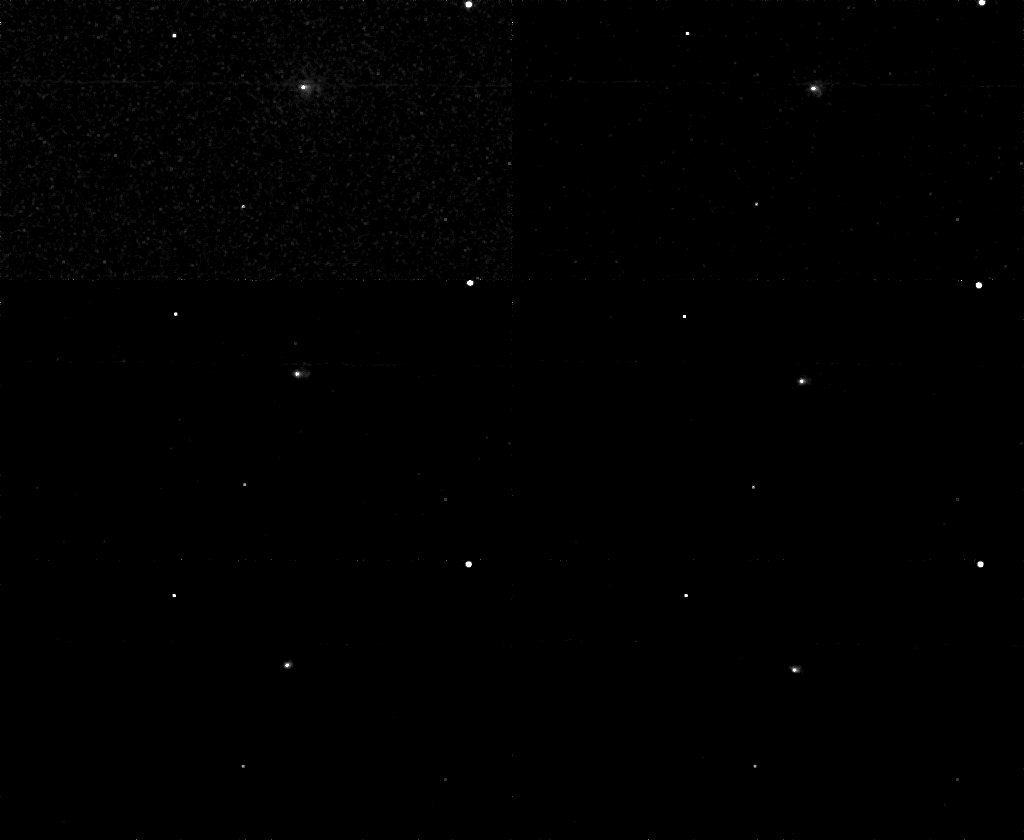
The combined efforts of ExoMars and Mars Express provided a remarkably comprehensive view of Comet 3I/ATLAS. The Trace Gas Orbiter, equipped with high-resolution cameras, meticulously captured detailed images of the comet’s surface features and coma—the diffuse cloud of gas and dust surrounding its nucleus. Meanwhile, Mars Express, utilizing various spectrometers, analyzed the comet’s composition by studying the light it reflected.

Analyzing Composition: Unveiling Secrets Through Spectroscopy
The spectroscopic analysis performed by Mars Express allowed scientists to identify the different molecules present in the comet’s coma and tail. This process is crucial for determining the comet’s origin and history, as the presence of specific compounds can indicate which regions of space it has traversed. For instance, detecting certain organic molecules would suggest the object formed in a region rich in those materials.
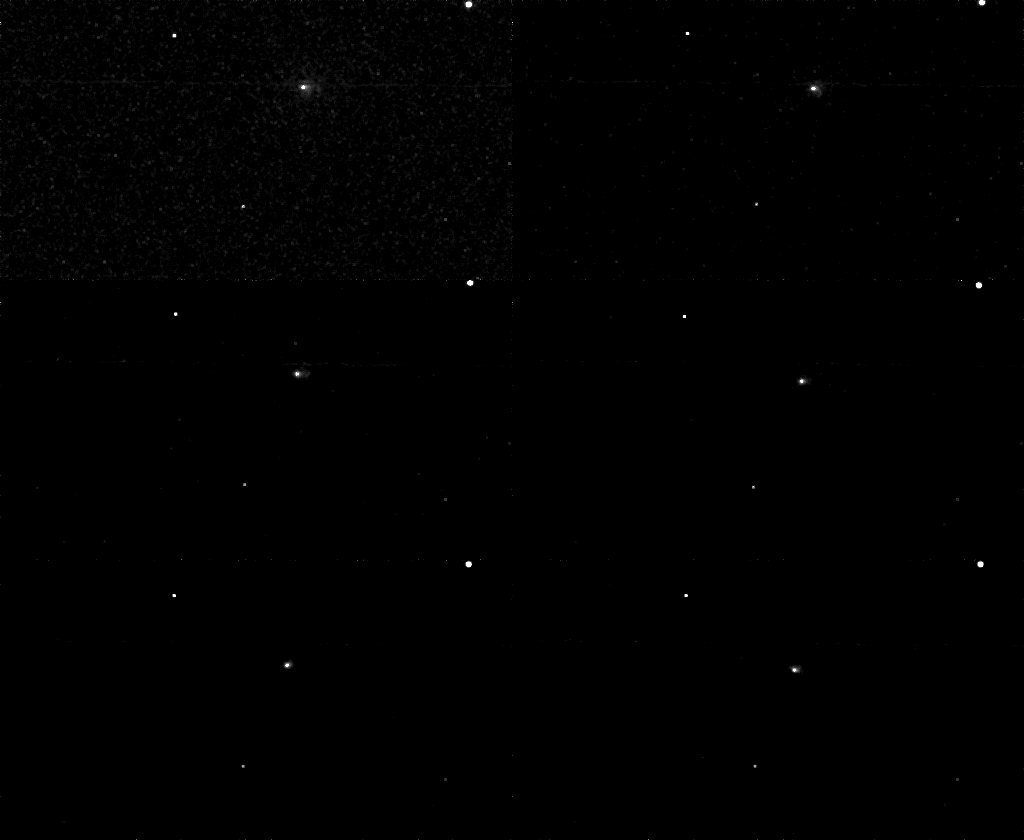
The data collected during this observation period is currently undergoing thorough analysis by scientists at ESA and collaborating institutions worldwide. Early findings suggest that 3I/ATLAS exhibits characteristics distinct from typical comets found within our solar system, strongly reinforcing its interstellar origin. Notably, these observations also served as a valuable test for the continued effectiveness of TGO and Mars Express instruments.
Looking Ahead: Future Exploration & Understanding
Although the closest approach has now passed, ESA continues to scrutinize the data collected during this momentous event. Future observations of similar interstellar comets will be essential for refining our models and broadening our understanding of the universe beyond our solar system. The successful observation of 3I/ATLAS underscores the significance of international collaboration and the ongoing exploration of our cosmic neighborhood, as well as highlighting how much we can learn from these distant visitors.
Source: Read the original article here.
Discover more tech insights on ByteTrending.
Discover more from ByteTrending
Subscribe to get the latest posts sent to your email.