Most model rockets prioritize speed and spectacle, often landing in a field after their brief ascent. While entertaining, they lack practical utility. However, the atmosphere holds valuable data ripe for collection, and the Arduino Nano 33 BLE Sense Rev2 provides an ideal platform for gathering it. Vlud ingeniously utilized this board as a rocket payload to capture weather telemetry during flights, transforming a simple hobby into a data-gathering mission.
Introducing LIFT: A Flight Telemetry System
This innovative payload package is called LIFT (LoRa Integrated Flight Telemetry), highlighting its key features. Beyond the onboard sensors of the Nano 33 BLE Sense, it incorporates LoRa technology to transmit data from the rocket to a ground station. The rocket itself, powered by a D12-5 Estes motor, follows conventional design principles; however, the electronic payload elevates its functionality significantly.
The Power of Integrated Sensors
The Nano 33 BLE Sense Rev2 is equipped with an impressive suite of onboard sensors, making it exceptionally well-suited for this application. Key sensors include:
- Temperature Sensor: Records ambient temperature during the flight.
- Humidity Sensor: Measures atmospheric humidity at various altitudes.
- Barometric Pressure Sensor: Enables approximate altitude determination based on pressure changes.
- Inertial Measurement Unit (IMU): The gyroscope within the IMU detects when the rocket reaches its apex, providing crucial data points for analysis.
By combining these sensor readings, Vlud’s system can correlate temperature and humidity with altitude, creating a detailed profile of atmospheric conditions during flight.
Data Transmission and Redundancy
The collected telemetry data is transmitted back to the ground station via a Semtech XL1278 LoRa transceiver module. To ensure data integrity, another LoRa transceiver at the ground station records the incoming data, providing redundancy in case of signal loss or rocket recovery issues. This approach guarantees that valuable weather information isn’t lost even if the rocket doesn’t return intact.
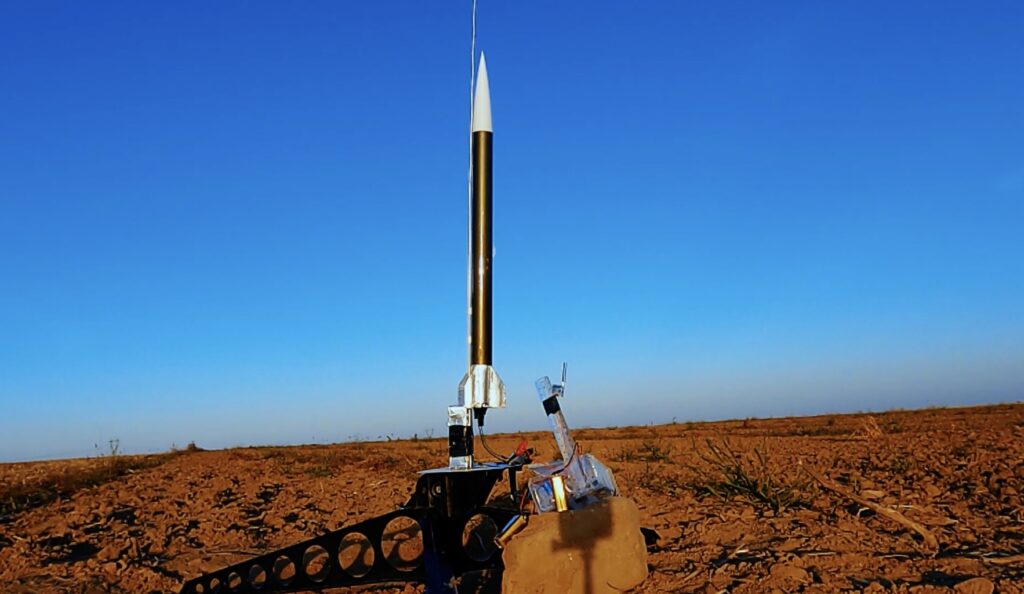
This project demonstrates the potential of combining hobbyist rocketry with advanced sensor technology, opening up possibilities for atmospheric research and educational initiatives focused on telemetry collection.
Source: Read the original article here.
Discover more tech insights on ByteTrending.
Discover more from ByteTrending
Subscribe to get the latest posts sent to your email.