ByteTrending
  • Home
    • About ByteTrending
    • Contact us
    • Privacy Policy
    • Terms of Service
  • Tech
  • Science
  • Review
  • Popular
  • Curiosity
Donate
No Result
View All Result
ByteTrending
No Result
View All Result
Home Curiosity
Related image for key information extraction

Key Information Extraction – The Title Must Include The Full Main Keyword Exactly As Written And Should Include An Engaging Angle To Improve Click-Through Rate.

ByteTrending by ByteTrending
September 4, 2025
in Curiosity, Science
Reading Time: 2 mins read
0
Share on FacebookShare on ThreadsShare on BlueskyShare on Twitter

Intelligent document processing (IDP) refers to the automated extraction, classification, and processing of data from various document formats—both structured and unstructured. Within the IDP landscape, key information extraction (KIE) serves as a fundamental component, enabling systems to identify and extract critical data points from documents with minimal human intervention. Organizations across diverse sectors—including financial services, healthcare, legal, and supply chain management—are increasingly adopting IDP solutions to streamline operations, reduce manual data entry, and accelerate business processes. As document volumes grow exponentially, IDP solutions not only automate processing but also enable sophisticated agentic workflows—where AI systems can analyze extracted data and initiate appropriate actions with minimal human intervention. The ability to accurately process invoices, contracts, medical records, and regulatory documents has become not just a competitive advantage but a business necessity. Importantly, developing effective IDP solutions requires not only robust extraction capabilities but also tailored evaluation frameworks that align with specific industry needs and individual organizational use cases.

In this blog post, we demonstrate an end-to-end approach for building and evaluating a KIE solution using Amazon Nova models available through Amazon Bedrock. This end-to-end approach encompasses three critical phases: data readiness (understanding and preparing your documents), solution development (implementing extraction logic with appropriate models), and performance measurement (evaluating accuracy, efficiency, and cost-effectiveness). We illustrate this comprehensive approach using the FATURA dataset—a collection of diverse invoice documents that serves as a representative proxy for real-world enterprise data. By working through this practical example, we show you how to select, implement, and evaluate foundation models for document processing tasks while taking into consideration critical factors such as extraction accuracy, processing speed, and operational costs.

Whether you’re a data scientist exploring generative AI capabilities, a developer implementing document processing pipelines, or a business analyst seeking to understand automation possibilities, this guide provides valuable insights for your use case. By the end of this post, you’ll have a practical understanding of how to use large language models for document extraction tasks, establish meaningful evaluation metrics for your specific use case, and make informed decisions about model selection based on both performance and business considerations. These skills can help your organization move beyond manual document handling toward more efficient, accurate, and scalable document processing solutions.

Dataset

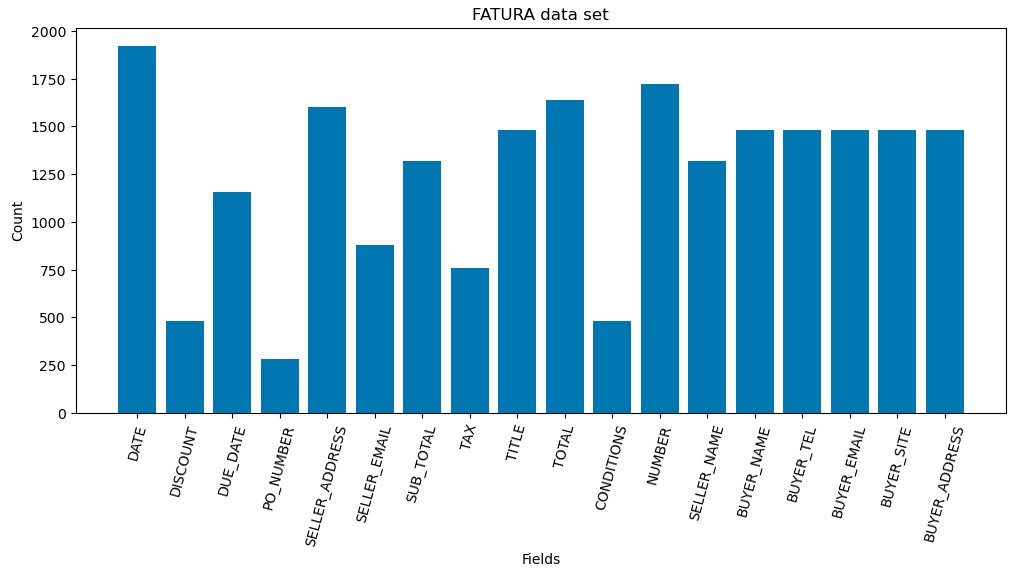
Demonstrating our KIE solution and benchmarking its performance requires a dataset that provides realistic document processing scenarios while offering reliable ground truth for accurate performance measurement. One such dataset is FATURA, which contains 10,000 invoices with 50 distinct layouts (200 invoices per layout). The invoices are all one-page documents stored as JPEG images with annotations of 24 fields per document. High-quality labels are foundational to evaluation tasks, serving as the ground truth against which we measure extraction accuracy. Upon examining the FATURA dataset, we identified several variations in the ground truth labels that required standardization.

Related Post

robotics supporting coverage of robotics

How CES 2026 Showcased Robotics’ Shifting Priorities

April 2, 2026
Related image for RoboReward Robotics

Automated Robotics: The RoboReward Revolution

March 10, 2026

Automated Robotics: The RoboReward Revolution

March 10, 2026

Proactive AI Agents: Mastering Long-Term Tasks

March 8, 2026


Source: Read the original article here.

Discover more tech insights on ByteTrending.

Share this:

  • Share on Facebook (Opens in new window) Facebook
  • Share on Threads (Opens in new window) Threads
  • Share on WhatsApp (Opens in new window) WhatsApp
  • Share on X (Opens in new window) X
  • Share on Bluesky (Opens in new window) Bluesky

Like this:

Like Loading...

Discover more from ByteTrending

Subscribe to get the latest posts sent to your email.

Tags: AutomationData ScienceDevelopment

Related Posts

robotics supporting coverage of robotics
AI

How CES 2026 Showcased Robotics’ Shifting Priorities

by Ricardo Nowicki
April 2, 2026
Related image for RoboReward Robotics
Popular

Automated Robotics: The RoboReward Revolution

by ByteTrending
March 10, 2026
Related image for RoboReward Robotics
Popular

Automated Robotics: The RoboReward Revolution

by ByteTrending
March 10, 2026
Next Post
Related image for spacecraft

craft summary main keyword: spacecraft

Leave a ReplyCancel reply

Recommended

Related image for PuzzlePlex

PuzzlePlex: Evaluating AI Reasoning with Complex Games

October 11, 2025
Related image for Ray-Ban hack

Ray-Ban Hack: Disabling the Recording Light

October 24, 2025
Related image for Ray-Ban hack

Ray-Ban Hack: Disabling the Recording Light

October 28, 2025
Kubernetes v1.35 supporting coverage of Kubernetes v1.35

How Kubernetes v1.35 Streamlines Container Management

March 26, 2026
data-centric AI supporting coverage of data-centric AI

How Data-Centric AI is Reshaping Machine Learning

April 3, 2026
SpaceX rideshare supporting coverage of SpaceX rideshare

SpaceX rideshare Why SpaceX’s Rideshare Mission Matters for

April 2, 2026
robotics supporting coverage of robotics

How CES 2026 Showcased Robotics’ Shifting Priorities

April 2, 2026
Kubernetes v1.35 supporting coverage of Kubernetes v1.35

How Kubernetes v1.35 Streamlines Container Management

March 26, 2026
ByteTrending

ByteTrending is your hub for technology, gaming, science, and digital culture, bringing readers the latest news, insights, and stories that matter. Our goal is to deliver engaging, accessible, and trustworthy content that keeps you informed and inspired. From groundbreaking innovations to everyday trends, we connect curious minds with the ideas shaping the future, ensuring you stay ahead in a fast-moving digital world.
Read more »

Pages

  • Contact us
  • Privacy Policy
  • Terms of Service
  • About ByteTrending
  • Home
  • Authors
  • AI Models and Releases
  • Consumer Tech and Devices
  • Space and Science Breakthroughs
  • Cybersecurity and Developer Tools
  • Engineering and How Things Work

Categories

  • AI
  • Curiosity
  • Popular
  • Review
  • Science
  • Tech

Follow us

Advertise

Reach a tech-savvy audience passionate about technology, gaming, science, and digital culture.
Promote your brand with us and connect directly with readers looking for the latest trends and innovations.

Get in touch today to discuss advertising opportunities: Click Here

© 2025 ByteTrending. All rights reserved.

No Result
View All Result
  • Home
    • About ByteTrending
    • Contact us
    • Privacy Policy
    • Terms of Service
  • Tech
  • Science
  • Review
  • Popular
  • Curiosity

© 2025 ByteTrending. All rights reserved.

%d