Machine learning models thrive on data—lots of it—but what happens when you’re staring down a dataset that just isn’t cutting it?
The frustrating reality is that many projects are hampered by limited or imbalanced datasets, leading to overfitting, poor generalization, and ultimately, underwhelming performance.
But there’s a powerful technique gaining traction among data scientists:
data augmentation.


It’s essentially creating new, synthetic data points from your existing ones, allowing you to artificially expand your dataset without needing to collect more raw information—a huge win for efficiency and cost savings.
By cleverly transforming your current data, you can boost model accuracy, improve robustness against variations in real-world scenarios, and unlock the true potential of your algorithms.
Why Data Augmentation Matters
Many machine learning models, especially deep neural networks, thrive on massive datasets. The more examples they see, the better they learn to generalize and perform accurately on unseen data. However, acquiring large, labeled datasets can be a significant bottleneck – it’s expensive, time-consuming, and sometimes simply impossible depending on the application. Imagine trying to train a model to detect rare medical conditions or identify defects in specialized manufacturing processes; obtaining enough real-world examples is often a major hurdle.
The limitations of small datasets manifest as overfitting. When a model learns from too few examples, it essentially memorizes the training data instead of learning underlying patterns. This leads to excellent performance on the training set but dismal results when faced with new, slightly different data – the exact opposite of what we want! Overfitting manifests in various ways: inflated accuracy scores during training that don’t translate to real-world performance, sensitivity to minor input changes, and an inability to generalize to broader scenarios.
Data augmentation offers a powerful solution to this problem. It doesn’t involve collecting *more* data; instead, it focuses on creating *variations* of the existing data points. By applying transformations like rotations, flips, color adjustments, or even more sophisticated techniques based on domain knowledge (e.g., adding noise to audio signals), we effectively expand the size and diversity of our training set without incurring the costs associated with manual labeling. This allows models to learn more robust features and generalize better.
Essentially, data augmentation tricks the model into believing it has seen a wider range of possibilities than it actually has. It’s like showing a child different angles of an apple – they still understand it’s an apple, but their understanding is richer and more nuanced. This leads to improved model performance, better generalization capabilities, and ultimately, more reliable results in real-world applications.
The Dataset Dilemma

Many machine learning models, especially deep neural networks, thrive on vast amounts of labeled training data. However, obtaining such datasets can be a significant hurdle. Consider scenarios like medical image analysis where expert annotation is expensive and time-consuming, or rare event detection in industrial processes where relevant data points are inherently scarce. These limitations often lead to insufficient data for robust model training, directly impacting the accuracy and reliability of the final product.
A common consequence of limited labeled data is overfitting. Overfitting occurs when a model learns the training data too well, including its noise and specific quirks. This results in excellent performance on the training set but poor generalization to unseen data – essentially, the model memorizes instead of learning underlying patterns. The effects can range from slightly reduced accuracy on new examples to complete failure in real-world applications, making the model unusable.
The risks associated with overfitting extend beyond simply inaccurate predictions. A model prone to overfitting can be difficult to debug and improve, as its behavior is tightly coupled to the peculiarities of the training data. This lack of generalizability undermines the entire purpose of building a machine learning model – to make reliable predictions on data it hasn’t seen before.
Beyond More Data – The Power of Variation

While increasing the volume of your training dataset is a common approach to improving model performance, simply adding more copies of existing examples often isn’t sufficient. Machine learning models, particularly deep learning architectures, excel at memorizing patterns. If you just duplicate data, your model might learn to reproduce those exact instances rather than generalizing effectively to unseen data. This leads to overfitting – high accuracy on the training set but poor performance in real-world scenarios.
The true power of data augmentation lies in introducing *variations* into the existing data. These variations don’t create entirely new examples, but they subtly alter existing ones in ways that mimic the kinds of transformations a model might encounter in deployment. For example, image models can benefit from rotations, flips, color adjustments, and small distortions. Text models can leverage techniques like synonym replacement or back-translation to generate slightly different versions of sentences.
By exposing your model to these diverse variations, you effectively increase the size and diversity of your training data without needing to collect entirely new samples. This encourages the model to learn more robust features that are less sensitive to specific input characteristics, leading to improved generalization and better performance on unseen data.
Common Data Augmentation Techniques
Data augmentation is a crucial technique in machine learning used to artificially increase the size of your training dataset by creating modified versions of existing data points. This is particularly useful when you have limited labeled data, which is often the case in real-world scenarios. The core idea behind data augmentation is to expose your model to variations it might encounter during deployment, thereby improving its generalization ability and preventing overfitting. Without sufficient data, models are prone to memorizing training examples rather than learning underlying patterns – a phenomenon that leads to poor performance on unseen data.
When it comes to image data, several common techniques can be employed for augmentation. Basic transformations like rotations (slight changes in angle), flips (horizontal or vertical mirroring), zooms (enlarging or shrinking the image), and color adjustments (brightness, contrast, saturation) are excellent starting points. Rotating an image of a cat, for instance, doesn’t change the fact that it’s still a cat; it simply presents the model with a different perspective. Similarly, flipping an image can help the model learn to recognize objects regardless of their orientation. These simple modifications drastically expand the effective size of your training set and encourage the model to be more robust to real-world variations.
Beyond these foundational techniques, you can explore more advanced options such as cropping, shearing (skewing), and adding noise. Cropping focuses on different regions of an image, forcing the model to learn features from partial views. Shearing distorts the shape of the image, simulating perspective changes. Adding Gaussian or salt-and-pepper noise introduces random pixel variations, making the model more resilient to imperfections in data quality. The choice of which augmentations to use depends heavily on the specific dataset and task at hand; experimentation is key to finding what works best.
It’s important to remember that not all augmentations are beneficial. Excessive or inappropriate augmentation can actually hurt performance if it introduces unrealistic distortions or biases. Carefully consider the domain knowledge you have about your data, and always validate the effectiveness of your chosen augmentation techniques through careful experimentation and monitoring of model performance on a validation set.
Image Transformations – The Basics
Image transformations are among the most widely used data augmentation techniques, particularly in computer vision tasks like image classification, object detection, and segmentation. These involve applying geometric or color manipulations to existing images to create new, slightly altered versions. Common examples include rotations (shifting the image angle), flips (mirroring along an axis – horizontal or vertical), zooms (enlarging or shrinking the image), and color adjustments such as brightness, contrast, saturation, and hue modifications. These transformations don’t change the core content of the image; they simply present it in a slightly different guise.
The primary benefit of employing these basic image transformations is to improve model robustness – that is, its ability to generalize well to unseen data. By training on variations of your existing images, you effectively simulate real-world conditions where objects might appear at unexpected angles, be partially obscured, or have varying lighting conditions. For instance, a self-driving car’s object detection system trained with rotated and scaled images will perform better in diverse weather and driving scenarios.
While seemingly simple, these transformations can significantly impact model performance. It’s crucial to choose appropriate transformation ranges based on the specific dataset and task. Overly aggressive rotations or zooms could introduce artifacts that confuse the model, whereas insufficient augmentation may not provide enough variation for robust learning. Experimentation is key; start with conservative values and gradually increase them while monitoring validation set performance.
Advanced Augmentation Strategies
Beyond simple transformations like rotations and flips, advanced augmentation strategies open up new avenues for improving model robustness and performance. These techniques often involve more complex algorithms and a deeper understanding of your dataset’s nuances, but the potential rewards—increased accuracy, better generalization, and reduced overfitting—are significant. We’ll explore several powerful methods that move beyond basic data augmentation, focusing on how to apply them effectively in different scenarios.
One particularly exciting area is leveraging Generative Adversarial Networks (GANs) for data creation. GANs can learn the underlying distribution of your existing dataset and generate entirely new, synthetic samples that resemble real data. This approach is invaluable when dealing with limited datasets or situations where privacy concerns restrict access to real-world examples. Imagine training a medical image classifier with only a handful of patient scans; a GAN could create realistic variations, effectively expanding your dataset without compromising patient confidentiality. However, implementing GANs for augmentation isn’t trivial—training them requires careful tuning and can be computationally expensive, demanding significant expertise.
For natural language processing (NLP) tasks, techniques like back-translation or incorporating contextual word embeddings offer sophisticated alternatives to standard synonym replacement. Back-translation involves translating text into another language and then back into the original, introducing subtle variations while preserving meaning. Contextual embeddings, derived from models like BERT, capture a word’s meaning based on its surrounding context, allowing for more nuanced augmentations that maintain semantic coherence. These methods are particularly useful for improving sentiment analysis or question answering systems where slight changes in wording can drastically alter the outcome.
Ultimately, selecting the right advanced augmentation strategy depends heavily on your specific use case and dataset characteristics. While GANs offer immense potential, they also demand significant resources and expertise. Back-translation and contextual embeddings provide powerful alternatives for NLP tasks, while more specialized techniques continue to emerge across various domains. Experimentation and careful validation are crucial to ensure that any augmentation method genuinely improves model performance rather than introducing unintended biases or artifacts.
Generative Adversarial Networks (GANs) for Data Creation
Generative Adversarial Networks (GANs) offer a powerful approach to data augmentation by creating entirely new, synthetic data points that resemble your existing dataset. This is particularly valuable when dealing with limited real-world data or situations where acquiring more data is expensive, time-consuming, or involves sensitive information – think medical records or financial transactions. GANs consist of two neural networks: a generator, which creates new data instances, and a discriminator, which attempts to distinguish between the generated data and the real data. Through an iterative process of competition and refinement, the generator learns to produce increasingly realistic synthetic examples that can effectively expand your training dataset.
The benefits extend beyond simply increasing volume; GANs can also generate variations addressing specific biases or gaps in your original data. For example, if you’re building a facial recognition system with limited representation of certain demographics, a GAN could be trained to create more diverse faces. However, training GANs is notoriously challenging and requires careful tuning of hyperparameters and network architectures. Issues like mode collapse (where the generator produces only a narrow range of outputs) and vanishing gradients are common pitfalls that can significantly impact the quality and usefulness of the generated data.
Successfully implementing GAN-based data augmentation demands expertise and substantial computational resources. Furthermore, it’s crucial to validate the synthetic data produced by the GAN to ensure its fidelity and avoid introducing unintended biases or artifacts into your model. Techniques like Frechet Inception Distance (FID) are often employed to evaluate the quality of generated samples. While complex, GANs represent a cutting-edge tool for tackling data scarcity and enhancing machine learning models in scenarios where traditional augmentation methods fall short.
Implementing Data Augmentation
Data augmentation is no longer a ‘nice-to-have’ but a crucial component of many successful machine learning pipelines. Integrating it effectively requires more than just applying random transformations; it demands careful consideration of your dataset, model architecture, and the specific problem you’re trying to solve. A common pitfall is blindly applying augmentations without understanding their impact – this can actually degrade performance by introducing unrealistic or misleading examples. Start small, experiment rigorously with different techniques, and always validate the augmented data’s effectiveness through careful monitoring of your model’s training and validation metrics.
The implementation process typically involves identifying suitable augmentation strategies based on your data type (images, text, audio, etc.) and the characteristics of your dataset. For image datasets, this could include rotations, flips, scaling, cropping, color jittering, or even more advanced techniques like CutMix or MixUp. Text data might benefit from synonym replacement, random insertion/deletion, or back-translation. Libraries such as Albumentations, imgaug, and TensorFlow’s built-in image processing tools significantly simplify this process, providing a wealth of pre-built augmentations and customizable pipelines. Remember to keep track of the augmentation parameters and their impact on your model’s performance – logging these experiments is key for reproducibility and optimization.
Let’s illustrate with a simple example using Albumentations: `albumentations.Compose([albumentations.HorizontalFlip(p=0.5), albumentations.Rotate(limit=30, p=0.3)])`. This snippet demonstrates how easily you can combine horizontal flips and rotations into an augmentation pipeline. For more complex scenarios, consider creating custom augmentations tailored to your specific data characteristics or leveraging generative adversarial networks (GANs) for data synthesis – although these approaches require significantly more expertise and computational resources. Regardless of the complexity, always ensure that the augmented data remains representative of the real-world distribution you’re trying to model.
Finally, remember that data augmentation isn’t a magic bullet. It’s most effective when used in conjunction with other best practices like careful feature engineering, proper hyperparameter tuning, and robust evaluation techniques. Consider A/B testing different augmentation strategies against your baseline model to quantify their impact. By adopting a systematic and experimental approach, you can harness the power of data augmentation to significantly improve your machine learning models’ performance and generalization capabilities.
Tools and Libraries for Easy Implementation
Data augmentation has become a cornerstone of modern machine learning, particularly in computer vision where labeled datasets are often scarce or expensive to create. Luckily, several powerful libraries simplify the implementation process, abstracting away complex image manipulation logic. Albumentations is arguably the most popular choice, known for its speed and extensive range of transformations including geometric operations (rotations, flips), color adjustments (brightness, contrast), and noise injection. imgaug provides a more flexible framework with a focus on composability, allowing users to define custom augmentation pipelines through a declarative style. Finally, TensorFlow’s built-in image processing tools offer basic augmentations directly within the TensorFlow ecosystem, providing tight integration for those already working in that environment.
Let’s illustrate these libraries with simple code examples. With Albumentations, you could apply a random horizontal flip to an image like this: `albumentations.HorizontalFlip()(image=img)`. Similarly, imgaug’s `Sequential` object lets you chain transformations: `ia.Sequential([ia.Affine(rotate=(-45, 45)), ia.Multiply((0.8, 1.2))])(image=img)`. For TensorFlow users, the `tf.image` module offers functions such as `tf.image.random_brightness()` and `tf.image.random_flip_left_right()`, which can be easily incorporated into your data pipelines.
Choosing the right library depends on your specific needs and existing workflow. Albumentations excels in performance and breadth of transformations, making it a great default choice. imgaug’s flexibility shines when you need to create highly customized augmentation strategies. TensorFlow’s tools are convenient for TensorFlow-centric projects but might lack some of the advanced features found in dedicated data augmentation libraries. Remember that experimentation is key; try different combinations and parameters to find what works best for your particular dataset and model.
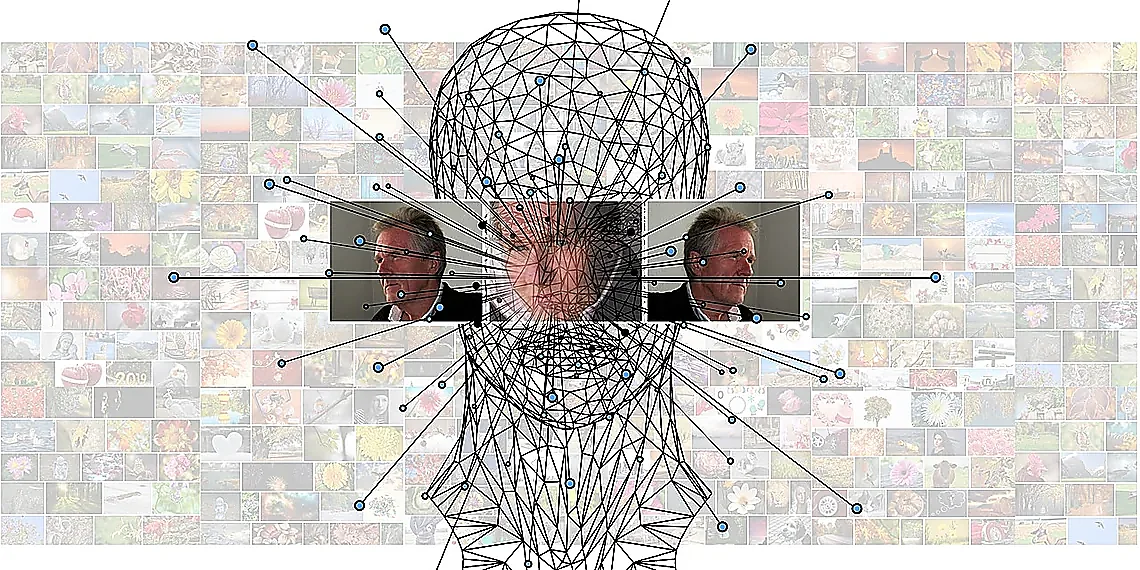
We’ve covered a lot of ground, from simple rotations to sophisticated generative approaches, showcasing how strategically expanding your dataset can dramatically improve model performance and robustness.
The core takeaway is clear: in an era where labeled data remains a precious commodity, techniques like data augmentation offer a powerful path toward achieving state-of-the-art results without prohibitive costs.
It’s not just about throwing random transformations at your data; thoughtful application, guided by domain expertise and careful validation, unlocks the true potential of these methods – especially when exploring advanced approaches like neural style transfer or incorporating synthetic data generation.
Looking ahead, we anticipate even more innovative applications, potentially leveraging techniques such as adversarial training for automated augmentation strategies and further integration with federated learning environments to overcome privacy constraints; advancements in data augmentation are poised to remain a critical area of focus within the machine learning landscape, particularly as models become increasingly complex and demand ever-larger datasets. The creative use of data augmentation will continue to be an essential tool for pushing boundaries and unlocking new capabilities in AI systems, allowing us to build more resilient and accurate models across various applications. Try implementing these techniques in your next project!
Continue reading on ByteTrending:
Discover more tech insights on ByteTrending ByteTrending.
Discover more from ByteTrending
Subscribe to get the latest posts sent to your email.