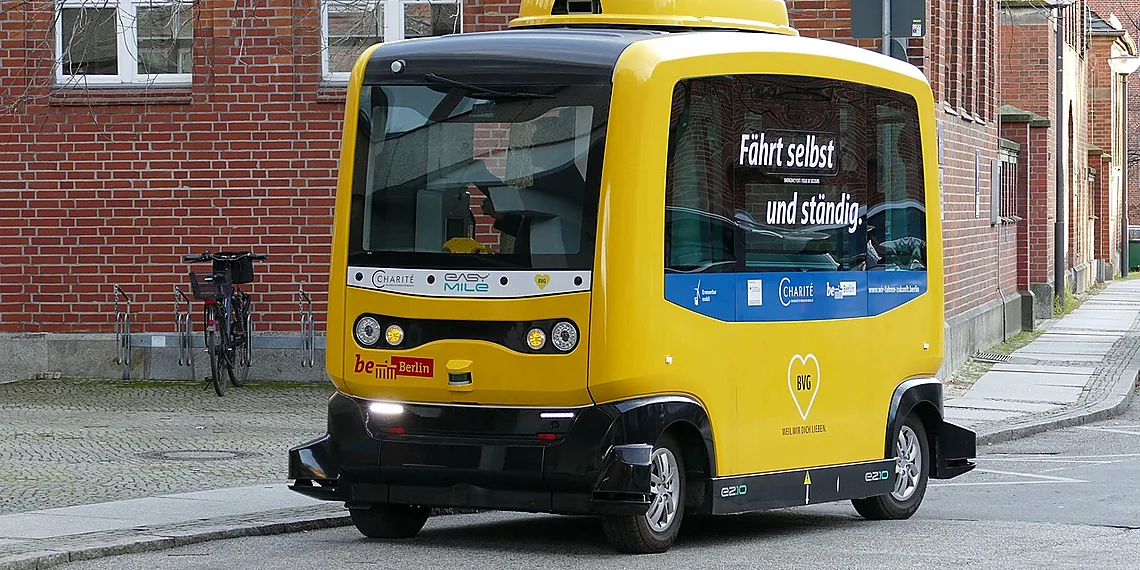



The promise of effortless transportation has captivated us for decades, and self-driving cars feel closer than ever to fulfilling that dream. Yet, despite significant advancements in sensor technology and machine learning, truly reliable autonomous vehicles remain elusive, often struggling with situations that would be trivially obvious to a human driver. Current systems excel at predictable scenarios but frequently falter when confronted with the unexpected – a child chasing a ball into the street, an oddly parked delivery truck, or even just changing weather conditions. These limitations stem from a fundamental challenge: most autonomous driving algorithms rely heavily on pattern recognition and lack genuine understanding of the world. They can identify objects like pedestrians and cars, but they don’t inherently *know* why those objects are behaving in certain ways or what might happen next. This is where the concept of commonsense reasoning comes into play; it’s about understanding implicit knowledge and making inferences based on everyday experiences. A recent paper published in argues that integrating commonsense reasoning capabilities is not just a desirable enhancement but a crucial necessity for achieving robust autonomous driving. The researchers propose a novel framework combining neural networks with symbolic AI techniques to enable vehicles to anticipate events and react appropriately, moving beyond simple object detection towards true situational awareness. Their work suggests that equipping self-driving systems with this ‘common sense’ could be the key to unlocking truly reliable and adaptable transportation.
The Autonomous Vehicle Bottleneck
The pursuit of fully autonomous vehicles – those achieving SAE Level 5 autonomy, requiring no human intervention – has been a driving force in the tech industry for years. Yet, despite significant investment and progress, true Level 5 autonomy remains stubbornly out of reach. A core reason for this persistent bottleneck lies in our over-reliance on current machine learning approaches. While deep learning excels at pattern recognition within defined parameters, it fundamentally struggles with scenarios outside its training data – a critical limitation when navigating the unpredictable complexities of real-world driving.
The problem boils down to data dependence. Autonomous driving models are ravenously hungry for data, requiring massive datasets encompassing countless hours of driving footage in various conditions. However, these datasets inherently lack comprehensive representation of every possible scenario. Rare events – malfunctioning traffic signals, sudden debris on the road, unusual pedestrian behavior – constitute ‘edge cases’ that rarely appear and therefore receive scant attention during training. Consequently, when an AV encounters one of these unforeseen circumstances, its performance can degrade dramatically, potentially leading to dangerous misclassifications and unpredictable actions.
Consider a scenario where a traffic signal is malfunctioning, displaying incorrect or no signals. A purely data-driven model might interpret this as a novel situation it hasn’t encountered, potentially freezing or making an inaccurate judgment. Similarly, imagine a sudden, widespread slowdown of vehicles ahead – perhaps due to an unseen hazard. Without the ability to reason about *why* cars are behaving in a particular way, a machine learning system may misinterpret the scene and react inappropriately. These unexpected events highlight the critical need for systems that can go beyond recognizing patterns; they require true ‘commonsense reasoning’ – the ability to infer, deduce, and apply general knowledge to novel situations.
Ultimately, achieving Level 5 autonomy demands a paradigm shift away from solely relying on data-intensive machine learning. Integrating automated commonsense reasoning – enabling vehicles to understand *why* things are happening rather than just recognizing *what* is happening – offers a promising path forward. This approach can bridge the gap created by insufficient training data and equip autonomous vehicles with the adaptability needed to navigate the truly unexpected, bringing us closer to the vision of safe and reliable self-driving cars.
Data Dependence & Edge Cases

Current autonomous driving systems heavily rely on massive datasets for training machine learning models. These datasets typically consist of labeled images and sensor readings collected during routine driving conditions – sunny days, clear roads, predictable traffic patterns. The sheer volume of data is necessary because deep learning algorithms require countless examples to learn complex relationships between visual inputs and appropriate actions like steering, braking, and acceleration.
However, the very nature of these datasets creates a significant bottleneck. Real-world driving presents an infinite variety of scenarios, many of which are rare or unusual – ‘edge cases’ such as sudden weather changes, unconventional road layouts, unexpected pedestrian behavior, or malfunctioning traffic signals. These edge cases are inherently underrepresented in standard training datasets because they occur infrequently. As a result, models trained on these datasets perform well in common situations but struggle dramatically when confronted with something outside their experience.
This lack of representation can lead to dangerous misclassifications and unpredictable actions. For example, a model might fail to recognize a partially obscured traffic signal or incorrectly interpret the intentions of a cyclist behaving atypically. The inability to reliably handle these edge cases is a primary reason why achieving SAE Level 5 autonomy – full automation in all conditions – remains elusive with current machine learning-centric approaches.
Introducing Automated Commonsense Reasoning
For years, the pursuit of fully autonomous driving (SAE Level 5) has been a technological holy grail. Despite significant advancements in machine learning and sensor technology, true autonomy remains elusive. While current systems excel at pattern recognition – identifying objects like pedestrians or traffic lights based on vast datasets – they often falter when faced with unexpected situations or scenarios not adequately represented in their training data. The core problem? They lack ‘common sense.’ This article explores a promising new direction: automated commonsense reasoning, and why it may be the key to finally achieving Level 5 autonomous driving.
Traditional machine learning approaches for self-driving cars largely operate by identifying correlations within massive datasets. If an algorithm sees enough images of a red light with a specific shape, it learns to recognize that as ‘stop.’ However, what happens when the traffic signal malfunctions and displays a flashing yellow? Or when debris obscures the light entirely? A machine learning model trained solely on typical scenarios would likely fail. Automated commonsense reasoning, in contrast, attempts to mimic how humans understand the world – not just by recognizing patterns, but by applying general knowledge and logical inference.
At its heart, automated commonsense reasoning involves equipping AI systems with a foundational understanding of how things work. It’s about enabling them to draw inferences: ‘If I see a car suddenly swerving away from something, that thing is likely dangerous.’ Or, ‘If the traffic light isn’t working correctly, I should treat it as a four-way stop.’ This goes beyond simple object recognition; it requires understanding relationships, motivations (why are those cars turning?), and potential consequences. It allows for flexible decision making even when faced with incomplete or contradictory information – something humans do effortlessly.
The recent paper arXiv:2601.04271v1 highlights how automated commonsense reasoning can address critical gaps in current autonomous driving systems, particularly in handling unusual road scenarios where training data is scarce. By incorporating a broader understanding of the world, these systems can move beyond rote pattern recognition and towards true adaptability – a crucial step toward realizing the dream of safe and reliable Level 5 autonomous driving.
Beyond Pattern Recognition: How It Works

Traditional machine learning models for autonomous driving excel at pattern recognition – identifying objects like pedestrians or traffic lights from vast datasets. However, they often struggle when faced with unexpected situations that deviate from these patterns. Consider a scenario where a traffic light is obscured by snow; a system trained solely on typical traffic light images might misinterpret the situation. This is because machine learning primarily focuses on correlations within data and lacks the underlying understanding of *why* things are happening.
Commonsense reasoning, in contrast, aims to equip autonomous systems with a broader understanding of the world – similar to how humans operate. It involves drawing inferences and making decisions based on general knowledge about physics, social norms, and everyday objects. For example, knowing that cars generally stop at red lights, or that people typically walk around obstacles, allows us to anticipate behavior even in unusual circumstances. This isn’t about recognizing a specific image; it’s about understanding the principles governing the scene.
Automated commonsense reasoning systems attempt to replicate this human capability using techniques like knowledge graphs and symbolic AI. These systems leverage pre-existing knowledge bases – collections of facts and rules about how the world works – to reason through situations and generate plausible explanations, even with limited data. By combining pattern recognition with logical inference, these systems can potentially navigate complex scenarios that would stump a purely machine learning-based approach.
Real-World Scenarios & Results
The research highlights a critical limitation of current autonomous driving systems: their dependence on vast datasets for accurate object detection and scene understanding. When faced with unusual or unexpected situations – scenarios rarely found in training data – these systems often falter, leading to potentially dangerous errors. To illustrate this, the paper focuses on two compelling examples where traditional perception models struggled but were significantly improved by incorporating commonsense reasoning.
Consider the case of a malfunctioning traffic signal. A standard object detection model might misinterpret a flickering or partially obscured light as something other than what it truly is – a red light indicating drivers should stop. However, a system equipped with commonsense reasoning could utilize knowledge about traffic regulations and typical intersection behavior to infer that a flashing light likely signifies a problem and requires caution, overriding the flawed perception output. Similarly, when confronted with cars abruptly slowing down and swerving away from an unseen obstacle, the model initially might not identify the hazard.
In this second scenario, the commonsense reasoning module leverages understanding of typical driver behavior – avoiding potential dangers – to deduce that something is obstructing the road ahead, even if the perception system can’t directly detect it. By combining visual input with prior knowledge about how drivers react in various situations, the system effectively fills in the gaps left by imperfect object detection. This isn’t simply a matter of correcting misclassifications; it’s about understanding *why* objects are behaving as they do.
These examples demonstrate that autonomous driving isn’t solely about recognizing objects; it’s about understanding the context and reasoning about what those objects mean in relation to the overall environment. By integrating commonsense reasoning, researchers are showing a promising path towards more robust and reliable autonomous systems capable of handling the unpredictable realities of real-world driving conditions – a vital step toward achieving SAE Level 5 autonomy.
Malfunctioning Traffic Signals and Unexpected Obstructions
Researchers recently explored how automated commonsense reasoning can bolster autonomous driving capabilities, particularly when perception models falter. One scenario tested involved a malfunctioning traffic signal exhibiting erratic behavior – cycling through colors unpredictably or remaining stuck on one state. Traditional object detection systems relying solely on visual input would struggle to determine the ‘true’ color of the light in such instances. By integrating commonsense reasoning, the system could leverage knowledge about typical traffic signal operation (e.g., sequence of colors, expected duration) and infer the most likely correct state even when the perception model delivered incorrect data.
A second challenging situation involved a sudden obstruction appearing ahead – perhaps debris on the road or an unseen vehicle briefly blocking visibility. In this case, the AV detected cars abruptly slowing down and swerving to avoid something in their path. Without additional information, the system might misinterpret these actions as a general traffic slowdown. However, using commonsense reasoning, the system could deduce the presence of an obstruction based on the coordinated reactions of surrounding vehicles, even if it couldn’t directly ‘see’ what was causing them.
Crucially, in both scenarios, the automated commonsense reasoning component acted as a safety net, correcting errors arising from inaccurate or incomplete perception data. This ability to apply general knowledge and infer missing information is presented as a critical step towards achieving higher levels of autonomy, particularly in handling unexpected real-world events where purely data-driven models often fail.
The Hybrid Approach & Future Implications
The current push towards autonomous driving has largely centered on machine learning, particularly deep learning models trained on massive datasets. However, the absence of Level 5 autonomy – vehicles capable of handling all driving conditions without human intervention – suggests a critical limitation in this approach. The paper highlighted in arXiv:2601.04271v1 proposes that relying solely on machine learning creates brittle systems unable to handle unexpected or rare scenarios. A more promising path lies in a hybrid architecture, blending the strengths of machine learning’s pattern recognition with the flexibility and adaptability afforded by automated commonsense reasoning.
This ‘hybrid approach’ isn’t about replacing machine learning entirely; it’s about augmenting it intelligently. The paper introduces an ‘uncertainty measurement’ technique that acts as a trigger. When the perception model – responsible for identifying objects, lane markings, etc. – encounters ambiguity or low confidence (high uncertainty), control is transferred to a commonsense reasoning module. Imagine a malfunctioning traffic signal; a purely machine learning system might misinterpret it based on incomplete data, whereas a commonsense reasoning engine could leverage its understanding of traffic rules and likely driver behavior to infer the correct action. This system can be scaled by focusing initially on specific edge cases where uncertainty is high, gradually expanding the scope as confidence in the reasoning module grows.
The implications of integrating commonsense reasoning extend far beyond resolving isolated anomalies. It allows AVs to reason about *why* events are happening, not just react based on observed patterns. For example, if all cars ahead suddenly slow down and swerve, a machine learning system might simply brake aggressively. A system with commonsense reasoning could infer that there’s an obstacle or hazard ahead – perhaps something the perception model hasn’t yet detected – and adjust its behavior accordingly. This moves beyond reactive driving to proactive safety and more human-like decision making.
Looking toward Level 5 autonomy, this hybrid approach seems increasingly essential. The sheer complexity of real-world driving demands a system capable of navigating situations that haven’t been explicitly encountered in training data. While machine learning will continue to improve in its ability to handle common scenarios, automated commonsense reasoning provides the crucial layer of adaptability and robustness needed to bridge the gap – allowing autonomous vehicles to truly understand and interact with the world around them.
Uncertainty Measurement and Integration
A critical challenge in autonomous driving lies in handling situations where perception models encounter uncertainty – scenarios they haven’t been explicitly trained for. To address this, researchers are implementing ‘uncertainty measurement’ techniques that quantify the confidence level of a perception model’s output. When the perceived certainty falls below a defined threshold, it triggers a shift to a commonsense reasoning module. This module leverages knowledge graphs and rule-based systems to infer likely scenarios based on contextual cues like road layout, traffic rules, and observed vehicle behavior – essentially filling in the gaps where data is lacking.
The beauty of this hybrid approach is its scalability. Rather than requiring vast datasets for every conceivable edge case (which is impractical), uncertainty measurement allows AVs to leverage pre-existing knowledge bases and logical reasoning. Integration into existing autonomous systems can be achieved by layering this module on top of current perception pipelines; the uncertainty metric acts as a gatekeeper, diverting ambiguous situations to the commonsense engine. This avoids disrupting established machine learning workflows while adding a crucial layer of robustness.
Looking ahead, widespread adoption of uncertainty-triggered commonsense reasoning could significantly accelerate progress towards SAE Level 5 autonomy. It allows for more graceful degradation in challenging conditions – instead of abrupt stops or unpredictable maneuvers, the AV can reason about potential causes and plan safer responses. Furthermore, this modular design fosters easier updates and improvements; new commonsense rules and knowledge graph entries can be added without retraining entire deep learning models.
The challenges facing current AI systems in vehicles are becoming increasingly clear, highlighting a critical need beyond simply processing data; they require understanding the world as humans do.
Our exploration of commonsense reasoning demonstrates its potential to bridge this gap, offering a powerful framework for enabling machines to navigate complex and unpredictable situations with greater safety and efficiency.
While still in its early stages, integrating commonsense knowledge into algorithms represents a significant leap forward in the pursuit of truly robust autonomous driving capabilities.
The ability for vehicles to infer unspoken rules, anticipate human behavior, and react appropriately to nuanced scenarios is no longer a futuristic fantasy but a tangible goal within reach thanks to these advancements, paving the way for more reliable systems on our roads. This isn’t just about coding better algorithms; it’s about rethinking how we teach machines to perceive and interact with reality – vital for the evolution of autonomous driving and beyond. The implications are profound, potentially reshaping urban planning, logistics, and even personal mobility as we know them today. We invite you to ponder these possibilities: How might widespread adoption of commonsense-equipped vehicles alter our cities? What new ethical considerations will arise with increasingly sophisticated AI drivers? Consider the broader impact – the future of transportation is being actively shaped now, and your perspective matters.
Source: Read the original article here.
Discover more tech insights on ByteTrending ByteTrending.
Discover more from ByteTrending
Subscribe to get the latest posts sent to your email.