
We often picture scientific breakthroughs as solitary endeavors, brilliant minds toiling away in isolation. But the reality is far more complex – and frequently, much less representative than we’ve been led to believe. The story of quantum mechanics, a field that revolutionized our understanding of the universe at its most fundamental level, is particularly riddled with overlooked narratives.
For decades, the contributions of women to this groundbreaking science have remained largely invisible, their crucial work overshadowed by prevailing societal biases and historical omissions. Imagine pivotal calculations, ingenious theoretical insights, and relentless experimental dedication simply fading into the background – that’s precisely what happened to a remarkable group of individuals.
Now, thanks to Manon Parry’s compelling new book, *Hidden Figures of Quantum Mechanics*, these forgotten pioneers are finally stepping out of the shadows. This meticulously researched work shines a light on women like Emmy Noether, Lise Meitner, and Chien-Shiung Wu, revealing their profound impact on shaping our understanding of everything from atomic structure to nuclear fission.
Parry’s book isn’t just about correcting historical inaccuracies; it’s a testament to the power of perseverance and a vital reminder that scientific progress is rarely a linear journey. It unveils how these women navigated systemic barriers, collaborated with colleagues, and ultimately left an indelible mark on the landscape of quantum mechanics and beyond.

The ‘Boys’ Physics’ Problem
The term ‘boys’ physics,’ often applied derisively to quantum mechanics, carries a heavy historical baggage rooted in deeply ingrained societal biases of the early 20th century. While quantum mechanics itself is anything but gendered – its principles apply equally regardless of who investigates them – the field’s development and subsequent perception were unfortunately shaped by prevailing attitudes that largely excluded women from scientific pursuits. This wasn’t a reflection of inherent ability, but rather a consequence of systemic barriers including limited access to education, professional networks, and research funding. The narrative became entrenched as men dominated university physics departments and prestigious research positions, effectively creating the illusion that quantum mechanics was inherently masculine.
This skewed perception wasn’t built on any scientific foundation; it arose from a historical accident – a cultural climate where women were actively discouraged from pursuing careers in STEM fields. The early pioneers of quantum mechanics, while undeniably brilliant, operated within this biased context. Their contributions were amplified and celebrated, further solidifying the image of physics as a male domain. Women who *did* make significant breakthroughs, like Emmy Noether (whose work was initially undervalued) or Lise Meitner (whose crucial contribution to nuclear fission was largely ignored by recognition bodies), often had their achievements minimized or attributed to male colleagues – perpetuating the false impression that men were solely responsible for these advancements.
It’s vital to dismantle this inaccurate association. Quantum mechanics, at its core, is a framework for understanding the universe’s fundamental nature and requires rigorous logical reasoning, mathematical proficiency, and creative problem-solving – qualities not exclusive to any gender. Acknowledging the historical context of ‘boys’ physics’ allows us to actively challenge these outdated stereotypes and promote greater inclusivity in quantum research today. Recognizing the contributions of overlooked female physicists provides a more complete and accurate understanding of how this groundbreaking field evolved.
Moving forward, it is crucial to highlight the vital roles women have played and continue to play in advancing our knowledge of quantum mechanics. By actively showcasing diverse perspectives and challenging ingrained biases, we can reshape the narrative surrounding ‘boys’ physics,’ fostering a truly inclusive environment where all individuals – regardless of gender – are encouraged to explore and contribute to this fascinating and increasingly important area of science.
Historical Context: The Gendered Narrative

The early 20th century, the period coinciding with the development of quantum mechanics, was marked by deeply entrenched societal biases that significantly restricted women’s participation in science and academia. Prevailing cultural norms dictated that intellectual pursuits, particularly those considered ‘difficult’ or requiring abstract reasoning – like physics – were inherently masculine domains. This wasn’t a formal policy but rather a pervasive belief system reinforced through educational practices, professional networks, and media portrayals.
These biases manifested in several ways: limited access to higher education for women, especially in STEM fields; informal exclusion from research teams and mentorship opportunities; and the devaluation of their contributions. Even when women achieved significant breakthroughs, their work was often attributed to male colleagues or minimized within scientific discourse. The very language used to describe physics – terms like ‘boys’ physics’ – actively contributed to a perception of it as an exclusively masculine field, discouraging female participation.
The rise of quantum mechanics, demanding complex mathematical frameworks and abstract conceptual leaps, unfortunately amplified these biases. As the subject gained prestige and was associated with innovation and technological advancement, the societal pressure for men to dominate the field intensified. This created a self-perpetuating cycle: fewer women entered physics, leading to further reinforcement of the idea that it was ‘men’s work,’ which in turn discouraged future generations.
Pioneering Women Revealed
For decades, the narrative surrounding quantum mechanics – a field revolutionizing our understanding of the universe at its most fundamental level – has largely excluded the vital contributions of women. While names like Einstein and Bohr dominate textbooks, countless brilliant female scientists played critical roles in shaping the theory’s development, often facing systemic barriers and having their achievements minimized or attributed to male colleagues. This article aims to shine a light on these ‘hidden figures’ of quantum mechanics, revealing their groundbreaking work and challenging the historically skewed perception of this pivotal scientific era.
One such figure is Emmy Noether (1882-1935), whose theorem established a profound link between symmetry and conservation laws – a cornerstone concept in both classical and quantum physics. Despite facing discrimination at Göttingen University, where she was initially denied academic titles despite teaching courses, Noether’s work provided mathematical rigor to the emerging field of quantum mechanics. Her insights are essential for understanding everything from energy conservation to the behavior of particles; without her contributions, our grasp of the universe would be significantly incomplete.
Beyond theoretical foundations, women also made crucial experimental and analytical advancements. Rosalind Franklin, famously known for her X-ray diffraction images of DNA, also conducted significant research into coal’s molecular structure in the 1940s, using techniques that provided valuable insights into electron density and bonding – directly relevant to understanding quantum phenomena within materials. Her work, often overshadowed by Watson and Crick’s discovery, unveiled critical aspects of molecular behavior applicable to fields like material science and nanotechnology, demonstrating a deeper connection between molecular structures and the principles of quantum mechanics.
Furthermore, figures like Lise Meitner (1878-1968), whose understanding of nuclear fission was integral to Otto Hahn’s Nobel Prize win (which she was unjustly excluded from), exemplify the frustrating reality faced by many women in science. Their tireless dedication and intellectual brilliance deserve recognition – not as footnotes in history, but as essential contributors to our modern comprehension of quantum mechanics and its boundless potential.
Beyond the Calculations: Rosalind Franklin’s Quantum Insights
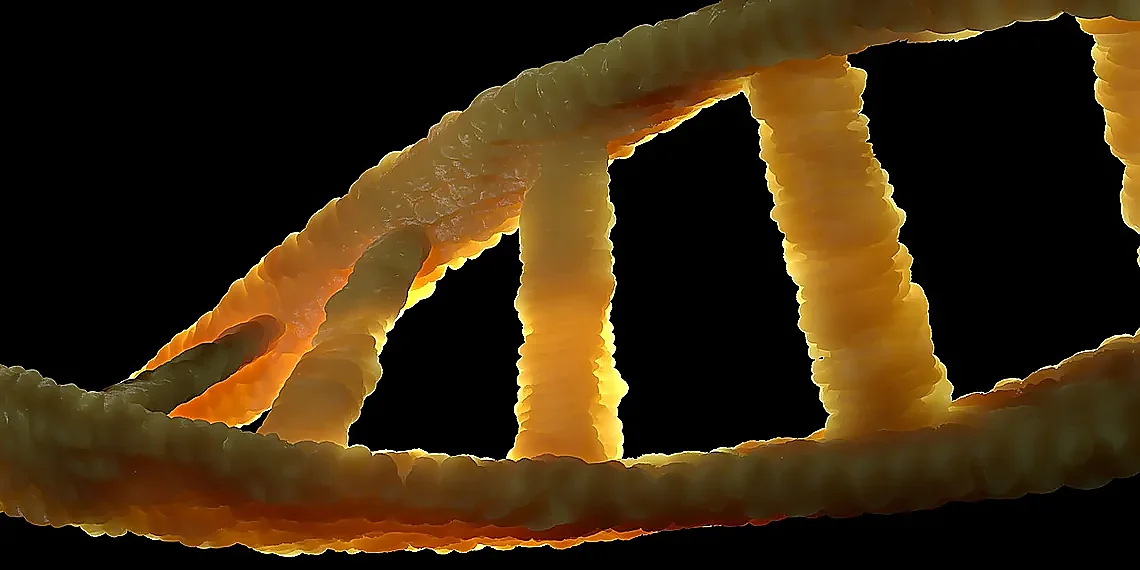
While widely recognized for her crucial work on DNA’s structure using X-ray diffraction, Rosalind Franklin’s scientific contributions extended far beyond this iconic achievement. Her expertise lay deeply within the realm of physical chemistry and crystallography, requiring a profound understanding of quantum mechanics to interpret the patterns she observed in molecular structures. The very principles governing how electrons scatter and diffract – a cornerstone of quantum theory – were essential for her analysis of everything from coal to DNA.
Franklin’s meticulous experimental techniques allowed her to generate incredibly detailed X-ray diffraction images, which revealed not just shapes but also information about the electron density within molecules. This provided invaluable insights into molecular bonding and vibrational modes, phenomena directly linked to quantum mechanical behavior. For example, her studies of coal’s structure, crucial for understanding its properties, relied heavily on applying quantum principles to interpret how electrons behaved within the complex carbon lattice.
Despite the undeniable importance of Franklin’s data – which provided critical evidence used by Watson and Crick – her contributions were often minimized during her lifetime. The subsequent Nobel Prize awarded solely to Watson, Crick, and Wilkins further cemented this unfortunate legacy. Recognizing Franklin’s sophisticated application of quantum mechanics principles and her profound impact on our understanding of molecular structures is vital for a more complete and accurate history of science.
Impact and Legacy
The rediscovery and celebration of these ‘Hidden Figures’ in quantum mechanics carries profound implications, extending far beyond simply correcting historical inaccuracies. Recognizing the substantial contributions of women like Emmy Noether, Lise Meitner, and Chien-Shiung Wu – often overshadowed or outright erased from mainstream accounts – fundamentally reshapes our understanding of scientific progress itself. It challenges the pervasive narrative that ‘boys’ physics’ was solely a male endeavor, revealing a richer, more complex history where groundbreaking discoveries were frequently made in collaboration, or even spearheaded, by women whose work went uncredited for decades.
This revised historical perspective isn’t just about fairness; it’s crucial for fostering a more inclusive and accurate scientific narrative. By highlighting the systemic biases that prevented these women from receiving due recognition, we can critically examine similar biases that may still exist within STEM fields today. Acknowledging their struggles and triumphs provides tangible examples of resilience and ingenuity in the face of adversity, offering invaluable lessons for aspiring scientists – particularly those from marginalized communities.
The impact resonates powerfully with future generations. Seeing women actively shaping the foundations of quantum mechanics—a field now poised to revolutionize computing, medicine, and materials science—provides an undeniable source of inspiration. It dismantles harmful stereotypes and demonstrates that success in STEM is not determined by gender but by talent, dedication, and perseverance. This visibility can be a catalyst for increased participation from underrepresented groups, diversifying the scientific workforce and enriching the field with new perspectives and approaches.
Ultimately, shining a light on these forgotten pioneers isn’t just about righting past wrongs; it’s an investment in the future of quantum mechanics itself. A more inclusive and equitable scientific community leads to broader participation, increased innovation, and ultimately, faster progress toward unlocking the full potential of this transformative field.
Correcting the Record: Why Representation Matters
For decades, the narrative surrounding quantum mechanics has largely excluded the vital contributions of marginalized groups, particularly women. While figures like Marie Curie are recognized, countless other brilliant scientists faced systemic barriers that prevented their work from gaining widespread acknowledgement. Correcting this historical record isn’t merely about fairness; it’s essential for a more complete and accurate understanding of how scientific breakthroughs occur. Ignoring these silenced voices diminishes the complexity of innovation and perpetuates harmful stereotypes suggesting science is solely a domain for certain demographics.
The lack of representation in STEM fields, particularly at leadership levels, can be directly linked to this historical erasure. When young women and individuals from underrepresented backgrounds don’t see themselves reflected in the stories of scientific pioneers, it creates an implicit bias that discourages them from pursuing these careers. Highlighting the accomplishments of women like Emmy Noether, whose groundbreaking work on symmetries fundamentally shaped theoretical physics despite facing institutional opposition, demonstrates that impactful contributions can arise from diverse perspectives and overcome adversity.
By actively seeking out and celebrating the ‘hidden figures’ of quantum mechanics – and science in general – we not only enrich our understanding of scientific history but also inspire a new generation to embrace STEM. Seeing role models who have navigated similar challenges fosters a sense of belonging and possibility, encouraging more young women and individuals from marginalized communities to pursue careers where their unique talents can contribute to future breakthroughs.
The Future of Quantum Exploration
The story of the ‘Hidden Figures’ of quantum mechanics – often overlooked women and people of color who made crucial contributions – isn’t just a historical correction; it’s a vital lesson for the future of quantum exploration. As we push the boundaries of understanding at the subatomic level, striving to build quantum computers and revolutionize fields from medicine to materials science, we risk repeating past mistakes if we don’t actively cultivate inclusivity. The initial dominance of a narrow demographic in theoretical physics created blind spots, potentially hindering progress by limiting perspectives on fundamental questions and experimental approaches.
Today’s quantum research faces immense challenges – entanglement remains stubbornly difficult to control, decoherence limits computation time, and translating theory into practical applications requires ingenious engineering. It’s increasingly clear that overcoming these hurdles won’t be achieved through a continuation of the same methodologies. Just as Katherine Johnson’s meticulous calculations were instrumental in NASA’s success, fresh perspectives are needed now to unlock the full potential of quantum mechanics. Imagine how different approaches to error correction, for example, might emerge from researchers with backgrounds vastly different from those traditionally represented within physics.
Diversity isn’t merely a matter of fairness; it is a catalyst for innovation itself. Individuals from underrepresented groups often bring unique problem-solving skills and challenge established assumptions – precisely the kind of disruption needed to break through scientific plateaus. A wider range of lived experiences can illuminate previously unseen connections, leading to novel experimental designs or entirely new theoretical frameworks in quantum mechanics. Actively seeking out these varied viewpoints is not just ethical; it’s strategically essential for accelerating discovery.
Looking ahead, fostering a truly diverse and inclusive quantum research ecosystem requires more than simply increasing representation. It demands dismantling systemic biases within academia and industry, providing equitable access to education and mentorship, and valuing contributions from all backgrounds. By embracing the lessons learned from correcting historical omissions, we can ensure that the future of quantum exploration is not only groundbreaking but also reflects the richness and ingenuity of humanity as a whole.
Diversity as a Catalyst for Innovation
Historically, the field of quantum mechanics has suffered from a significant lack of diversity, contributing to a narrow perspective on its challenges and potential solutions. The narrative often centered around a limited group of predominantly male researchers, overlooking crucial contributions from women and individuals from underrepresented backgrounds. As we now recognize – thanks in part to works like Margot Lee Shetterly’s ‘Hidden Figures’ – this exclusion wasn’t merely about fairness; it actively hindered scientific progress by suppressing alternative viewpoints and approaches that could have accelerated discoveries.
The very nature of quantum mechanics demands challenging established assumptions and thinking outside conventional frameworks. Diverse teams, bringing together individuals with varied cultural backgrounds, lived experiences, and educational pathways, are inherently better equipped to identify biases embedded within existing models and propose novel interpretations. For instance, perspectives from fields like art or music – often excluded from traditional STEM education – could offer fresh analogies and conceptual tools for understanding complex quantum phenomena.
Looking ahead, fostering inclusivity in quantum research isn’t just a matter of social responsibility; it’s a strategic imperative. By actively recruiting and supporting individuals from diverse backgrounds—including women, people of color, LGBTQ+ individuals, and those with disabilities—we unlock a wealth of untapped potential for innovation. This broadened perspective promises to not only accelerate breakthroughs in quantum computing, sensing, and communication but also ensure that these transformative technologies are developed responsibly and benefit all of humanity.
The story of women in science, particularly within a complex field like quantum mechanics, is far richer than we’ve been led to believe, and it’s critical that we actively work to bring these narratives into the light. Recognizing their achievements isn’t just about correcting historical omissions; it fundamentally reshapes our understanding of scientific progress itself, revealing how much innovation was potentially stifled by systemic biases. We must acknowledge the profound impact these individuals had, often operating in shadows cast by a predominantly male landscape and contributing meaningfully to foundational concepts. Their perseverance serves as an inspiration for aspiring scientists facing similar challenges today, demonstrating that brilliance transcends any artificial barriers. The principles underpinning quantum mechanics were advanced by minds of all backgrounds; limiting our perspective limits our potential. Let’s commit to fostering environments where diverse talents can flourish, ensuring a more equitable and vibrant future for scientific discovery. To delve deeper into these remarkable lives and their vital contributions, we wholeheartedly recommend exploring “Hidden Figures: The True Story of Four Black Women and the Space Race” – while focused on NASA, it powerfully illustrates the broader struggles and triumphs faced by women in STEM fields during this era and offers valuable context. For those eager to further expand their understanding of diversity within science, a wealth of resources exists online and in libraries; seeking out these materials is an essential step towards building a more inclusive scientific community.
Let’s carry this awareness forward, actively championing inclusivity and celebrating the often-overlooked pioneers who paved the way for future generations. The journey toward equitable representation in STEM is ongoing, requiring continuous effort and a willingness to challenge ingrained assumptions. By amplifying these forgotten voices, we not only honor their legacy but also inspire others to pursue their passions relentlessly, regardless of societal pressures or historical biases.
Continue reading on ByteTrending:
Discover more tech insights on ByteTrending ByteTrending.
Discover more from ByteTrending
Subscribe to get the latest posts sent to your email.