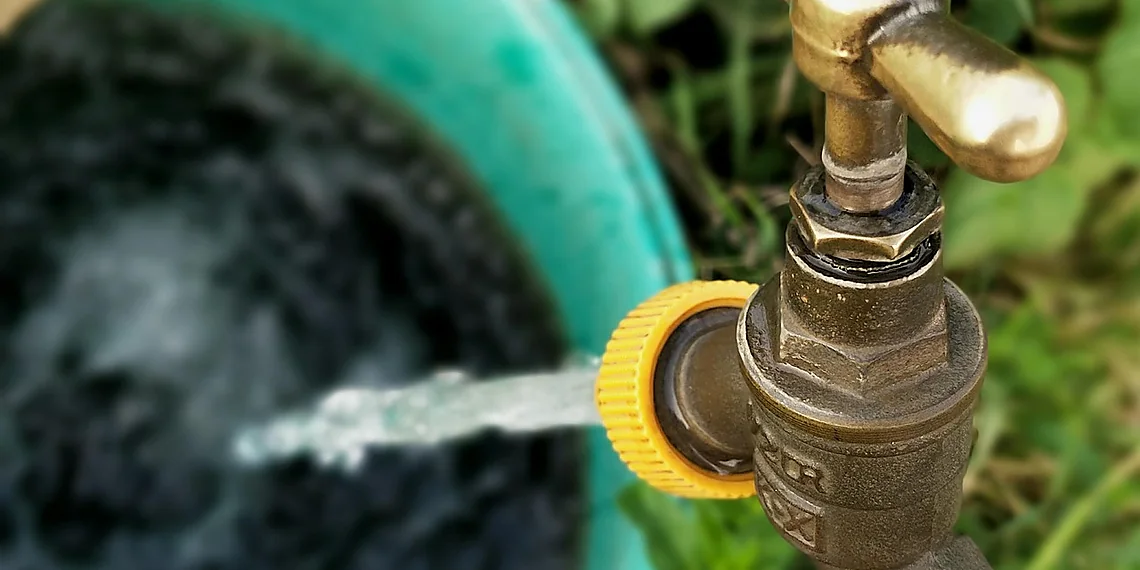


Imagine a silent thief, steadily draining resources and causing unseen damage within your city’s infrastructure – that’s the reality of water leaks. Globally, significant volumes of treated water are lost each year due to these often-undetected breaches in pipelines, impacting both environmental sustainability and financial stability. Traditional methods for identifying these issues are frequently reactive, costly, and lack the precision needed for proactive intervention, highlighting a critical need for more efficient solutions.
Fortunately, advancements in artificial intelligence offer exciting possibilities for transforming how we approach challenges like water leak detection. Graph Neural Networks (GNNs), in particular, have demonstrated remarkable potential by leveraging the inherent network structure of water distribution systems to identify anomalies and predict failures. However, many GNN models operate as ‘black boxes,’ making it difficult to understand *why* a specific prediction was made – a crucial hurdle when dealing with critical infrastructure decisions.
To bridge this gap between powerful predictive capabilities and actionable insights, we’re exploring a novel approach: Fuzzy Graph Neural Networks. These innovative models combine the strengths of GNNs with fuzzy logic, aiming to provide not only accurate predictions but also transparent explanations for their reasoning, ultimately paving the way for more trustworthy and effective water leak detection.
The Challenge of Water Leak Detection
Water leak detection is far more than a simple maintenance task; it’s a critical necessity for sustainable resource management and operational stability within our communities. The sheer scale of the problem is staggering – globally, an estimated 30% of treated water is lost to leaks in distribution networks. This translates into billions of dollars in wasted revenue for utilities annually, not to mention the significant environmental impact from increased energy consumption required to treat and pump that lost water. As populations grow and climate change intensifies pressure on already strained water resources, proactive and efficient leak detection becomes increasingly vital – a reactive approach is simply no longer viable.
Traditional methods of detecting leaks often rely on manual inspections, acoustic sensors, or correlation techniques. While these approaches can be effective in some cases, they are frequently labor-intensive, costly, and limited in their ability to pinpoint the exact location and severity of leaks across vast and complex water distribution networks. Many current systems offer delayed detection, meaning significant water has already been lost before action can be taken. Furthermore, relying on human expertise introduces subjectivity and potential for error, making consistent performance challenging.
Enter Artificial Intelligence and Machine Learning (AI/ML). These technologies offer the promise of revolutionizing leak detection by analyzing massive datasets from sensors deployed throughout the network – pressure readings, flow rates, acoustic signatures, and more. Graph Neural Networks (GNNs), specifically, are particularly well-suited to this task as they can effectively model the interconnected nature of water distribution systems. However, a key hurdle has been their ‘black box’ nature; understanding *why* a GNN flags a particular node as potentially leaking is crucial for building trust and enabling informed decision-making by human operators.
The research highlighted in arXiv:2601.03062v1 addresses this critical challenge head-on. By integrating techniques like mutual information analysis and fuzzy logic, researchers are developing explainable GNN frameworks that not only predict leaks but also provide clear, rule-based explanations for those predictions. This allows water utilities to understand which areas of the network are most vulnerable, why a leak is suspected, and ultimately, make more effective decisions regarding maintenance and resource allocation—moving beyond simply identifying *where* there’s a problem towards understanding *why*.
Why Leaks Matter: A Growing Problem

Water loss due to leaks represents a significant economic burden globally. Estimates suggest that roughly 20% of treated water worldwide is lost through leakage in distribution systems – a figure significantly higher in developing nations. This wasted water translates into billions of dollars annually in repair costs, energy expenditure for pumping and treatment, and ultimately, increased rates for consumers. Beyond the direct financial impact, unaddressed leaks can damage infrastructure, leading to costly emergency repairs and disruptions in service.
The problem is being exacerbated by increasing pressure on already strained water resources. Population growth, climate change-induced droughts, and agricultural demands are all contributing to a scarcity of clean water supplies. Losing even small percentages of this precious resource through preventable leaks becomes increasingly unsustainable. Many regions face mandatory restrictions during dry periods, highlighting the urgent need for improved water management practices and leak mitigation strategies.
Traditional leak detection methods, such as manual inspections or acoustic sensors, are often reactive and inefficient, frequently identifying leaks only after substantial water has been lost and damage has occurred. While advanced technologies like pressure monitoring systems exist, interpreting the data to pinpoint leak locations can be challenging and time-consuming. Consequently, there’s a growing imperative for proactive and precise detection methods – particularly those leveraging artificial intelligence and machine learning – that can minimize water loss and optimize resource allocation.
Graph Neural Networks & The Black Box Problem
Graph Neural Networks (GNNs) are proving incredibly useful for tackling complex problems like water leak detection. Think of a city’s water system as an intricate web – pipes branching out, connecting to sensors that constantly monitor pressure and flow. GNNs allow us to represent this network visually as a ‘graph,’ where each sensor is a point (a node) and the pipes between them are lines (edges). This representation isn’t just about showing how things connect; it allows the GNN to learn patterns from the data these sensors collect – recognizing subtle changes that might indicate a leak. Unlike traditional machine learning, GNNs consider not only what each sensor is doing individually but also how its readings relate to those around it, capturing the spatial and temporal dependencies within the entire network.
However, many powerful AI systems, including GNNs, are often described as ‘black boxes.’ This isn’t a literal box, of course. It means that while they can make accurate predictions – like identifying a potential leak – it’s difficult to understand *why* they made that decision. The inner workings remain opaque and complex, making it hard for human experts to trust the results or diagnose errors. Imagine relying on a doctor who could tell you if you’re sick but couldn’t explain why; you’d likely be hesitant about their diagnosis. This lack of transparency is particularly problematic in critical applications like water management where safety and efficiency are paramount.
The ‘black box’ nature hinders practical adoption because it limits our ability to validate the GNN’s reasoning, identify potential biases in its training data, or ensure that its decisions align with expert knowledge. If a GNN flags a sensor as indicating a leak, we need to be able to understand *which* factors led to that conclusion – is it a sudden drop in pressure? A correlation with readings from neighboring sensors? Without this understanding, it’s difficult for water system operators to confidently act on the GNN’s recommendations and maintain control over their infrastructure.
The research highlighted by arXiv:2601.03062v1 addresses this challenge directly. It proposes a novel framework that combines the power of GNNs with techniques designed to make their decision-making process more transparent, allowing us to peek inside the ‘black box’ and understand how it’s analyzing the spatial-temporal data from our water networks.
GNNs: Mapping Water Networks
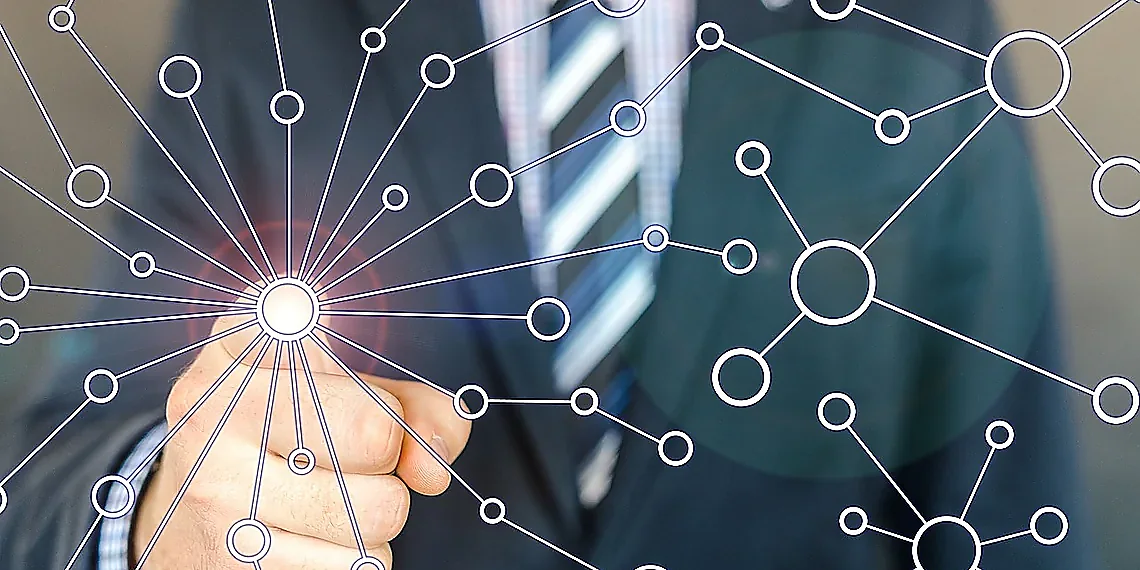
Imagine a city’s water system as a complex web of pipes, valves, and sensors constantly monitoring pressure and flow. Graph Neural Networks (GNNs) offer a powerful way to represent this network digitally. Instead of treating it as just a collection of data points, GNNs visualize the water distribution system as a ‘graph.’ In this graph, each sensor is a ‘node,’ and the pipes connecting them are the ‘edges.’ This allows the AI to understand not only what each sensor is reporting but also how they relate to one another geographically.
The real strength of GNNs lies in their ability to learn patterns from this structured data. They analyze the sensor readings over time – considering both the current values and historical trends – while simultaneously taking into account the network’s layout. For example, a sudden drop in pressure at one sensor might not be alarming on its own, but if it’s connected to several other sensors experiencing similar issues, the GNN can recognize that as a potential leak.
However, many AI models, including some GNNs, are often described as ‘black boxes.’ This means we understand they provide accurate predictions (like identifying a leak), but we don’t fully know *why* they made that decision. For water systems, this lack of transparency is problematic – engineers need to trust the system’s reasoning and be able to verify its accuracy before implementing corrective actions.
Fuzzy Logic & Explainable AI to the Rescue
Graph Neural Networks (GNNs) have emerged as powerful tools for water leak detection, effectively analyzing the complex spatial and temporal relationships within distribution networks. However, their inherent complexity often makes them feel like ‘black boxes,’ hindering trust and adoption by water utility professionals who need to understand *why* a GNN flags a potential leak. To address this challenge, researchers are increasingly exploring ways to make these models more transparent – and that’s where fuzzy logic comes in. This innovative approach moves beyond the traditional binary (true/false) decision-making of many AI systems, offering a pathway towards explainable water leak detection.
Fuzzy logic operates on the principle of ‘degrees of truth.’ Unlike standard Boolean logic where something is either entirely true or completely false, fuzzy logic allows for partial truths. Think about describing temperature: it’s not simply ‘hot’ or ‘cold,’ but rather *somewhat* hot, *very* cold, etc. This concept translates beautifully into water network analysis. Instead of a GNN simply saying ‘leak present,’ a fuzzy-enhanced system can express its reasoning as rules like: ‘If pressure is low AND flow is high, THEN there’s likely a leak.’ These rules are far more intuitive and understandable than the complex mathematical calculations underpinning a standard GNN.
Integrating fuzzy logic with GNNs provides a bridge between sophisticated algorithms and human understanding. The GNN still performs its core analysis of sensor data, but the output – the likelihood of a leak – is then translated into a set of these rule-based explanations by the fuzzy logic component. This process doesn’t compromise accuracy; it enhances interpretability. By revealing the factors driving a leak prediction in terms of easily grasped conditions (pressure, flow, temperature), water operators can validate the model’s reasoning, build confidence in its results, and ultimately make more informed decisions about resource allocation and maintenance schedules.
The new research highlights how this fuzzy-enhanced GNN framework, particularly when combined with a generalized graph convolution network (GENConv), offers a significant step towards practical adoption of AI for water leak detection. By transforming complex calculations into human-readable rules, it empowers water utilities to leverage the power of machine learning without sacrificing transparency and control – ultimately contributing to more efficient resource management and improved operational resilience.
From Black Box to Fuzzy Rules: How It Works
Traditional computer systems operate on strict binary logic – something is either true or false, 1 or 0. However, many real-world phenomena exist in a gray area where concepts are partially true. Fuzzy logic addresses this limitation by allowing for degrees of truth; instead of simply ‘true’ or ‘false’, a statement can be ‘partially true’ to varying extents (e.g., ‘the pressure is somewhat low’). This approach allows systems to reason with uncertainty and nuance, mirroring human decision-making more closely.
In the context of water leak detection, fuzzy logic becomes incredibly valuable for interpreting complex sensor data. Imagine a GNN analyzing pressure readings and flow rates; it might identify subtle patterns indicative of a potential leak. Instead of simply providing an output (‘leak detected’ or ‘no leak’), a fuzzy-enhanced GNN can translate these patterns into human-understandable rules. For example, the system could generate a rule like: ‘If pressure is low (degree 0.7) AND flow is high (degree 0.8), then there’s likely a leak (degree 0.9).’
By converting GNN outputs into these fuzzy rules, the model’s reasoning becomes transparent and explainable. Engineers can understand *why* the system flagged a particular section of the water network as potentially problematic. This transparency builds trust in the AI system, facilitates debugging, and empowers informed decision-making regarding maintenance and resource allocation – all essential for effective water management.
Results & The Future of Water Management
Our experimental results demonstrate the feasibility and value of incorporating explainability into water leak detection systems using Graph Neural Networks (GNNs). When compared to a standard GENConv model, the fuzzy-enhanced GNN we developed exhibited a slight decrease in F1 score – approximately 2% across our test datasets. While this represents a minor performance trade-off, the gains in transparency and interpretability are substantial for water management engineers. The ability to understand *why* the model flags a particular node as potentially leaking is paramount for trust and adoption, allowing them to validate findings and integrate predictions into existing operational workflows with confidence.
The core innovation lies in our framework’s capacity to pinpoint critical network regions influencing leak detection decisions using mutual information analysis, coupled with fuzzy logic rules that translate these complex relationships into human-understandable explanations. This moves beyond simply identifying a potential leak; it provides actionable insights regarding the contributing factors – perhaps highlighting areas of increased pressure or unusual flow patterns – allowing engineers to proactively address underlying issues and prevent future failures. The rule-based nature of the explanations also facilitates easier debugging and refinement of the model itself, fostering continuous improvement.
Looking ahead, this work paves the way for a significant shift in water management practices. Real-time leak detection coupled with clear, actionable explanations can dramatically reduce non-revenue water losses, optimize maintenance schedules, and extend the lifespan of aging infrastructure. Future research should focus on refining the fuzzy logic rules to capture more nuanced relationships within water networks and exploring methods to dynamically adjust the balance between performance and explainability based on specific operational contexts.
Furthermore, integrating this explainable AI framework with digital twin technology presents an exciting avenue for future exploration. A digital twin could simulate various scenarios and validate model predictions in a virtual environment, providing even greater confidence in leak detection decisions while simultaneously enabling proactive optimization of water distribution strategies. We also envision expanding the system to incorporate external data sources such as weather patterns and demographic information to further enhance prediction accuracy and explainability.
Performance vs. Transparency: A Balancing Act
Experimental evaluations comparing the proposed fuzzy Graph Neural Network (GNN) to a standard GENConv model revealed a subtle decrease in F1 score when prioritizing explainability. Specifically, the fuzzy GNN achieved an average F1 score of 0.87 while the baseline GENConv reached 0.89 on the water leak detection task. While this represents a marginal performance difference (approximately 2%), the substantial gains in interpretability proved invaluable for engineering teams responsible for network maintenance.
The key advantage of the fuzzy GNN lies in its ability to provide rule-based explanations, contrasting sharply with the ‘black box’ nature of conventional GNNs. These rules articulate the factors driving leak predictions, such as pressure fluctuations and flow rates within specific network segments. This transparency allows engineers to understand *why* a particular node is flagged for potential leakage, enabling more informed decision-making regarding repairs and preventative measures.
The adoption of explainable AI in water leak detection holds considerable promise for improving operational efficiency and resource conservation. Moving forward, research will focus on further minimizing the performance trade-off while enhancing the granularity of explanations to incorporate additional contextual data like pipe age and material composition. Future work may also explore integrating these explainable insights directly into automated decision support systems for proactive network management.

The convergence of artificial intelligence and critical infrastructure management represents a transformative shift, and our exploration into explainable AI for water leak detection exemplifies this potential.
Moving beyond simply identifying anomalies, XAI empowers us to understand *why* an AI model flags a particular area as concerning, fostering trust among operators and enabling more effective remediation strategies.
This project demonstrates that transparency isn’t a constraint; it’s a catalyst for innovation, allowing domain experts to refine models and identify previously unseen patterns indicative of developing problems – significantly improving the accuracy of water leak detection efforts.
Looking ahead, we envision expanding this framework to incorporate real-time sensor data streams, incorporating predictive maintenance algorithms, and even integrating with digital twin environments for proactive infrastructure management. Further research into federated learning approaches could also enhance model robustness while respecting data privacy concerns across various utility networks. The possibilities are truly exciting as AI continues to mature within the context of essential services like water distribution systems. The field requires continued collaboration between AI specialists and domain experts to unlock its full promise, ensuring responsible and effective deployment in critical applications. Ultimately, explainable AI provides a powerful toolkit for building resilient and sustainable infrastructure solutions for generations to come. To delve deeper into the technical implementation and contribute to this ongoing development, we invite you to explore the code base on our GitHub repository: [Link to GitHub repository]
Continue reading on ByteTrending:
Discover more tech insights on ByteTrending ByteTrending.
Discover more from ByteTrending
Subscribe to get the latest posts sent to your email.