



For decades, astronomers have gazed into the cosmos, piecing together a hazy picture of how our home galaxy, the Milky Way, came to be. Now, the James Webb Space Telescope is rewriting that narrative with unprecedented clarity and detail. Its infrared gaze pierces through cosmic dust clouds, revealing previously unseen structures and offering tantalizing clues about the universe’s earliest days. This isn’t just a new image; it’s a revolution in how we understand galaxy formation itself. The data pouring in from Webb is fundamentally reshaping our models of how galaxies like ours assemble over billions of years, finally allowing us to probe deeper into Milky Way origins than ever before possible. We’re on the cusp of understanding not only our own galactic history but also unlocking secrets about countless other galaxies throughout the universe. Prepare to journey back in time and witness a new era of astronomical discovery.
The initial findings are particularly exciting because they suggest that the Milky Way’s formation wasn’t a straightforward, linear process as previously believed. Webb’s observations hint at complex interactions and mergers with smaller galaxies – galactic building blocks – that occurred throughout its evolution. This new perspective allows scientists to search for ‘Milky Way twins,’ galaxies that share similar developmental histories and offer vital insights into the processes that shaped our own cosmic neighborhood. Join us as we delve into these discoveries, exploring the implications for our understanding of the universe’s grand design.
The ‘Milky Way Twins’ – A Cosmic Time Machine
The James Webb Space Telescope (JWST) isn’t just showing us stunning images of distant nebulae; it’s offering a profound glimpse into the past – specifically, the very early history of galaxies like our own Milky Way. By observing incredibly distant galaxies, we’re essentially looking back in time, because light takes billions of years to reach us from those vast distances. These observations are allowing astronomers to piece together an unprecedented picture of how the Milky Way formed and evolved over cosmic timescales.
A key element of this research focuses on what scientists have dubbed ‘Milky Way twins’ – galaxies that existed billions of years ago and share striking similarities with our own galaxy at earlier stages in its development. These aren’t perfect replicas, but they possess characteristics like similar mass, star formation rates, and even the presence of early galactic structures we believe were crucial for the Milky Way’s eventual shape. Identifying these ‘twins’ requires careful analysis; astronomers look for galaxies exhibiting a central bulge of stars surrounded by a rotating disk, much like our own galaxy’s structure.
The significance of finding these distant relatives lies in their ability to act as cosmic time machines. Studying them allows us to witness the processes that likely shaped the Milky Way firsthand – from initial mergers with smaller galaxies to the ongoing formation of new stars. These early galactic ‘snapshots’ help refine our models and theories about how spiral galaxies like ours assemble, providing invaluable clues to understanding our own place in the universe.
What are ‘Milky Way Twins’?
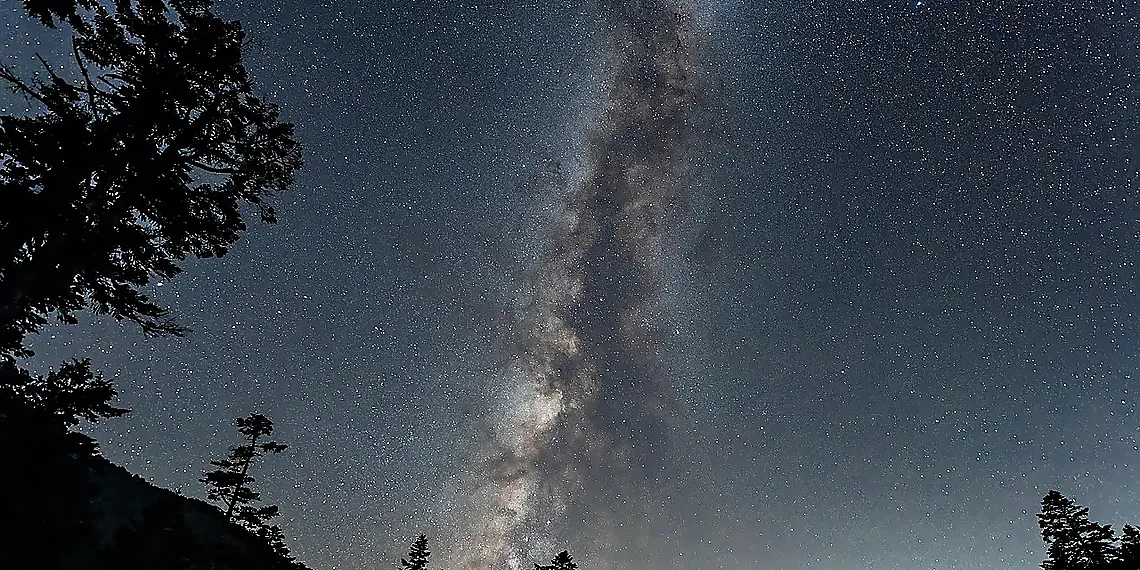
The term ‘Milky Way twins’ refers to galaxies identified by astronomers as bearing striking similarities to the Milky Way galaxy during its formative years – a period roughly 10-11 billion years ago. These aren’t exact replicas, but rather galaxies exhibiting characteristics that suggest they represent snapshots of our own galactic evolution at an earlier point in cosmic time. Observing these distant galaxies allows scientists to essentially look back in time and study the conditions that shaped the Milky Way we see today.
Identifying a ‘Milky Way twin’ isn’t arbitrary. Astronomers use specific criteria, primarily focusing on stellar mass, star formation rate, and morphology (shape). Galaxies considered twins typically have similar masses to what scientists estimate the Milky Way possessed billions of years ago – around 20% of its current mass. They also exhibit high rates of star formation, indicative of a more active period of galactic growth, and often display irregular shapes or ongoing mergers, reflecting the chaotic processes that likely occurred during the early Milky Way’s development.
These ‘Milky Way twins’ are invaluable tools for understanding our galaxy’s origins. By studying their properties – things like the abundance of certain elements, the distribution of stars, and the presence of gas clouds – astronomers can piece together a more complete picture of how the Milky Way assembled itself over billions of years. The James Webb Space Telescope’s advanced capabilities are proving crucial in identifying and characterizing these distant galactic relatives with unprecedented clarity.
Webb’s Breakthrough: Peering Through the Cosmic Fog
For centuries, astronomers have gazed at the Milky Way and pondered its origins – how did our majestic spiral galaxy come to be? While theoretical models existed, direct observation of the Milky Way’s formative years has been severely hampered by a thick curtain of dust and gas that obscures our view. Previous telescopes, relying primarily on visible light, simply couldn’t penetrate this cosmic fog. However, the James Webb Space Telescope (JWST) is revolutionizing our understanding, and recent research leveraging its unparalleled capabilities is finally offering unprecedented glimpses into the Milky Way’s infancy.
The key to Webb’s breakthrough lies in its infrared vision. Visible light gets scattered and absorbed by dust, but infrared radiation, with its longer wavelengths, can pass through relatively unimpeded. This allows Webb – specifically utilizing instruments like NIRCam (Near-Infrared Camera) and MIRI (Mid-Infrared Instrument) – to peer directly into the early Universe, revealing galaxies that existed billions of years ago when the Milky Way was still coalescing from smaller building blocks. These observations are essentially time travel, allowing scientists to witness a period previously shrouded in mystery.
The recent study focuses on identifying “Milky Way twins” – galaxies similar in size and mass to our own galaxy at different points in cosmic history. By studying these distant analogs, astronomers can piece together the likely processes that shaped the Milky Way’s evolution. Webb’s ability to resolve details within these early galaxies is providing crucial data about their star formation rates, metallicities (the abundance of elements heavier than hydrogen and helium), and overall structure – all critical factors in understanding how our own galaxy assembled over billions of years.
Ultimately, this research represents a significant leap forward in our quest to understand the Milky Way origins. By overcoming the limitations of previous telescopes and harnessing the power of infrared observation, Webb is not only revealing the past but also refining our models for galaxy formation, offering invaluable insights into the very processes that led to the creation of our cosmic home.
The Power of Infrared Vision

For centuries, astronomers have sought to understand the Milky Way’s origins – where it came from and how it evolved into the spiral galaxy we observe today. However, previous telescopes faced a significant hurdle: vast clouds of dust and gas that obscure our view of the early universe. Visible light, the kind our eyes can see, is easily scattered by these interstellar particles, effectively creating a cosmic fog that hides the building blocks of galaxies like our own. Understanding how galaxies formed in the distant past required a revolutionary new approach.
The James Webb Space Telescope (JWST) overcomes this limitation through its powerful infrared vision. Infrared light has longer wavelengths than visible light, allowing it to penetrate these dust clouds and reveal what lies beyond. JWST’s suite of instruments, including the Near-Infrared Camera (NIRCam) and the Mid-Infrared Instrument (MIRI), are specifically designed to detect this faint infrared radiation emitted by early galaxies. NIRCam captures images in near-infrared wavelengths, while MIRI observes at longer mid-infrared wavelengths, providing complementary data about the temperature and composition of these distant objects.
By analyzing the light from ‘Milky Way twins’ – smaller, less evolved galaxies resembling our own ancestors – observed billions of years ago, researchers are piecing together a more complete picture of how the Milky Way assembled. These observations show that early galaxy formation was a chaotic process involving frequent mergers and interactions with other galaxies, ultimately leading to the majestic spiral structure we see today.
Unraveling the Milky Way’s Turbulent Past
The James Webb Space Telescope (JWST) is rewriting our understanding of the Milky Way’s origins, revealing a turbulent past far more active than previously imagined. Recent observations focused on galaxies remarkably similar to our own – dubbed “Milky Way twins” – during the early Universe are providing unprecedented detail about how our galaxy came to be. These aren’t just snapshots; they’re glimpses into formative periods when smaller galaxies collided and coalesced, ultimately building the majestic spiral we observe today.
A key finding is the confirmation of a ‘violent youth’ for the Milky Way and its progenitors. Early galaxies weren’t serene islands in space; they were constantly undergoing mergers with other galaxies, triggering intense bursts of star formation known as starbursts. JWST’s infrared capabilities allow astronomers to peer through cosmic dust clouds that obscure visible light, revealing previously hidden regions of these merging galaxies where stars are being born at astonishing rates. The data suggests these merger events weren’t isolated incidents but a continuous process spanning billions of years.
Previously, models often assumed mergers were less frequent or less impactful than what JWST is now showing. The telescope’s observations detail the precise timing and nature of these galactic collisions with greater accuracy than ever before. We are seeing not only *that* mergers occurred, but also how they affected star formation rates – sometimes dramatically accelerating them, other times disrupting nascent structures. This refined understanding challenges existing cosmological simulations and necessitates a reevaluation of our galaxy evolution models.
Ultimately, these observations paint a picture of the Milky Way’s ancestry as a complex tapestry woven from countless smaller galaxies, each contributing to its final form. By studying these distant ‘Milky Way twins,’ astronomers are effectively looking back in time to witness the very processes that shaped our galactic home and providing invaluable clues about the evolution of galaxies throughout the Universe.
Mergers & Starbursts: A Violent Youth
The early universe was a far more chaotic place than it is today, and new data from the James Webb Space Telescope (JWST) is painting an increasingly vivid picture of this turbulent period for galaxies like our own Milky Way. Current models suggest that most large galaxies didn’t form gradually through slow accretion but rather through frequent mergers with smaller galaxies and intense bursts of star formation known as ‘starbursts.’ These events dramatically altered a galaxy’s shape, size, and composition, effectively laying the groundwork for its later evolution.
JWST’s infrared capabilities allow astronomers to peer through dust clouds that obscure visible light, revealing previously unseen details about these early galaxies. Recent observations of galaxies resembling Milky Way ‘twins’ – those with similar mass and structure observed at a time when the universe was only a few billion years old – are providing strong support for this merger-driven formation scenario. These twin galaxies often exhibit signs of recent or ongoing mergers, including tidal tails (streams of stars pulled from interacting galaxies) and unusually high star formation rates.
Crucially, JWST’s data is allowing scientists to refine the timeline of these events. Earlier observations had suggested that major Milky Way-like mergers occurred much earlier in the universe’s history than previously thought. Now, with more precise measurements of distances and redshifts (a measure of how fast a galaxy is receding), researchers are beginning to piece together a more nuanced understanding of when and how frequently these mergers happened, and what impact they had on the chemical enrichment – the process by which heavier elements are created and distributed within galaxies.
Future Implications & The Quest for Cosmic Origins
The revelation of the Milky Way’s origins through Webb Telescope observations isn’t just about understanding our galactic home; it opens a window into the broader processes that shaped galaxies across the cosmos. By studying these early ‘Milky Way twins,’ astronomers are gaining invaluable insights into how galaxies assemble, merge, and evolve over billions of years. The detailed data reveals a chaotic past – a period of frequent collisions and mergers – which ultimately led to the spiral structure we observe today. This paints a picture that challenges previous simpler models of galaxy formation, suggesting a more dynamic and violent early universe than previously imagined.
Crucially, these findings aren’t unique to our Milky Way. The principles governing its development likely apply to countless other galaxies throughout the observable universe. While each galaxy has its own distinct history, the underlying mechanisms – gravitational interactions, star formation bursts triggered by mergers, and the gradual settling into a stable form – are likely universal. Webb’s ability to peer back in time allows us to witness these formative events playing out across vast distances, essentially providing a cosmic laboratory for studying galaxy evolution on an unprecedented scale.
Looking ahead, future Webb observations will focus on identifying even more distant and earlier ‘Milky Way progenitors,’ pushing the boundaries of our observational reach. Projects like COSMOS-Web are specifically designed to survey large areas of the sky in infrared light, revealing faint galaxies at incredibly high redshifts (representing very early epochs). Furthermore, combined observations with other telescopes – ground-based observatories and space-based missions – will allow astronomers to build a more complete picture, incorporating data on gas dynamics, dark matter distribution, and the chemical composition of these nascent galaxies. The quest for understanding cosmic origins is far from over; Webb’s discoveries are merely setting the stage for even more profound revelations.
Ultimately, this research underscores the interconnectedness of everything we observe in the universe. Understanding the Milky Way’s evolution provides a crucial benchmark against which to compare other galactic systems and refine our overall models of cosmic structure formation. The ongoing exploration facilitated by instruments like Webb promises not only to illuminate the past but also to fundamentally reshape our understanding of the present – revealing the universal laws that govern the grand tapestry of galaxies we see stretching across the cosmos.
Beyond the Milky Way: A Universal Story?
The recent discoveries regarding the Milky Way’s origins, achieved through James Webb Space Telescope (JWST) observations of early galaxies resembling our own, offer a compelling glimpse into a universal process. These ‘Milky Way twins,’ observed as they were forming billions of years ago, exhibit strikingly similar characteristics to what astronomers believe characterized the nascent stages of our galaxy. This suggests that the chaotic mergers and accretion events responsible for the Milky Way’s structure – including its central bulge and halo – may be common occurrences in the early universe across a wide range of galaxies.
Understanding these formative processes isn’t just about piecing together the history of the Milky Way; it provides a crucial framework for interpreting observations of other galaxies. If we can identify analogous evolutionary pathways in distant galaxies, we can begin to build a more comprehensive model of galaxy formation applicable beyond our local cosmic neighborhood. The similarities observed so far point towards a set of fundamental physical laws and initial conditions that govern how galaxies assemble over time.
Future JWST projects are already planned to further investigate these phenomena. Researchers intend to utilize Webb’s unparalleled infrared capabilities to examine even more distant and earlier galaxies, searching for additional ‘Milky Way twins’ and refining our understanding of the universal rules shaping galactic evolution. Combined with data from other observatories like the Extremely Large Telescope (ELT), scientists hope to create a detailed census of galaxy formation across cosmic time.
The James Webb Space Telescope has fundamentally reshaped our perspective on the cosmos, delivering unprecedented clarity into the early universe and dramatically altering established timelines for galactic formation.
Its observations are providing crucial data points, allowing scientists to refine models of how galaxies like our own assembled over billions of years – a monumental shift in understanding Milky Way origins.
We’ve seen firsthand how Webb’s infrared capabilities pierce through cosmic dust clouds, revealing previously hidden stellar nurseries and the building blocks of ancient galaxies, confirming many theoretical predictions while simultaneously presenting new mysteries for us to unravel.
The implications extend far beyond simply charting the past; they inform our understanding of planetary formation, the distribution of elements throughout the universe, and ultimately, our place within this vast expanse of space and time. These discoveries are not just about looking back; they’re about building a more complete picture of everything around us now and what’s to come. The work is far from over – Webb continues its mission, promising even more groundbreaking revelations in the years ahead. To delve deeper into these incredible findings and explore upcoming Webb telescope missions, we encourage you to visit NASA’s website or search for related articles on ByteTrending; there’s a universe of knowledge waiting to be explored!
Continue reading on ByteTrending:
Discover more tech insights on ByteTrending ByteTrending.
Discover more from ByteTrending
Subscribe to get the latest posts sent to your email.







