
Manufacturing processes are marvels of precision, yet even slight deviations can lead to costly defects and production delays. Identifying these subtle issues – a task known as anomaly detection – is crucial for maintaining quality control and optimizing efficiency in modern factories. Traditional methods often struggle with the complexity of real-world scenarios, relying on patterns that can be easily fooled by unexpected events.
A significant hurdle in current approaches lies in their ‘causal blindness’; they excel at spotting differences but lack a true understanding of *why* those differences occur. This means false positives are frequent, requiring human intervention to confirm genuine problems and potentially halting production unnecessarily. Imagine an AI flagging a minor temperature fluctuation as a critical failure – frustrating for engineers and disruptive to the workflow.
Now, meet Causal-HM, a groundbreaking new AI model that’s changing the game. By incorporating physical understanding into its learning process, Causal-HM doesn’t just detect anomalies; it reasons about their underlying causes, leading to dramatically improved accuracy and reduced false alarms. Initial results demonstrate state-of-the-art performance in identifying manufacturing flaws, offering a powerful new tool for industrial automation.
The Challenge of Multimodal Anomaly Detection
Modern manufacturing is increasingly reliant on complex, interconnected systems – think robotic welding, 3D printing, or automated assembly lines – where even minor deviations from the norm can lead to costly defects and production delays. Anomaly detection, identifying these unusual occurrences before they escalate into full-blown problems, has become absolutely crucial for maintaining quality and efficiency. Traditional quality control methods often rely on manual inspection, which is slow, subjective, and prone to human error. AI-powered anomaly detection offers a significant leap forward by automating this process, providing real-time feedback, reducing waste, and ultimately enhancing product reliability – imagine catching a subtle flaw in a 3D print before an entire batch needs to be scrapped.
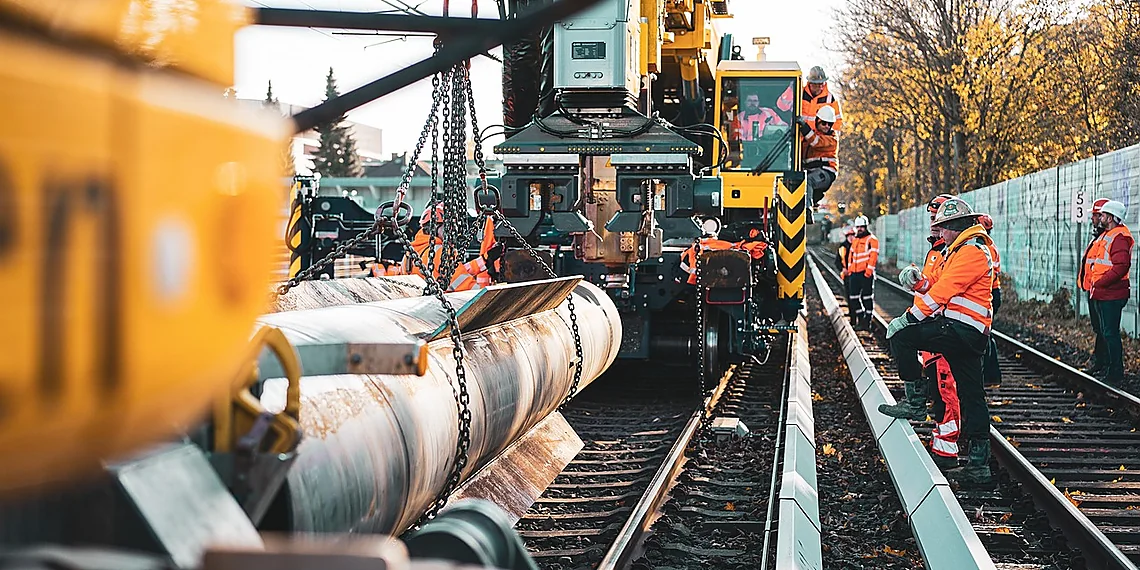
However, the rise of sophisticated manufacturing processes has also introduced new challenges for anomaly detection. Today’s systems generate vast amounts of data from diverse sources: high-resolution video streams showing robotic movements, audio recordings capturing machine sounds, and sensor readings monitoring temperature, pressure, and vibration. This ‘multimodal’ data represents a rich tapestry of information, but existing anomaly detection algorithms often struggle to effectively integrate it. Many approaches treat all these modalities as equal contributors, failing to account for the underlying physical relationships that govern how process actions (like the robot’s welding path) influence final results (the quality of the weld itself).
The problem is further compounded by the inherent differences in data characteristics – video presents a high-dimensional visual landscape while sensors provide comparatively low-dimensional numerical signals. This ‘heterogeneity gap’ can easily drown out vital contextual information, leading to false positives or, more critically, missed anomalies. For example, a slight change in weld voltage (a sensor signal) might be insignificant on its own but, when considered alongside changes in the robot’s movement captured by video, could indicate an impending defect that would otherwise go unnoticed.
Ultimately, current anomaly detection systems often lack ‘causal understanding’ – they can identify *that* something is unusual, but not necessarily *why*. This limits their ability to provide actionable insights and prevent future occurrences. A truly effective system needs to understand the generative process; how different factors interact to produce a final product. Addressing this causal blindness is key to unlocking the full potential of AI-powered quality control in modern manufacturing.
Why Manufacturing Needs AI-Powered Quality Control

Modern manufacturing processes are increasingly complex, involving intricate machinery, robotic systems, and sophisticated materials. These advancements, while boosting production capabilities, also introduce new avenues for defects to arise. Traditional quality control methods often rely on manual inspection or rule-based systems which struggle to keep pace with the speed and complexity of modern lines. Even minor anomalies—a slight vibration in a robotic arm, an inconsistent weld bead, or a subtle discoloration on a finished part—can cascade into significant issues like product recalls, wasted materials, and ultimately, decreased customer satisfaction.
The implementation of AI-powered quality control offers substantial benefits across the board. Automated anomaly detection systems can significantly increase efficiency by identifying defects in real time, allowing for immediate corrective action and minimizing scrap rates. This translates directly to reduced operational costs through lower material consumption and labor expenses. Furthermore, early detection prevents defective products from reaching consumers, bolstering brand reputation and improving overall product reliability – a critical factor in maintaining competitiveness.
Consider robotic welding as an example: variations in voltage, current, gas flow, or even subtle changes in the robot’s trajectory can lead to weld defects like porosity, cracks, or incomplete fusion. AI systems analyzing video feeds alongside sensor data (temperature, pressure) can pinpoint these anomalies far earlier and more consistently than human inspectors. Similarly, in composite material manufacturing, microscopic voids or delaminations, often invisible to the naked eye, can compromise structural integrity; AI-powered image analysis provides a non-destructive means of identifying such flaws.
Causal-HM: A New Approach to Understanding Data Relationships
Traditional anomaly detection in manufacturing often struggles with a fundamental limitation: ‘causal blindness.’ Many existing methods treat all available data—whether it’s video footage of a robotic arm welding, audio recordings of the process, or sensor readings from various machines—as equally important features. They essentially blend these diverse inputs together without considering that the *process* (the actions and conditions during manufacturing) directly *causes* the *result* (the quality of the finished product). This lack of understanding can lead to false positives and a failure to pinpoint the true root cause of defects.
Imagine trying to diagnose why a cake didn’t rise properly. Would you simply combine all information—ingredient quantities, oven temperature readings, even background music playing during baking—without considering how each ingredient interacts chemically or how the oven’s heat affects the batter? Of course not! You’d focus on understanding *how* ingredients and conditions lead to a specific outcome. Causal-HM takes a similar approach to anomaly detection in manufacturing.
Causal-HM, introduced in a new paper (arXiv:2512.21650v1), directly addresses this causal blindness by explicitly modeling the physical relationship between process modalities – like video, audio, and sensor data – and result modalities, such as post-weld image quality assessments. This unified framework allows it to understand how changes in the manufacturing *process* impact the final product. Crucially, Causal-HM also tackles the challenge of integrating high-dimensional visual data (like video) with low-dimensional sensory signals, ensuring that valuable process context isn’t lost in the noise.
By establishing this causal dependency, Causal-HM moves beyond simply identifying anomalies; it aims to *explain* them. This deeper understanding empowers manufacturers to proactively adjust processes and prevent defects before they occur, leading to improved quality assurance and reduced waste – a significant advancement over existing anomaly detection techniques.
Understanding Process-to-Result Causality

Existing anomaly detection systems in manufacturing often treat all data streams—video of a robotic arm welding, audio recordings of the machine, sensor readings from various points—as equally important when assessing weld quality. This ‘causal blindness’ means they don’t inherently understand that the video *causes* the weld to look a certain way, or that sensor data directly influences the final result. The system sees them as just features to be analyzed together, potentially diluting crucial information and missing subtle but significant causal relationships.
Imagine trying to diagnose why a cake didn’t rise properly without understanding baking principles. You could analyze the ingredients (flour, sugar, eggs) and the oven temperature, but if you don’t know that the interaction *between* those elements creates leavening, you might miss the real cause – perhaps too much mixing or not enough baking powder. Causal-HM operates similarly; it doesn’t just look at process inputs and results in isolation, but explicitly models how they influence each other.
Causal-HM addresses this limitation by building a framework that represents the physical ‘Process to Result’ dependency. It recognizes that video, audio, and sensor data are *inputs* that generate the final weld quality—a visual inspection result or automated measurement. By modeling this causal flow, Causal-HM can better isolate anomalies, focusing on deviations from expected process behaviors that directly impact the outcome, rather than being distracted by irrelevant variations in unrelated data streams.
Key Innovations of Causal-HM
Causal-HM introduces several key innovations to address the limitations of existing anomaly detection methods in manufacturing, most notably through its Sensor-Guided CHM Modulation and Causal-Hierarchical Architecture. Traditional approaches often fail to account for the underlying physical processes that govern manufacturing operations, treating all data modalities as equal contributors. This can lead to misinterpretations and missed anomalies. Causal-HM directly tackles this “causal blindness” by explicitly modeling the relationship between process inputs (like sensor readings) and resulting outputs (like visual inspection images). The framework recognizes that certain sensors provide critical context for interpreting visual data, allowing it to discern subtle deviations from expected behavior.
The Sensor-Guided CHM Modulation is a crucial element in bridging the gap between high-dimensional visual information – such as video streams of robotic welding – and lower-dimensional sensor signals. Instead of blindly concatenating these disparate data types, Causal-HM leverages the low-dimensional sensor readings to *guide* the feature extraction process from the visual data. This targeted approach ensures that features relevant to the specific context defined by the sensors are prioritized, preventing critical information embedded within the visual data from being overwhelmed or ignored. By focusing on the most pertinent visual aspects informed by sensor data, anomaly detection accuracy is significantly improved.
At the heart of Causal-HM lies its Causal-Hierarchical Architecture. This structure doesn’t just identify anomalies; it actively enforces generative consistency based on physical principles. The hierarchical design breaks down the manufacturing process into distinct levels of abstraction, allowing the model to reason about cause and effect at each stage. Anomalies are flagged when violations of these expected causal relationships are detected – for example, a sensor reading indicating excessive pressure combined with a visual anomaly suggesting material deformation. This structured approach moves beyond simple outlier detection to provide a more robust and interpretable assessment of process health.
Ultimately, the Causal-Hierarchical Architecture ensures that anomalies aren’t simply identified as statistical outliers but are understood within the context of the underlying physical processes. By explicitly modeling these causal dependencies, Causal-HM offers a significant advancement in multimodal unsupervised anomaly detection for smart manufacturing, leading to more reliable quality assurance and reduced production defects.
Sensor-Guided Feature Extraction
Causal-HM addresses a significant challenge in anomaly detection for manufacturing: effectively integrating low-dimensional sensor data with high-dimensional visual information like video streams. Traditional approaches often treat all data modalities as equally important, failing to account for the underlying physical relationships between process parameters (measured by sensors) and the resulting product quality (visible in images). Causal-HM’s ‘Sensor-Guided Feature Extraction’ directly tackles this issue by leveraging sensor readings – such as voltage, current, or pressure – to guide the feature extraction process from visual data. This means that features extracted from video are not arbitrary; they are shaped and prioritized based on what the sensors are telling us about the ongoing manufacturing process.
The technique works by using low-dimensional sensor signals to modulate the higher-dimensional visual representations during feature learning. Essentially, if a sensor indicates an unusual condition (e.g., a sudden drop in voltage), the system focuses its attention on extracting features from the video that are likely related to that specific event. This contextualization is crucial; for example, a slight discoloration in a weld might be normal under certain conditions but indicative of a defect when coupled with high welding current. By incorporating this sensor context, Causal-HM avoids false positives and improves the accuracy of anomaly detection.
This ‘sensor guidance’ significantly reduces the impact of irrelevant visual noise and allows the model to focus on features that are causally linked to process variables. The result is a more robust and interpretable anomaly detection system that doesn’t just identify deviations but also provides insights into their potential root causes, enabling proactive adjustments in the manufacturing process.
Enforcing Generative Consistency with Hierarchical Architecture
Causal-HM’s hierarchical architecture is designed to enforce generative consistency by explicitly modeling how physical processes influence manufacturing outcomes. Unlike traditional anomaly detection methods that treat all data modalities equally, Causal-HM recognizes the directional relationship – the process *causes* the result. This understanding is crucial because anomalies often manifest as violations of these expected causal links. The architecture uses a hierarchical structure to represent this dependency, allowing it to reason about anomalies at multiple levels of abstraction; for instance, an unexpected sensor reading might indicate an issue with a robotic arm’s movement (process), which would then lead to a visible defect in the weld (result).
The core of Causal-HM’s anomaly detection lies in its ability to identify deviations from this expected physical behavior. The hierarchical structure comprises multiple levels, each representing a different level of detail within the manufacturing process and its resultant outcome. Each level learns representations that are consistent with the known generative logic. When an anomaly occurs – for instance, a sudden spike in welding current – it disrupts this consistency. These disruptions are then detected as anomalies because they violate the established hierarchical relationships between process inputs (sensor data, video feeds) and the final product quality (post-weld images).
Specifically, Causal-HM’s hierarchical structure allows for a more robust identification of subtle or complex anomalies that might be missed by simpler methods. By modeling dependencies across different modalities and levels of abstraction, it can differentiate between normal variations in manufacturing processes and truly anomalous events which indicate potential quality issues. This enables earlier detection and intervention, minimizing waste and improving overall production efficiency.
Results and Future Directions
The experimental results demonstrate Causal-HM’s significant advantage in anomaly detection within manufacturing processes. When tested on the challenging Weld-4M benchmark dataset – a widely recognized standard for robotic welding quality assessment – Causal-HM achieved an impressive Isolation Area Under ROC Curve (I-AUROC) score of 90.7%. To put that into simpler terms, imagine trying to pick out defective welds from a pile of perfect ones using only visual data. An I-AUROC score represents how well the AI can distinguish between these two; a higher score means it’s better at identifying anomalies. A score of 90.7% signifies a very high level of accuracy, substantially surpassing the performance of existing anomaly detection methods on this dataset. This improvement stems directly from Causal-HM’s ability to understand and utilize the underlying physical relationships between the welding process and its outcome.
Causal-HM’s architecture allows it to weigh different data sources – like video feeds, audio recordings, and sensor readings – based on their causal influence on the final weld quality. This is a crucial departure from previous approaches that treated all data as equally important, often leading to visual information dominating and masking subtle signals from sensors. By explicitly modeling this ‘Process to Result’ dependency, Causal-HM can identify anomalies even when they are only reflected in sensor data or manifest as subtle inconsistencies across modalities.
Looking ahead, the potential applications of Causal-HM extend far beyond robotic welding. The framework’s ability to model causal relationships makes it adaptable to a wide range of manufacturing processes involving complex interactions between different inputs and outputs – think 3D printing, precision machining, or even food processing. Future research will focus on expanding Causal-HM’s capabilities by incorporating domain knowledge and expert insights into the causal structure modeling process. Furthermore, exploring techniques for self-supervised learning to further reduce reliance on labeled data promises to make it even more accessible and applicable across diverse industrial settings.
Finally, there’s significant opportunity to investigate how Causal-HM can be used not just for anomaly *detection*, but also for root cause analysis. By tracing back the causal chain of events leading to a defect, the system could potentially identify specific process parameters that need adjustment, enabling proactive quality control and optimizing manufacturing efficiency – moving beyond simply flagging problems to actively preventing them.
Performance on the Weld-4M Benchmark
To rigorously evaluate its capabilities, the researchers behind Causal-HM tested their approach on the challenging Weld-4M benchmark dataset – a standard resource for assessing welding anomaly detection methods. The results were impressive: Causal-HM achieved an I-AUROC score of 90.7%. This metric, short for “Imbalanced Area Under the Receiver Operating Characteristic curve,” essentially measures how well the system can distinguish between normal welds and those with defects. A higher score indicates better performance; a perfect score would be 100%, while a random guess would typically hover around 50%.
The 90.7% I-AUROC achieved by Causal-HM represents a significant improvement over existing anomaly detection techniques on Weld-4M. While the paper details comparisons to specific baselines, broadly speaking it demonstrates that incorporating causal relationships and addressing the heterogeneity between different data modalities (like video and sensor readings) leads to substantially more accurate defect identification. This enhanced accuracy translates directly into better quality control for manufacturers.
The success of Causal-HM on Weld-4M highlights the potential for physically informed AI in manufacturing. Future research will likely focus on extending this framework to other complex industrial processes beyond welding, such as 3D printing or composite material fabrication. Exploring ways to incorporate domain expertise and refine the causal modeling process could further enhance performance and adaptability across diverse manufacturing scenarios.
The emergence of Causal-HM marks a significant leap forward in how we approach quality control within manufacturing environments.
By integrating physical understanding directly into AI models, this innovative technique promises to move beyond reactive measures and towards proactive flaw prevention, drastically reducing waste and improving efficiency.
The ability for systems like Causal-HM to pinpoint the root causes of defects, rather than simply identifying anomalies, unlocks unprecedented opportunities for process optimization and design refinement.
This represents a substantial advancement in the field of Anomaly Detection, particularly as manufacturers grapple with increasingly complex production processes and stringent quality demands – imagine fewer recalls, optimized material usage, and ultimately, a more sustainable operation. The implications extend beyond simple defect identification; they touch upon predictive maintenance and even automated process adjustments based on learned causal relationships. We’re only beginning to scratch the surface of what’s possible with this approach, and expect to see continued innovation building upon these foundational principles. Future iterations could incorporate real-time sensor data streams for immediate feedback loops and personalized training regimes tailored to specific manufacturing lines. The potential is truly transformative, promising a future where AI proactively safeguards product quality and enhances operational excellence across industries. We’re excited to witness the evolution of this technology and its widespread adoption in years to come. Stay tuned for more exciting breakthroughs as research continues to push the boundaries of what’s possible with causal inference and machine learning in industrial settings. The future of manufacturing is intelligent, proactive, and fundamentally driven by data-informed decisions, and Causal-HM is a powerful tool leading the charge. We believe this technology will become an indispensable asset for forward-thinking manufacturers seeking to gain a competitive edge. For more insights into cutting-edge AI and ML developments shaping industries worldwide, follow ByteTrending – your go-to source for staying ahead of the curve.
Continue reading on ByteTrending:
Discover more tech insights on ByteTrending ByteTrending.
Discover more from ByteTrending
Subscribe to get the latest posts sent to your email.