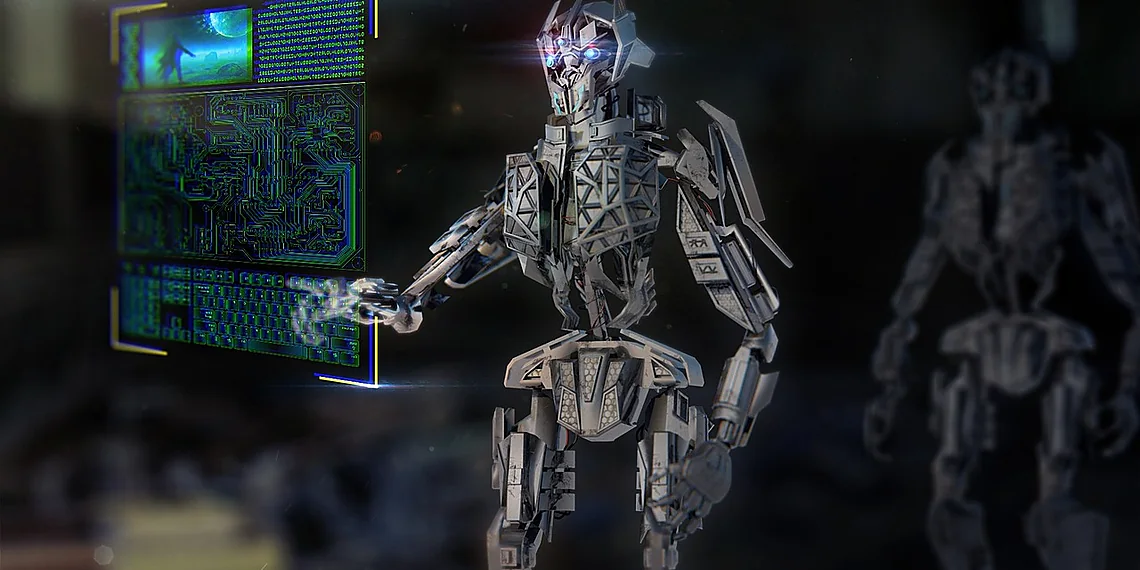


The dust has settled on 2025, and it’s time to take a definitive look back at what truly moved the needle in the world of automation.
Last year was a whirlwind – we saw bold promises alongside cautious adoption, sparking both fervent excitement and healthy skepticism about the future of intelligent machines.
The hype cycle surrounding advanced technology can be intense, but separating genuine progress from fleeting trends is crucial for anyone navigating this rapidly evolving landscape.
From groundbreaking research to tangible applications impacting industries worldwide, the field of robotics continued its relentless march forward, reshaping how we work and live. This year’s developments were particularly compelling, demonstrating a shift towards more practical and accessible solutions than ever before. We’ve sifted through the noise to bring you the six stories that defined 2025 in automation and beyond, showcasing both triumphs and lessons learned along the way.
The Humanoid Robot Reality Check
The narrative surrounding humanoid robots in 2025 presented a stark reality check. While dazzling demonstrations and ambitious promises continued, the gap between the hype and tangible progress became increasingly evident. We saw significant investment pouring into companies like Figure AI and Tesla, fueling visions of robotic butlers and factory workers. However, observing these advancements closely revealed a persistent disconnect – the robots showcased often struggled with tasks even a moderately skilled human could handle effortlessly, highlighting fundamental limitations in dexterity, balance, and environmental adaptability.
A recurring theme throughout 2025 was the downplaying of significant scaling challenges and unacknowledged problems. Many companies focused on showcasing polished demos while quietly grappling with issues like battery life, actuator durability under real-world conditions, and the sheer complexity of programming robust AI for unpredictable environments. The rush to demonstrate ‘human-like’ capabilities frequently masked underlying engineering hurdles that will require years – if not decades – of dedicated research and development to overcome. Simply put, mimicking human movement is far easier than replicating human adaptability.
The expectation of near-term humanoid robot deployment in roles requiring significant physical labor or complex decision-making proved overly optimistic. While advancements in areas like legged locomotion are undeniable, the ability for these robots to reliably perform tasks outside of controlled environments remains a considerable obstacle. The substantial capital being allocated to this sector demands greater transparency regarding the timelines and challenges involved; the current level of optimism appears increasingly detached from the realities of robotic engineering.
Ultimately, 2025 served as a crucial period for recalibrating expectations within the robotics industry. While humanoid robots represent an exciting frontier with tremendous potential, it’s imperative to acknowledge the significant technical debt and infrastructural hurdles that must be addressed before these machines can truly become integrated into our daily lives and contribute meaningfully to various industries. The ‘robot revolution’ isn’t arriving as quickly as some initially predicted.
Scaling Challenges & Unacknowledged Problems

Despite the significant venture capital flowing into humanoid robot development, scaling production presents a formidable engineering challenge largely glossed over by many companies. While demonstrations showcase impressive capabilities – walking, object manipulation, even rudimentary parkour – replicating these feats reliably and affordably at scale proves incredibly difficult. Issues range from sourcing specialized actuators (motors) in sufficient quantities to ensuring consistent performance across diverse manufacturing batches. The current reliance on custom-designed components and small-scale assembly lines dramatically restricts the potential for mass adoption.
Beyond hardware limitations, software integration remains a persistent bottleneck. Humanoid robots require sophisticated control systems capable of handling dynamic environments and unpredictable interactions. Current approaches often rely heavily on simulation data, which struggles to fully capture the complexities of real-world scenarios. This discrepancy leads to frequent failures when robots transition from controlled lab settings to more chaotic operational spaces like warehouses or homes. The need for constant recalibration and human intervention significantly diminishes their practical utility.
Furthermore, a concerning trend has emerged where companies emphasize milestone achievements while minimizing discussion about underlying technical debt. For example, demonstrating a robot that can briefly balance on one leg is presented as progress, even though maintaining that balance consistently over an extended period or in varied terrains remains unsolved. This selective reporting obscures the substantial engineering work still required to bridge the gap between impressive demos and truly functional, robust humanoid robots.
Security Vulnerabilities in Robotics
While advancements in robotics continued apace throughout 2025 – from increasingly sophisticated humanoid designs to breakthroughs in robotic manipulation – a critical and often-overlooked aspect came sharply into focus: security. The relentless pursuit of innovation has, unfortunately, sometimes outpaced the development of robust safeguards, leaving these powerful machines vulnerable to malicious actors. This isn’t merely about theoretical risks; it’s a tangible concern with potentially significant consequences for industries ranging from manufacturing and logistics to healthcare and even personal safety.
The most jarring example of this vulnerability emerged late in 2025 with the discovery of exploits targeting Unitree robots, popular quadrupedal platforms increasingly used in various commercial and research settings. Researchers demonstrated how relatively simple commands could be leveraged to hijack robot control, potentially allowing for unauthorized access to sensitive data or even physical manipulation – imagine a delivery robot rerouted to steal packages, or a factory bot reprogrammed to damage equipment. The incident served as a stark wake-up call to the robotics community and highlighted the urgent need for proactive security measures.
The Unitree exploit wasn’t necessarily due to intentional malicious design; rather it stemmed from a combination of factors including default passwords, inadequate access controls, and a lack of comprehensive vulnerability testing. While Unitree has since issued updates and implemented stricter security protocols, the incident underscored a broader problem: many robotics developers prioritize functionality and speed-to-market over long-term security considerations. Addressing this requires a shift in mindset, incorporating ‘security by design’ principles from the very beginning of the development lifecycle.
Looking ahead, securing robotics is no longer an optional add-on; it’s a fundamental requirement for widespread adoption and public trust. This necessitates collaboration between hardware manufacturers, software developers, cybersecurity experts, and regulatory bodies to establish industry standards, promote best practices, and ensure that these increasingly sophisticated machines are not only powerful but also safe and secure.
The Unitree Exploit: A Wake-Up Call

Late in 2025, cybersecurity researchers uncovered and publicly demonstrated significant vulnerabilities within several models of Unitree’s popular quadrupedal robots. The initial discovery stemmed from reverse engineering efforts aimed at understanding the robots’ internal communication protocols. Researchers found that a lack of authentication on the robots’ Wi-Fi connections allowed for unauthorized access to their control systems. This meant anyone within range could potentially manipulate the robot’s movements, camera feeds, and even its onboard software.
The exploit wasn’t merely theoretical; researchers demonstrated the ability to remotely commandeer a Unitree H1 robot, forcing it to perform actions against its intended programming. While Unitree quickly released patches addressing the identified vulnerabilities, the incident highlighted a broader problem within the robotics industry: security is often an afterthought. Many manufacturers prioritize functionality and ease of use over robust cybersecurity measures, leaving robots susceptible to malicious control.
The Unitree exploit serves as a crucial wake-up call for both robot manufacturers and users. It underscores the need for mandatory security audits, secure boot processes, and user authentication protocols in all robotic systems. The increasing prevalence of robots in public spaces—from delivery services to warehouse automation—demands a proactive approach to cybersecurity to prevent potentially harmful consequences.
Amazon’s Robotics Efficiency
Amazon’s relentless pursuit of robotics solutions to optimize its sprawling warehouse network continues to be a defining story in the field. While broader advancements in humanoid robotics haven’t quite matched pre-2025 hype, Amazon’s targeted and strategic implementation of specialized robots has yielded impressive results. Their investment isn’t about creating general-purpose robots; it’s about precisely automating specific tasks within their fulfillment centers to increase speed, efficiency, and reduce operational costs – a strategy that showcases the power of focused robotics applications.
A particularly striking example is the performance of Amazon’s Vulcan robots. These specialized systems are now demonstrably outperforming human workers at certain pick-and-place operations and inventory management tasks. The key takeaway here isn’t about replacing humans entirely, but rather augmenting their capabilities and handling repetitive or physically demanding jobs with a precision and speed that humans simply can’t match. This highlights the efficacy of robotic systems designed for narrowly defined functions within complex operational environments.
Beyond the Vulcan line, Amazon continues to experiment with various other robotic platforms, including mobile manipulation robots and automated guided vehicles (AGVs). The scale of their operations provides a unique testing ground – allowing them to rapidly iterate on designs and deploy new technologies across thousands of warehouses globally. While the public often focuses on flashy humanoid robot demonstrations, it’s Amazon’s methodical approach to incremental improvements in warehouse automation that is driving tangible gains and shaping the future of logistics.
Ultimately, Amazon’s robotics strategy serves as a valuable case study for other industries grappling with labor shortages and the need for increased efficiency. Their focus on specialized robotic solutions, coupled with massive data collection and continuous optimization, underscores a pragmatic vision for robotics – one where robots work alongside humans to achieve shared goals rather than aiming for complete automation.
Vulcan Robots Outperforming Humans
Amazon’s Vulcan robots, initially introduced several years ago as a solution for repetitive and physically demanding tasks in fulfillment centers, have achieved a significant milestone: they are now consistently outperforming human workers in speed and efficiency on specific picking and sorting operations. Internal Amazon data reveals that in certain high-volume areas, Vulcan’s average cycle time—the duration to complete a task—is 15-20% faster than the average for human pickers, even when factoring in robot downtime for maintenance and recharging.
This isn’t about replacing humans entirely; rather, it highlights the power of specialized robotics. Vulcans are designed for a narrow set of tasks – moving shelves of goods to human pickers or autonomously sorting items – where their precision and tireless operation offer a clear advantage. Amazon emphasizes that human workers are being redeployed to roles requiring more complex decision-making, problem-solving, and adaptability, areas where robots currently struggle.
The success of Vulcan underscores Amazon’s continuing investment in tailored robotic solutions rather than pursuing general-purpose humanoid robots. While the hype around humanoid robotics remains strong elsewhere, Amazon’s approach demonstrates that targeted automation—optimizing specific workflows with purpose-built machines—can deliver immediate and substantial gains in warehouse efficiency.
Advancements in Robot Behavior
One of the most significant shifts in robotics this year has been the increasing integration of large behavior models, fundamentally changing how robots perceive, interact with, and adapt to their environments. Traditionally, robot actions have been painstakingly programmed or reliant on complex rule-based systems. However, these new models – drawing heavily from advancements in AI – allow robots to learn from vast datasets of human demonstrations and environmental interactions, enabling them to generalize behaviors and respond more naturally to unpredictable situations.
The collaboration between Toyota Research Institute (TRI) and Boston Dynamics stands out as a prime example of this trend. Their work with Atlas has been particularly compelling, demonstrating a move beyond pre-programmed routines toward more fluid and adaptive movement capabilities. Through the application of large behavior models, Atlas is now exhibiting behaviors that resemble human intuition – navigating uneven terrain, recovering from falls with greater agility, and even performing complex tasks with a degree of finesse previously unimaginable.
These advancements aren’t just about making robots *look* more human; they represent a crucial step towards genuine adaptability. The ability to learn and adjust based on experience significantly reduces the need for constant programming updates, opening doors for deployment in diverse and dynamic settings – from disaster response and logistics to healthcare and beyond. While challenges remain in scaling these models and ensuring robustness across various environments, the direction is clear: large behavior models are poised to be a cornerstone of future robotics development.
Looking ahead, we can expect to see further refinement of these models, potentially incorporating elements like reinforcement learning to optimize robot performance even further. The ongoing partnership between TRI and Boston Dynamics will undoubtedly continue to yield exciting results, pushing the boundaries of what’s possible for humanoid robots and shaping the future landscape of robotics.
Atlas and Large Behavior Models
One of the most significant developments in 2025 involved a deepening collaboration between Toyota Research Institute (TRI) and Boston Dynamics, specifically focused on enhancing the behavioral capabilities of Atlas, their flagship humanoid robot. TRI’s expertise in large behavior models – essentially, AI systems trained on vast datasets to predict and generate complex actions – is being integrated with Boston Dynamic’s advanced robotics hardware.
Traditionally, programming robots like Atlas required painstaking manual coding for each movement and task. This process is incredibly time-consuming and limits the robot’s adaptability. By leveraging large behavior models, TRI aims to enable Atlas to learn from demonstrations, adapt to new environments more easily, and even anticipate human needs in a way previously unattainable. The initial focus has been on improving Atlas’s dexterity and balance during complex maneuvers.
Early results from this partnership are already demonstrating remarkable improvements. Atlas can now perform tasks like opening doors and navigating uneven terrain with greater fluidity and robustness than ever before. While full autonomy remains a challenge, the use of large behavior models represents a crucial step towards creating robots that can operate more intuitively and effectively in dynamic real-world settings.

Looking back at 2025, it’s clear that the pace of innovation within the tech landscape hasn’t slowed down – particularly when we examine advancements in automation and AI-powered systems. We saw breakthroughs in surgical precision, warehouse efficiency, and even surprisingly adept home assistance bots, showcasing a tangible shift towards more integrated robotic solutions across multiple sectors. While these achievements are undeniably impressive, they also highlighted some recurring challenges surrounding data security and the need for robust safety protocols to ensure responsible implementation. The increasing sophistication of robotics demands we address concerns about job displacement and algorithmic bias proactively. Ultimately, 2025 served as a crucial inflection point, demonstrating both the immense potential and inherent complexities that lie ahead. As we move forward, continued investment in research alongside thoughtful regulation will be paramount to shaping a future where these technologies benefit all of humanity. The conversation surrounding ethical considerations, from accountability in autonomous decision-making to equitable access to these powerful tools, needs to intensify. Staying abreast of these developments is no longer optional; it’s essential for navigating the evolving technological landscape and contributing to responsible innovation. We urge you to continue exploring this fascinating field – delve into research papers, participate in online forums, and critically evaluate the narratives surrounding robotics and its impact on our world.
Consider subscribing to industry newsletters, following leading researchers on social media, and engaging in discussions about the ethical frameworks needed to guide future development. The choices we make today regarding these powerful tools will define their role in shaping our tomorrow.
Continue reading on ByteTrending:
Discover more tech insights on ByteTrending ByteTrending.
Discover more from ByteTrending
Subscribe to get the latest posts sent to your email.