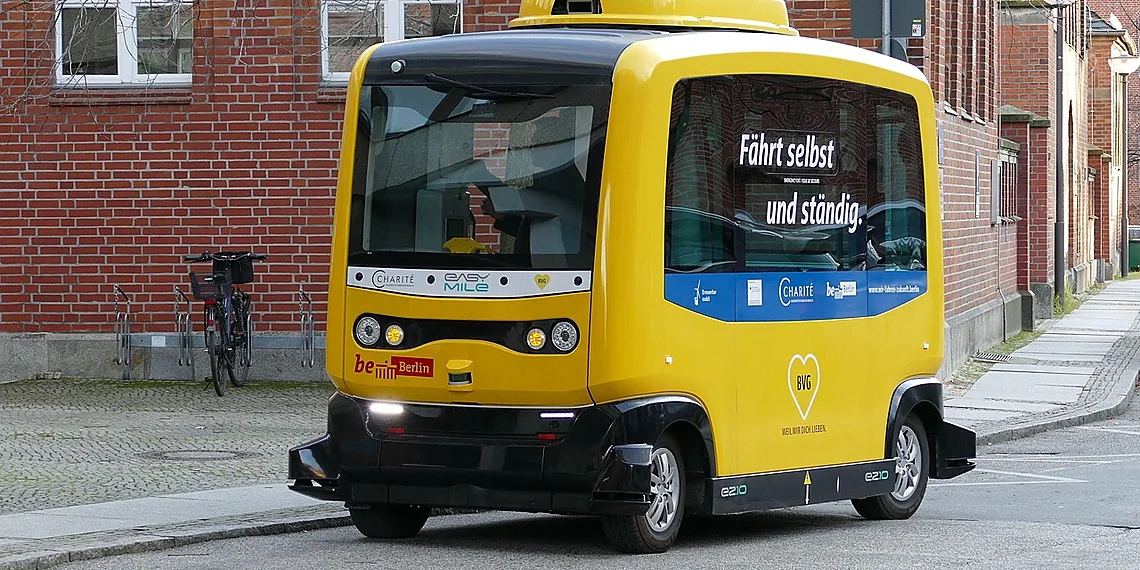

The world is rapidly becoming more interconnected and intelligent, driven by a surge in data collection from increasingly sophisticated devices. From self-driving cars navigating bustling city streets to advanced robots performing intricate tasks, these systems rely heavily on accurate and reliable sensor data – but what happens when those sensors become incredibly numerous and complex? Modeling the behavior of these interwoven networks presents a significant hurdle for engineers and researchers alike. The sheer volume of interactions between individual components within a modern system can quickly spiral into an overwhelming challenge, hindering development and potentially compromising performance. To address this critical need, a team at Kumamoto University has recently unveiled groundbreaking research that promises to revolutionize how we approach sensor system modeling. This innovative method offers a more efficient and precise way to simulate and optimize these vital systems, paving the way for safer and more capable technologies. Understanding and predicting the behavior of a complex sensor system is no longer just an academic pursuit; it’s essential for ensuring the reliability and safety of autonomous vehicles, industrial automation, precision agriculture, and countless other applications that are shaping our future. The ability to accurately perform sensor system modeling unlocks new possibilities across diverse fields, allowing us to push the boundaries of what’s possible with robotics and intelligent machines.
The development of autonomous vehicles alone necessitates incredibly robust sensor systems – cameras, LiDAR, radar – all working in concert to perceive their environment. Similarly, advanced robotic platforms require intricate coordination between multiple sensors for tasks ranging from delicate surgery to complex manufacturing processes. Traditional modeling approaches often struggle to keep pace with this exponential growth in complexity, leading to lengthy simulation times and potentially inaccurate predictions about real-world performance. The Kumamoto University research tackles these limitations head-on, introducing a novel framework that significantly reduces computational overhead while maintaining high fidelity. This advancement is particularly crucial for iterative design processes where rapid prototyping and validation are paramount.
The Challenge of Multi-Rate Sensor Data
Many modern applications rely on a symphony of sensors – think autonomous vehicles using lidar, cameras, and radar simultaneously to navigate the world. However, these sensors don’t all ‘tick’ at the same pace. Lidar might generate data points every few milliseconds, while a camera captures frames every tenth of a second, and radar updates even less frequently. Traditional sensor system modeling techniques often stumble when faced with this ‘multi-rate’ scenario – they assume a synchronized, uniform flow of information that simply doesn’t exist in the real world.
The core issue lies in how we represent data mathematically. Existing models are typically built on the assumption that all sensors provide readings at consistent intervals, allowing for straightforward calculations and predictions. When dealing with asynchronous sensor data, this simplification breaks down. Imagine trying to piece together a video from frames captured sporadically – you’d have gaps and distortions. Similarly, attempting to fuse information from multi-rate sensors using outdated methods can lead to inaccurate representations of the environment, misinterpretations of events, and ultimately, unreliable system behavior.
This problem isn’t just an academic curiosity; it has significant implications for real-time applications. Consider an autonomous vehicle reacting to a pedestrian suddenly stepping into the road. If the camera’s frame rate is slower than the lidar’s scan rate, the car might not ‘see’ the pedestrian until it’s too late. Accurate sensor system modeling allows us to predict how data from different sensors will interact and synchronize over time – crucial for ensuring timely responses in critical situations.
The research coming out of Kumamoto University addresses this challenge head-on by introducing a new mathematical framework designed specifically to handle these asynchronous streams. Their work promises more reliable fusion of sensor information, which is a vital step toward building truly robust autonomous systems and advanced robotics platforms.
Why Traditional Models Struggle
Many existing mathematical models used to describe systems – think of predicting how a robot will move or understanding environmental conditions – are built on the assumption that data arrives in a neat, predictable sequence. However, modern sensor systems rarely behave this way. Imagine a self-driving car: it’s using lidar for precise distance measurements, cameras for visual recognition, and radar to detect objects through fog. Each of these sensors operates at its own ‘sampling rate,’ essentially how often it collects data points. Lidar might capture 100,000 points per second, a camera might take 30 frames per second, while radar could update every few seconds – they’re all ticking at different clocks.
The problem arises when trying to combine this asynchronous data for real-time decision making. Traditional models often require synchronized data – everything needs to be aligned to the same time scale before analysis. This synchronization isn’t always possible or practical; forcing sensors to operate at a common rate can lead to a significant loss of information. For example, slowing down the lidar to match the camera’s frame rate means losing potentially crucial detail about the surrounding environment that was captured by the faster sensor. Similarly, interpolating (guessing) data points between radar updates can introduce inaccuracies.
Furthermore, these differing rates and lack of inherent synchronization create a ‘multi-rate’ problem. Simple averaging or filtering techniques often fail to accurately represent the underlying system behavior when data is arriving at wildly different frequencies. This can lead to inaccurate predictions, delayed responses in autonomous systems (like braking too late), and unreliable sensor fusion – the process of combining data from multiple sensors for a more complete picture of what’s happening.
Kumamoto University’s Innovative Framework
Kumamoto University researchers have developed a groundbreaking mathematical framework designed to accurately model sensor systems—a critical step towards creating more reliable and adaptable robots, autonomous vehicles, and broader sensor networks. The core challenge these systems present is their inherent complexity: multiple sensors often operate at vastly different speeds, collecting data that needs to be synchronized and interpreted effectively. Existing modeling techniques frequently struggle with this heterogeneity, leading to inaccuracies or excessive computational demands. This new framework tackles this problem head-on by introducing a novel approach to represent the temporal relationships between sensor readings.
At its heart, the framework utilizes what’s essentially a flexible ‘layered’ structure. Imagine each sensor’s data stream as a separate layer; instead of forcing these layers into a rigid, uniform timescale, the model allows for asynchronous updates and interactions. This means a high-frequency camera feed doesn’t need to be slowed down to match the slower readings from a radar system—each can evolve at its natural pace. The key innovation lies in how these layers are interconnected using mathematical functions that describe *how* information flows between them, accounting for delays and dependencies without introducing significant computational overhead. This allows the model to capture nuanced relationships between sensor data that simpler methods would miss.
To further simplify understanding, think of it like coordinating a dance team where some dancers move quickly (like cameras capturing rapid motion) while others perform slower, deliberate steps (like lidar mapping an environment). Traditional methods might force everyone to move at the same pace, losing detail or creating artificial movements. Kumamoto’s framework allows each dancer to move naturally, while still ensuring their movements are synchronized and contribute to a cohesive performance—the overall understanding of the situation. This layered approach facilitates accurate representation of sensor data even when sensors have very different update rates and measurement characteristics.
The result is a system that’s both highly adaptable – capable of handling diverse sensor types and operating conditions – and computationally efficient. By avoiding unnecessary synchronization, the framework minimizes processing time, making it practical for real-time applications like autonomous navigation where quick responses are vital. The researchers believe this new modeling capability will significantly advance the development of intelligent systems reliant on complex sensor data streams.
The Core Mathematical Approach
The Kumamoto University team’s sensor system modeling approach centers around a novel application of stochastic differential equations (SDEs). Unlike traditional methods that often struggle with varying sensor update frequencies – imagine one camera capturing data every millisecond while a LiDAR scanner updates only once per second – this framework explicitly incorporates these differing rates. It represents each sensor’s output as an SDE, allowing for independent evolution and interaction between them. This is crucial because it avoids the need to artificially synchronize sensors, which can introduce inaccuracies or significant computational overhead.
A key innovation lies in how the researchers handle the ‘coupling’ – the way different sensors influence one another. Instead of relying on rigid pre-defined relationships, their method utilizes a flexible kernel function. This kernel dynamically adjusts based on the observed data from each sensor, effectively learning and adapting to the underlying system’s behavior. Think of it as allowing the model to ‘figure out’ how the camera and LiDAR are related, rather than forcing them into a predetermined pattern; this adaptability is particularly valuable in real-world scenarios where systems are rarely perfectly predictable.
Furthermore, the team implemented advanced numerical techniques for solving these SDEs efficiently. They employed a ‘sparse’ solution approach that focuses computational resources on the most relevant sensor interactions at any given time. This dramatically reduces processing demands compared to brute-force methods, making it feasible to model systems with a large number of sensors in real-time – a critical requirement for applications like autonomous driving where decisions must be made quickly and reliably.
Real-World Applications & Impact
The implications of this new sensor system modeling technique extend far beyond just self-driving cars, promising a significant impact across numerous industries. Currently, many systems relying on multiple sensors—like industrial robots or complex environmental monitoring networks—struggle with the challenge of integrating data from sources operating at vastly different speeds and frequencies. This often leads to inaccuracies, delays in response time, and ultimately limits system performance. The Kumamoto University framework addresses this directly, enabling more precise and reliable data fusion and opening doors for previously unattainable levels of automation and precision.
Consider industrial automation; imagine a robotic arm performing intricate assembly tasks using vision systems, force sensors, and proximity detectors – all providing information at different rates. With this modeling approach, the robot can react faster to unexpected changes in its environment, preventing errors and improving throughput. Similarly, surgical robots could benefit immensely from more accurate sensor integration, allowing for greater dexterity and precision during minimally invasive procedures. The ability to accurately model these complex interactions unlocks a new level of control and efficiency.
Beyond manufacturing and healthcare, the framework holds significant potential for environmental monitoring. Networks of sensors tracking air quality, water levels, or seismic activity often struggle with data synchronization issues. By enabling more accurate modeling of sensor behavior across different sampling rates, we can build more robust and reliable early warning systems for natural disasters, leading to improved safety and resource management. Smart infrastructure projects, from bridge health monitoring to traffic flow optimization, could also leverage this technique to enhance performance and predict potential failures.
Looking ahead, the framework’s adaptability makes it a cornerstone for future innovation. As sensor technology continues to evolve—with increasingly diverse types and capabilities—the need for robust modeling techniques will only grow. This research provides a foundation for building truly intelligent systems that can learn from their environment in real-time, adapt to changing conditions, and ultimately operate with unparalleled safety and efficiency.
Beyond Autonomous Vehicles: Expanding Horizons
While initial research focused on autonomous vehicle applications, the Kumamoto University framework’s utility extends far beyond self-driving cars. The ability to accurately model sensor systems with varying data rates unlocks significant improvements in industrial automation. Consider robotic arms performing intricate assembly tasks; integrating vision sensors (high rate) with force/torque sensors (lower rate) through this modeling approach allows for real-time adjustments based on both visual guidance and tactile feedback, leading to increased precision, reduced errors, and faster cycle times. Similarly, surgical robots can benefit from fusing data from cameras, depth sensors, and haptic devices, enhancing surgeon control and minimizing invasiveness.
Environmental monitoring also stands to gain considerably. Current systems often rely on sparse sensor networks with asynchronous data collection, limiting their ability to detect rapid changes or localized events like pollution spikes. By applying this framework, we can integrate diverse data streams from air quality monitors (varying locations and update frequencies), weather stations, and even satellite imagery into a cohesive model. This enables proactive alerts for environmental hazards, optimized resource allocation for remediation efforts, and more accurate long-term trend analysis – crucial for addressing climate change and protecting public health.
The framework’s adaptability makes it suitable for smart infrastructure projects as well. Imagine a bridge equipped with sensors measuring strain, vibration, corrosion, and traffic load. Combining these data streams using the new modeling technique provides a comprehensive picture of structural health in real-time. This allows for predictive maintenance schedules, preventing catastrophic failures, extending asset lifespans, and ultimately reducing costs associated with repairs and replacements – a significant advancement over traditional reactive infrastructure management.
Looking Ahead: Future Research & Development
The Kumamoto University framework represents a significant leap forward in sensor system modeling, but its journey is far from over. While the initial results are incredibly promising, scaling this approach to truly massive and heterogeneous sensor networks presents considerable computational challenges. The current model’s complexity necessitates substantial processing power, potentially limiting real-time applications, particularly within resource-constrained environments like embedded robotics or edge devices. Future research will need to focus on developing more efficient algorithms and optimized implementations – perhaps leveraging hardware acceleration techniques – to mitigate this overhead and broaden its applicability.
A key area for future development lies in integrating artificial intelligence and machine learning into the modeling process itself. Currently, the framework relies heavily on predefined mathematical relationships. However, many real-world sensor systems exhibit non-linearities and complex dependencies that are difficult to capture through traditional methods. Training AI models on historical sensor data could allow the system to learn these intricate patterns automatically, improving accuracy and robustness in dynamic environments. This includes exploring techniques like reinforcement learning for adaptive parameter tuning and anomaly detection within the modeled system.
Beyond computational efficiency and AI integration, addressing limitations related to uncertainty quantification is crucial. While the framework provides accurate models under ideal conditions, real-world sensors are inherently noisy and prone to errors. Developing methods to explicitly quantify and propagate this uncertainty through the modeling process will be essential for building truly reliable systems – especially in safety-critical applications like autonomous driving where decisions must be made with a high degree of confidence. This could involve Bayesian approaches or other probabilistic techniques to represent model parameters and predictions.
Finally, future research should investigate methods for automating the framework’s configuration and parameter selection. Currently, expert knowledge is required to define the initial conditions and relationships between sensors. A system that can automatically learn these parameters from raw sensor data would significantly reduce the barrier to entry and enable wider adoption across diverse applications. This automation could also incorporate techniques like transfer learning to leverage existing models for similar sensor systems, accelerating development cycles and reducing the need for extensive retraining.
Challenges and Opportunities
While the Kumamoto University team’s new mathematical framework represents a significant advancement in sensor system modeling, challenges remain in its widespread implementation. The computational cost associated with solving these models, particularly for systems with numerous sensors and high dimensionality, is currently substantial. Scaling the method to handle extremely large-scale sensor networks – think thousands of interconnected devices – presents another hurdle requiring further optimization and potentially distributed computing approaches.
Despite these limitations, several promising avenues exist for future research and development. One exciting direction involves integrating artificial intelligence and machine learning (AI/ML) techniques. For example, ML algorithms could be trained to learn patterns in sensor data and predict model parameters, reducing computational burden and improving accuracy. Reinforcement learning might also play a role in optimizing sensor placement and network configuration within the modeling framework.
Further investigation into adaptive modeling strategies is also warranted. Currently, the framework assumes relatively static system behavior. Developing methods that can dynamically adjust to changing environmental conditions or sensor degradation would significantly enhance its robustness and applicability in real-world scenarios like autonomous navigation and industrial automation.
Continue reading on ByteTrending:
Discover more tech insights on ByteTrending ByteTrending.
Discover more from ByteTrending
Subscribe to get the latest posts sent to your email.