
Related Post
Imagine a cosmic shout, an incredibly powerful pulse of radio waves erupting from billions of light-years away, lasting mere milliseconds – that’s the enigma of Fast Radio Bursts.
These fleeting bursts have baffled astronomers for years, appearing seemingly at random and challenging our fundamental understanding of the universe; they’re among the most exciting mysteries in modern astrophysics.
The origin of these signals remains largely unknown, fueling intense speculation ranging from exotic astrophysical phenomena to, less likely, extraterrestrial intelligence.
Now, a groundbreaking observation by China’s Five-hundred-meter Aperture Spherical Radio Telescope (FAST), also known as Tianyan or the ‘Eye of the Sky,’ is shedding crucial new light on one particularly intriguing Fast Radio Burst, FRB 20240114A, potentially unlocking vital clues about their source and behavior. This discovery marks a significant leap forward in our quest to decode these cosmic whispers.
The Tianma Telescope & FRB 20240114A
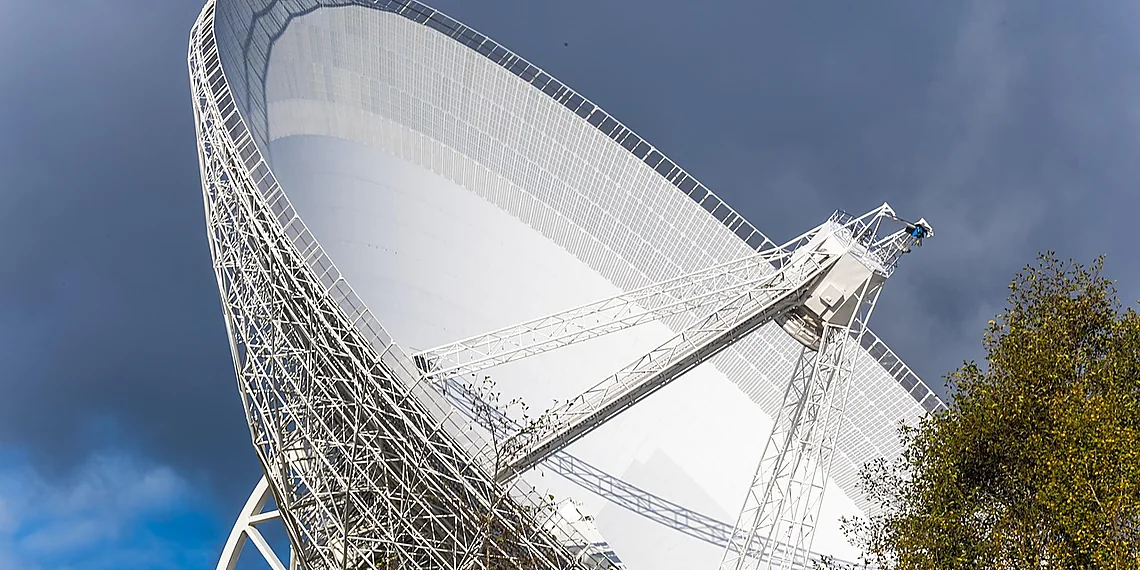
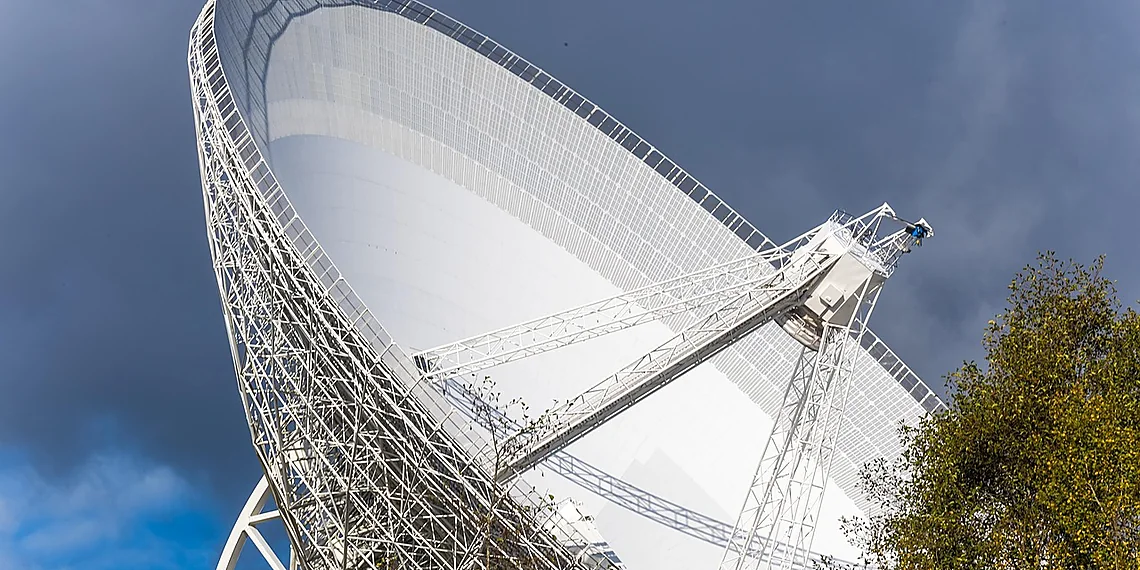
The hunt for Fast Radio Bursts (FRBs) just got a significant boost thanks to China’s Tianma Radio Telescope (TMRT). Located in Xinjiang, China, the TMRT boasts an impressive 64-meter diameter dish and operates across a broad frequency range, but its dual-frequency observation capabilities—simultaneously observing at 2.25 GHz and 8.60 GHz—are proving particularly valuable in unraveling the mysteries of these enigmatic cosmic signals. This unique ability allows scientists to study FRBs with unprecedented detail, discerning properties that would be missed by single-frequency observations.
Recently, researchers from the Shanghai Astronomical Observatory (SHAO) have been focusing their efforts on a specific FRB: 20240114A. Over an entire year, they conducted an astonishing 66 simultaneous dual-frequency observations of this burst. This intensive monitoring resulted in the detection of 155 bursts at 2.25 GHz, creating what’s now considered the largest long-term high-frequency (above 2.0 GHz) monitoring database for any FRB to date. The sheer volume and quality of data collected by TMRT represent a major step forward in FRB research.
Why is TMRT so well-suited for this task? Its large collecting area allows it to detect faint signals, while the dual-frequency observations provide crucial information about the dispersion measure – how radio waves are affected by intervening material along their journey to Earth. This data helps scientists estimate the distance of the FRB and potentially identify the type of environment it’s originating from. The continuous monitoring also enables researchers to track changes in the burst patterns, which could reveal clues about the underlying physical mechanisms producing these powerful signals.
The findings regarding FRB 20240114A are more than just a collection of data points; they offer a vital window into understanding the nature of Fast Radio Bursts. With continued observations and analysis using TMRT, scientists hope to shed further light on their origins – whether from highly magnetized neutron stars (magnetars), black hole mergers, or even entirely unknown astrophysical phenomena.
Meet TMRT: Power & Precision

The Tianma Radio Telescope (TMRT), also known as the Five-hundred-meter Aperture Spherical radio Telescope (FAST) in its full name, is a colossal single-dish observatory located in Guizhou Province, China. Its primary dish boasts an impressive diameter of 500 meters, making it the world’s largest fully steerable radio telescope. TMRT’s location within a naturally occurring karst depression provides excellent shielding from radio interference, crucial for detecting faint signals originating from vast cosmic distances.
A key feature that makes TMRT particularly valuable for Fast Radio Burst (FRB) research is its ability to operate at multiple frequencies simultaneously – specifically 1.0 GHz to 3.2 GHz. In the recent study of FRB 20240114A, researchers utilized dual-frequency observations at 2.25 GHz and 8.60 GHz. This simultaneous observation capability is vital for understanding FRBs because it allows scientists to investigate frequency dispersion – a phenomenon that reveals information about the intervening material between us and the source of the burst.
FRB 20240114A, the target of this recent study, has proven to be an especially interesting object. The sustained, dual-frequency monitoring enabled by TMRT’s advanced capabilities allowed for the detection of a remarkable 155 bursts over one year, creating a comprehensive dataset that significantly expands our understanding of FRBs and their properties. This extensive database represents a major advancement in long-term, high-frequency observation of FRBs.
A Year of Observations: Unprecedented Data
For years, Fast Radio Bursts (FRBs) have remained enigmatic cosmic signals, baffling astronomers with their sudden, intense flashes of radio waves originating from far beyond our galaxy. Now, a groundbreaking observation project using China’s massive Tianma Radio Telescope (TMRT) has yielded an unprecedented wealth of data on one particularly intriguing FRB: FRB 20240114A. This isn’t just another detection; it represents a concerted effort to understand these mysterious phenomena through sheer observational power.
The research team from the Shanghai Astronomical Observatory (SHAO) embarked on an ambitious plan, conducting a staggering 66 simultaneous dual-frequency observations – at both 2.25 GHz and 8.60 GHz – over a full year. This meticulous approach allowed for detailed analysis of the FRB’s characteristics across different frequencies, something rarely achieved before. The result? A remarkable detection of 155 bursts from FRB 20240114A at 2.25 GHz, creating by far the largest long-term high-frequency (above 2.0 GHz) monitoring database for any FRB to date.
The significance of this data volume cannot be overstated. Previously, scientists have often relied on sporadic detections of FRBs – a few fleeting glimpses into these events. With 155 bursts at our disposal, researchers now have a far richer dataset to analyze patterns, search for subtle variations in the signal’s properties, and ultimately, build more robust models explaining their origin. This level of detail is crucial for distinguishing between various theoretical explanations – from magnetars to exotic astrophysical processes.
Ultimately, this year-long observation campaign represents a pivotal moment in FRB research. The sheer volume of data collected provides an invaluable resource that will undoubtedly fuel new discoveries and bring us closer to unraveling the mysteries surrounding these powerful bursts of radio waves echoing across the cosmos.
The Scale of Discovery
Researchers at the Shanghai Astronomical Observatory have achieved a monumental feat in fast radio burst (FRB) research, collecting an unprecedented dataset of 155 bursts from FRB 20240114A over a year-long period. This remarkable observation involved 66 simultaneous dual-frequency observations using China’s Tianma Radio Telescope (TMRT), meticulously recording data at both 2.25 GHz and 8.60 GHz.
The sheer volume of data represents a significant leap forward for FRB studies. Prior to this, long-term high-frequency monitoring of repeating FRBs has been limited. This new database, the largest of its kind above 2.0 GHz, provides scientists with an unparalleled opportunity to analyze subtle patterns and variations within the bursts that were previously obscured by insufficient data.
Having a larger dataset allows for more robust statistical analysis and refined models attempting to explain the origin and behavior of FRBs. With 155 detected bursts, researchers can now probe the complexities of these mysterious signals with greater precision, potentially leading to breakthroughs in understanding their astrophysical sources and the mechanisms that generate them.
What Do These Bursts Tell Us?
Fast Radio Bursts (FRBs) remain one of the most perplexing mysteries in modern astrophysics. These incredibly powerful, millisecond-duration bursts of radio waves originate from vast distances – billions of light-years away – yet their source remains elusive. While a handful of FRBs have been linked to magnetars (highly magnetized neutron stars) within our own galaxy, the majority are ‘extragalactic’ and their true origin continues to fuel intense scientific debate. The sheer energy released in these bursts is astonishing; imagine if all the Earth’s power plants suddenly unleashed their combined output as a single radio flash – that gives you some sense of scale.
Several compelling theories attempt to explain FRBs, ranging from relatively mundane (though still extreme) astrophysical phenomena to more exotic possibilities. Neutron stars and magnetars are leading contenders, with potential explanations involving starquakes or magnetic reconnection events. Other hypotheses include collisions between cosmic strings – hypothetical one-dimensional objects left over from the early universe – or even entirely unknown processes. Distinguishing between these theories is incredibly challenging because FRBs are fleeting and often appear randomly across the sky, making follow-up observations difficult.
The groundbreaking research utilizing China’s Tianma Radio Telescope (TMRT) offers a crucial new piece of this puzzle. By conducting an unprecedented year-long, dual-frequency monitoring campaign of FRB 20240114A and detecting 155 bursts at 2.25 GHz, scientists have amassed the largest high-frequency dataset for any single FRB to date. This rich data allows for a more detailed analysis of signal characteristics like dispersion measure – which relates to the density of intervening material along the light’s path and provides clues about distance – and frequency evolution. Differences in these parameters across different FRBs can help narrow down potential source types; for example, certain theoretical models predict unique high-frequency behavior for bursts originating from specific astrophysical objects.
The TMRT data is particularly valuable because it allows researchers to probe the higher frequencies of FRB emissions more effectively than previously possible. Many proposed explanations for FRBs struggle to account for observed high-frequency properties, and this new dataset provides a critical test. While definitive answers remain elusive, this research strengthens our understanding of FRB behavior and refines the parameters that future observations will need to target in order to finally unlock the secrets behind these cosmic radio flashes.
Decoding the Signals

Fast Radio Bursts (FRBs) remain one of the most perplexing phenomena in modern astrophysics. These incredibly brief, intense pulses of radio waves originate from vast distances – billions of light-years away – and their cause is still largely unknown. Several leading hypotheses attempt to explain them, ranging from highly magnetized neutron stars called magnetars undergoing sudden rearrangements within their interiors, to more exotic possibilities like collisions between cosmic strings (hypothetical one-dimensional objects predicted by some theories of particle physics). Distinguishing between these models has proven extremely challenging due to the transient nature and limited data available for most FRBs.
The recent observations of FRB 20240114A using China’s Tianma Radio Telescope (TMRT) are particularly valuable because they provide high-frequency data, specifically at 2.25 GHz and 8.60 GHz, over an extended period. This dual-frequency capability is crucial for accurately measuring the dispersion measure (DM) of the FRB signal. DM quantifies how much the radio waves’ frequencies are spread out as they travel through interstellar and intergalactic plasma; it’s directly related to the density and distance along the line of sight. Different FRB origins might predict different DM characteristics or variations in frequency dependence, allowing scientists to potentially rule out certain models.
For instance, if magnetars are responsible for FRBs, their activity could cause subtle shifts in DM over time. Cosmic strings, on the other hand, would likely produce a more consistent and predictable DM. The detailed data from TMRT’s long-term monitoring campaign provides unprecedented opportunities to search for these subtle variations and correlations, potentially revealing crucial clues about the underlying physical processes generating these mysterious bursts and narrowing down the range of plausible explanations.
Future Implications & The Search Continues
The groundbreaking observations of FRB 20240114A by China’s Tianma Radio Telescope (TMRT) aren’t just a culmination of a year-long study; they represent a significant leap forward in our ability to understand Fast Radio Bursts (FRBs). This unprecedented dataset, comprising 155 detected bursts at high frequencies, provides invaluable insights into the burst behavior and allows for more sophisticated analysis than previously possible. The meticulous dual-frequency monitoring opens doors to future studies focused on polarization properties, dispersion measures, and potentially even revealing subtle variations in FRB signals that could unlock clues about their origins – whether they stem from magnetars, black holes, or entirely unknown phenomena.
Looking ahead, the success of this research highlights a clear path for expanding FRB investigations. The SHAO team plans to continue utilizing TMRT for long-term monitoring, and importantly, these findings are being shared with researchers worldwide. This collaborative approach is crucial; combining data from multiple telescopes – including those in Australia (ASKAP), Canada (CHIME), and the United States (FAST) – creates a global network capable of pinpointing FRB locations more precisely and capturing their fleeting signals across a wider range of frequencies. The sheer volume of data being generated necessitates international partnerships to effectively analyze and interpret these complex events.
This research also raises new, compelling questions. While the observed behavior of FRB 20240114A aligns with some existing theories, it simultaneously presents anomalies that demand further exploration. For instance, can we identify specific environmental factors or stellar processes that trigger these bursts? Are there distinct populations of FRBs with different characteristics, and if so, what mechanisms explain their diversity? The detailed data from TMRT provides a foundation for addressing these questions through refined models and targeted observations aimed at probing the conditions surrounding FRB sources.
Ultimately, the continued study of Fast Radio Bursts requires sustained investment in both telescope infrastructure and international collaboration. The insights gleaned from FRB 20240114A demonstrate the power of combining advanced technology (like TMRT) with a global network of scientists working together to unravel one of the universe’s most intriguing mysteries – a mystery that promises to reshape our understanding of astrophysics and potentially even reveal new fundamental physics.
Beyond 20240114A
The groundbreaking observations of FRB 20240114A using China’s TMRT have spurred renewed efforts to identify and characterize similar Fast Radio Bursts (FRBs) globally. Plans are underway to continue utilizing TMRT for long-term monitoring, particularly focusing on searching for repeating bursts and refining measurements of their dispersion measures – crucial data points for understanding FRB origins. Beyond TMRT, international collaborations involving telescopes like the Five-hundred-meter Aperture Spherical Radio Telescope (FAST), also in China, as well as observatories across North America, Europe, and Australia, will be vital to expanding our FRB detection rates.
Scientists are developing increasingly sophisticated observational strategies, including wide-field surveys designed to capture transient events like FRBs. These efforts often combine data from multiple telescopes simultaneously, a technique demonstrated by the TMRT observations of FRB 20240114A. The hope is that increased observation frequency and broader coverage will reveal subtle patterns in FRB behavior, such as correlations with specific galaxies or star-forming regions, which could provide clues about their sources – whether they originate from magnetars, black holes, or entirely unknown phenomena.
Unraveling the mysteries of Fast Radio Bursts remains a highly collaborative endeavor. The success of the TMRT study underscores the importance of sharing data and expertise across national boundaries. Future research will likely involve combining observations from various telescopes with different capabilities—some optimized for sensitivity, others for wide-field coverage—to build a more complete picture of these enigmatic cosmic signals. This global network is essential to pinpointing FRB locations with greater precision and ultimately revealing their true nature.
The unveiling of data from China’s FAST telescope regarding FRB 20240114A marks a pivotal moment in our understanding of the cosmos, offering unprecedented insights into these enigmatic signals.
This discovery underscores the power of international collaboration and advanced technological infrastructure – tools absolutely vital for pushing the boundaries of astronomical research.
While we’ve peeled back another layer of this cosmic mystery, the true nature of Fast Radio Bursts remains a tantalizing puzzle, sparking countless new questions about their origins and potential implications for physics as we know it.
Imagine the sheer energy unleashed in these brief but intense bursts, traveling across vast interstellar distances to reach us – it’s humbling and inspiring all at once, reminding us how much more there is to explore beyond our own solar system. The universe continues to surprise, challenge, and beckon with its infinite secrets, demanding we look closer and listen intently for the answers hidden within the static of space itself. Each new observation brings us one step closer to unraveling these cosmic enigmas and potentially revealing entirely new phenomena previously unimagined. Now is a time for continued dedication and investment in scientific exploration – it’s an investment in our collective future as curious beings seeking knowledge about our place within the grand scheme of things. We hope this article has ignited your own sense of wonder and curiosity regarding the universe’s mysteries, encouraging you to delve deeper into the science behind these incredible events. To learn more about Fast Radio Bursts and other exciting discoveries, we invite you to visit resources like the National Science Foundation’s website and follow leading astronomers on social media. Finally, consider supporting organizations dedicated to space exploration – your contribution can help fund future missions that will undoubtedly unlock even greater cosmic revelations.
Continue reading on ByteTrending:
Discover more tech insights on ByteTrending ByteTrending.
Discover more from ByteTrending
Subscribe to get the latest posts sent to your email.