
The artificial intelligence landscape is evolving at a breathtaking pace, and at its heart lies a paradigm shift in how we build intelligent systems.
We’re moving beyond specialized AI designed for single tasks to models capable of handling diverse inputs and generating complex outputs – a true leap towards more generalized intelligence.
Central to this revolution are what’s being called foundation models, large-scale neural networks trained on massive datasets that serve as the bedrock for numerous downstream applications.
These powerful models aren’t just about processing text anymore; they’re increasingly demonstrating capabilities across images, audio, and video, opening up exciting new frontiers in AI research and development. Their ability to understand and connect information from different modalities is becoming crucial for real-world problem solving, creating opportunities we are only beginning to explore. A significant challenge lies in ensuring these models can effectively align representations across these various data types – a process vital for accurate interpretation and generation of content that seamlessly integrates multiple inputs. A recent survey dives deep into this critical area, meticulously analyzing the representation potentials unlocked by foundation models when applied to multimodal alignment. Understanding how these models learn and relate information from different sources is key to unlocking their full potential and building truly intelligent systems.

Understanding Foundation Models & Alignment
Foundation models represent a significant shift in artificial intelligence development, moving beyond task-specific training towards learning broadly applicable representations from massive datasets. Unlike traditional AI models that are typically trained for a single purpose (like image classification or text generation), foundation models undergo large-scale pretraining on diverse data sources – think billions of images, text passages, and even audio files. This process allows them to develop a ‘latent capacity,’ meaning they implicitly learn underlying patterns and relationships within the data that can be adapted for numerous downstream tasks through transfer learning. Crucially, this often leads to ‘emergent capabilities,’ skills not explicitly programmed but arising from the model’s broad understanding – a hallmark of their power.
The concept of ‘multimodal alignment’ is central to unlocking the full potential of foundation models. Multimodality refers to the ability of these models to process and relate information from different modalities, like text and images or audio and video. Alignment, in this context, means how well these different modalities are *linked* within the model’s internal representations. A perfectly aligned model would understand that a picture of a cat corresponds to the word ‘cat’ – and much more complex relationships too. This isn’t just about recognizing correspondences; it’s about creating a shared understanding across modalities, allowing for tasks like generating image captions from images or answering questions based on both textual and visual information.
Researchers are developing various metrics to quantify this multimodal alignment, providing concrete ways to measure how effectively foundation models integrate different data types. Common approaches include cross-modal retrieval (how well can the model find related content across modalities?) and contrastive loss (which encourages representations of aligned pairs – like an image and its caption – to be closer together in the model’s internal space). These metrics are vital for understanding which architectures and training strategies lead to better alignment, allowing researchers to optimize foundation models for even more sophisticated multimodal applications. The survey highlights these key measurement techniques as a crucial component of evaluating representation potentials.
Ultimately, the power of foundation models lies not just in their ability to learn from vast quantities of data, but also in their capacity to bridge the gap between different forms of information. By focusing on multimodal alignment, we can unlock new possibilities for AI systems that understand and interact with the world in a more holistic and human-like way – leading to advancements in areas ranging from robotics and accessibility to creative content generation and scientific discovery.
What are Foundation Models?

Foundation models represent a significant shift in artificial intelligence development compared to traditional AI approaches. Historically, machine learning models were typically trained from scratch for each specific task, requiring substantial labeled data and specialized architectures. Foundation models, however, are characterized by large-scale pretraining on massive datasets – often encompassing text, images, audio, and video – using self-supervised or unsupervised learning techniques. This initial training phase allows the model to learn general representations of data, capturing underlying patterns and relationships.
The power of foundation models lies in their ability to leverage transfer learning. After pretraining, these models can be fine-tuned on smaller, task-specific datasets with significantly less labeled data than would be required for a traditional model. This adaptability allows them to perform well across a wide range of downstream tasks, from text generation and image classification to code completion and robotic control. Essentially, the ‘foundation’ learned during pretraining provides a strong starting point for various applications.
A notable characteristic of foundation models is the emergence of capabilities not explicitly programmed or anticipated during training. These emergent abilities – such as in-context learning (performing tasks based on examples provided within the prompt) and complex reasoning – arise from the sheer scale of the model and the breadth of data it’s exposed to. This phenomenon highlights the potential for these models to exhibit unexpected and valuable behaviors, though understanding and controlling these emergences remains an active area of research.
Measuring Multimodal Alignment
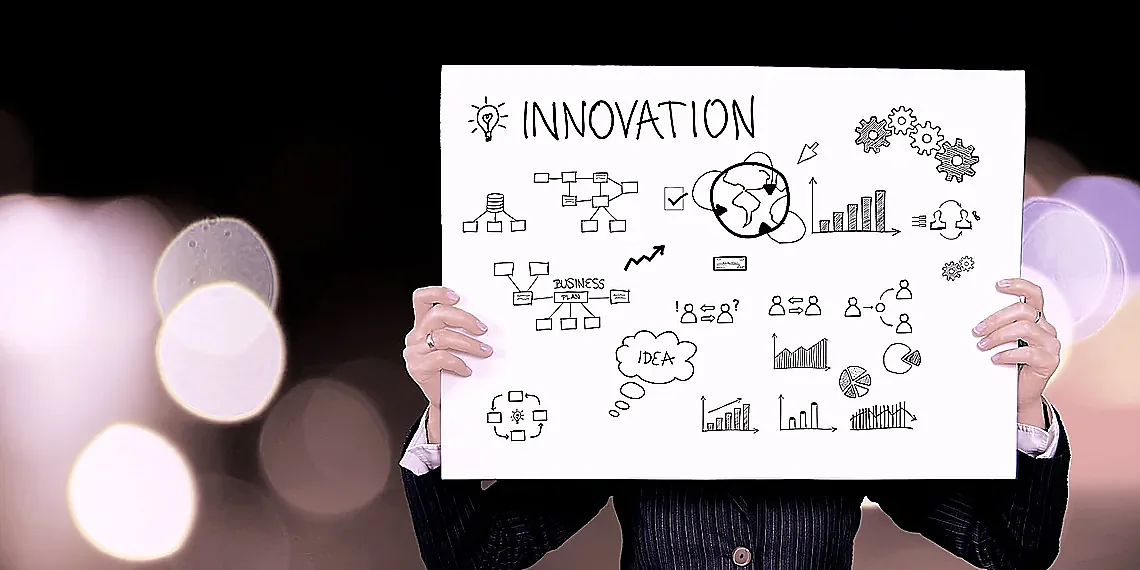
Foundation models, trained on massive datasets encompassing text, images, audio, and more, are demonstrating a surprising degree of consistency in their learned representations across different modalities. This phenomenon, known as multimodal alignment, suggests that concepts like ‘cat’ or ‘redness’ are encoded similarly regardless of whether they’re represented through pixels, words, or sound waves. Quantifying this alignment is crucial for understanding and improving foundation models; simply observing similarity isn’t enough – we need robust metrics to assess the quality of these cross-modal connections.
Several key metrics have emerged as standard tools for evaluating multimodal alignment. Cross-modal retrieval measures how well a model can find corresponding items across modalities, for example retrieving relevant images given a text query or vice versa. A higher score indicates better alignment. Contrastive loss functions are another common approach; these encourage representations of semantically similar inputs (e.g., an image and its caption) to be closer in embedding space while pushing dissimilar inputs further apart. Variations on this, like InfoNCE, are frequently employed.
Beyond retrieval and contrastive learning, other techniques include measuring the consistency of generated content across modalities – for instance, assessing whether a text-to-image model produces images that accurately reflect the input prompt. These metrics aren’t just about verifying alignment; they also provide valuable feedback for training foundation models to create more cohesive and integrated multimodal experiences.
Representation Potentials Across Modalities
Foundation models are rapidly transforming AI, not just by achieving state-of-the-art results in individual tasks but also by revealing a surprising consistency in how they represent information across different modalities like vision, language, speech, and even more specialized data types. This phenomenon, termed ‘representation potentials,’ suggests that these models aren’t simply memorizing training data; instead, they’re learning underlying semantic structures applicable far beyond their initial training scope. The core idea is that a foundation model develops latent capabilities – a foundational understanding – capable of encoding task-specific details within a single modality while simultaneously providing a common ground for bridging the gap between seemingly disparate forms of information.
A compelling illustration of this alignment lies in vision and language models. Researchers have observed that similar visual concepts—a ‘red apple,’ for instance—are consistently encoded with representations that are close to their textual descriptions within these foundation models, regardless of the specific architecture used (e.g., CLIP, Flamingo). This isn’t just a theoretical curiosity; it directly translates into improved performance on tasks like image captioning and visual question answering. Models can generate more accurate captions because they ‘understand’ the relationship between what they see and how that would be described in words. Similarly, when posed a visual question, they can leverage this shared representation space to reason about the image and formulate a relevant answer.
The implications of these consistent representations are profound. They suggest a path towards more unified AI systems that can seamlessly integrate information from various sources—imagine a robot understanding spoken commands while simultaneously processing visual input from its cameras – all through a common, aligned representational framework. Furthermore, the ability to transfer knowledge between modalities accelerates development; improvements in one modality (e.g., better language models) automatically benefit others (e.g., improved image recognition), creating a virtuous cycle of progress within the foundation model ecosystem.
The recent survey paper arXiv:2510.05184v1 delves deeper into these representation potentials, outlining key metrics for measuring alignment and synthesizing empirical evidence across diverse studies. It emphasizes that while this field is still in its early stages, the observed consistency provides a powerful foundation (pun intended!) for building increasingly sophisticated and versatile AI systems.
Vision & Language Alignment
Foundation models have significantly advanced the ability to align visual concepts with their textual descriptions, a capability crucial for tasks like image captioning and visual question answering (VQA). Models such as CLIP (Contrastive Language-Image Pre-training) directly learn joint embeddings of images and text during pre-training. This process forces the model to associate semantically similar images and captions close together in embedding space, effectively establishing a shared representation for vision and language. The resulting representations allow for zero-shot transfer – meaning the model can perform image captioning or VQA on unseen concepts without specific fine-tuning, simply by comparing embeddings.
The impact of this alignment is evident in improved performance on downstream tasks. For example, CLIP’s pre-trained visual features have been successfully utilized to guide generative models for text-to-image synthesis, demonstrating a deep understanding of the relationship between textual prompts and visual content. Similarly, other foundation models like BLIP (Bootstrapping Language-Image Pre-training) build upon this concept by incorporating both image-text contrastive learning and iterative refinement with generated captions, leading to even more accurate and contextually relevant image descriptions.
Beyond simply associating objects, these aligned representations enable a nuanced understanding of relationships and attributes. A VQA system powered by a vision-language foundation model can not only identify ‘a cat’ in an image but also answer questions like ‘What color is the cat?’ or ‘Is the cat sleeping?’, showcasing its ability to connect visual details with textual reasoning. This consistent alignment across modalities underscores the power of foundation models to bridge the gap between different forms of information.
Structural Regularities & Semantic Consistency
Recent research into foundation models is uncovering a fascinating phenomenon: surprising structural similarities in the representation spaces they create, even when those models differ significantly in architecture and training data. It’s becoming increasingly clear that these massive models, trained on incredibly diverse datasets, aren’t developing entirely unique internal understandings of the world. Instead, they often converge on surprisingly consistent mappings – similar concepts tend to be represented by nearby points within their latent space. This isn’t merely an anecdotal observation; researchers are employing sophisticated metrics and techniques to quantify this convergence across various models like CLIP, Flamingo, and others.
The implications of these shared representation spaces are profound for transfer learning. If different foundation models encode similar concepts in comparable locations, it suggests that knowledge gained from one model can be more easily transferred to another – or even applied to entirely new tasks. Imagine training a vision-language model on image captions, and then being able to leverage those learned representations to improve the performance of a text-to-image generation model with minimal additional fine-tuning. This shared understanding drastically reduces the need for task-specific data and accelerates the development cycle.
This convergence isn’t arbitrary; it hints at underlying structural regularities within data itself, which foundation models are implicitly discovering. For example, visual features associated with ‘dog’ might consistently cluster in a similar region of latent space regardless of whether the model is primarily trained on images (like Stable Diffusion) or video (like Google’s Gemini). Understanding these regularities promises to unlock even more efficient and effective strategies for building and deploying foundation models across a wider range of applications, fostering a future where multimodal alignment becomes significantly easier.
Shared Representation Spaces
Recent research has uncovered a fascinating characteristic of foundation models: despite being trained on diverse datasets and utilizing different architectural designs (e.g., transformers, diffusion models), they frequently map semantically similar concepts to proximate locations within their latent spaces. This means that if two images – one of a cat and another of a kitten – are encoded by separate foundation models, the resulting vector representations will likely be relatively close together in the model’s internal representation space. The same principle applies across modalities; text descriptions of ‘cat’ and ‘kitten’ will also exhibit similar proximity when processed by language-based foundation models.
This convergence isn’t simply a matter of chance. It suggests that certain fundamental semantic structures are inherent to the data itself, and foundation models, through their massive scale of training, independently discover and encode these underlying patterns. Studies using techniques like cross-modal retrieval demonstrate this alignment; for instance, text embeddings can be used to effectively retrieve corresponding images from image embedding spaces, even when the models were trained separately.
The implications for transfer learning are significant. The observed similarity in representation spaces allows for easier knowledge transfer between foundation models and across modalities. Instead of training entirely new models for each task, developers can leverage these pre-aligned representations to fine-tune existing foundation models with significantly less data and computational resources. This paves the way for more efficient development of multimodal applications and a deeper understanding of how meaning is encoded within large neural networks.
Future Directions & Challenges
While the recent strides in multimodal foundation models showcasing surprising alignment across seemingly disparate modalities are incredibly promising, significant hurdles remain before we can fully realize their potential. A key challenge lies in truly understanding *why* these representations align so well. Current explanations often point to shared underlying structure in data or emergent properties of scale, but a more granular mechanistic understanding is crucial for targeted improvement. We need to move beyond observing alignment and actively engineer it – identifying the specific architectural choices, training regimes, and data characteristics that maximize representation potentials across diverse modalities like text, vision, audio, and even robotics control signals.
Beyond simply maximizing potential, ensuring *reliable* and *controllable* alignment is paramount. Current models often exhibit unexpected correlations or biases learned from the pretraining data, which can manifest as undesirable behavior in downstream applications. Robustness to distribution shifts and adversarial attacks across modalities will be critical; a model that performs well on curated datasets may fail spectacularly when deployed in real-world scenarios. Furthermore, developing methods for *interpreting* these aligned representations is essential – not just to debug biases but also to allow humans to leverage the shared knowledge embedded within them.
Looking ahead, research should focus on several key areas. Firstly, exploring novel architectures that explicitly encourage multimodal alignment during pretraining offers a potentially powerful avenue. Secondly, developing more sophisticated metrics for evaluating representation potentials beyond simple similarity scores is needed; we need measures that capture not just *that* representations are similar, but also *how effectively* they transfer to specific downstream tasks across modalities. Finally, investigating techniques for dynamically adapting these shared representations – allowing them to specialize without sacrificing the benefits of cross-modal knowledge – could unlock even greater flexibility and performance.
Fostering Representation Potentials
The remarkable ability of foundation models to exhibit consistent representations across different architectures and modalities stems largely from two key factors: data diversity and architectural design. Models trained on vast, heterogeneous datasets – encompassing text, images, audio, and video – are exposed to a wider range of patterns and relationships, forcing them to develop more robust and generalizable features. Simultaneously, architectural choices like transformer networks, with their inherent attention mechanisms, facilitate the capture of long-range dependencies and complex interactions within and between data types. This combination allows for the emergence of latent representations capable of encoding task-specific information while retaining a shared semantic space.
However, maximizing representation potentials remains an area ripe for exploration. Current datasets, despite their size, often suffer from biases and lack sufficient coverage across all relevant modalities or subdomains. Furthermore, architectural innovations could further enhance the efficiency and expressiveness of these representations. For instance, exploring sparsity-inducing techniques or developing architectures specifically designed to encourage cross-modal alignment during pretraining could yield significant improvements. The focus should shift towards not just scale but also *quality* and targeted diversity in training data.
Looking ahead, a crucial challenge lies in better understanding the mechanisms driving these shared representations. While we observe their existence, precisely how different modalities contribute to and reinforce each other within the latent space remains largely unclear. Developing methods for probing and visualizing these internal representations – akin to techniques used in neuroscience – will be essential for unlocking further optimization strategies and ultimately realizing the full potential of foundation models for multimodal AI.
The convergence we’ve witnessed across diverse modalities – text, image, audio, and more – is truly transformative for artificial intelligence.
Our survey highlights a clear trajectory toward increasingly sophisticated multimodal systems capable of understanding and generating content in ways previously unimaginable.
From improved human-computer interaction to breakthroughs in scientific discovery, the potential applications are vast and continue to expand as researchers push boundaries.
A key driver behind this progress is the emergence of foundation models, trained on massive datasets and demonstrating remarkable adaptability across various tasks – a paradigm shift that’s reshaping how we approach AI development altogether. These powerful architectures allow for seamless integration and synergistic understanding between different data types, leading to richer and more nuanced outputs than ever before..”,
Continue reading on ByteTrending:
Discover more tech insights on ByteTrending ByteTrending.
Discover more from ByteTrending
Subscribe to get the latest posts sent to your email.