
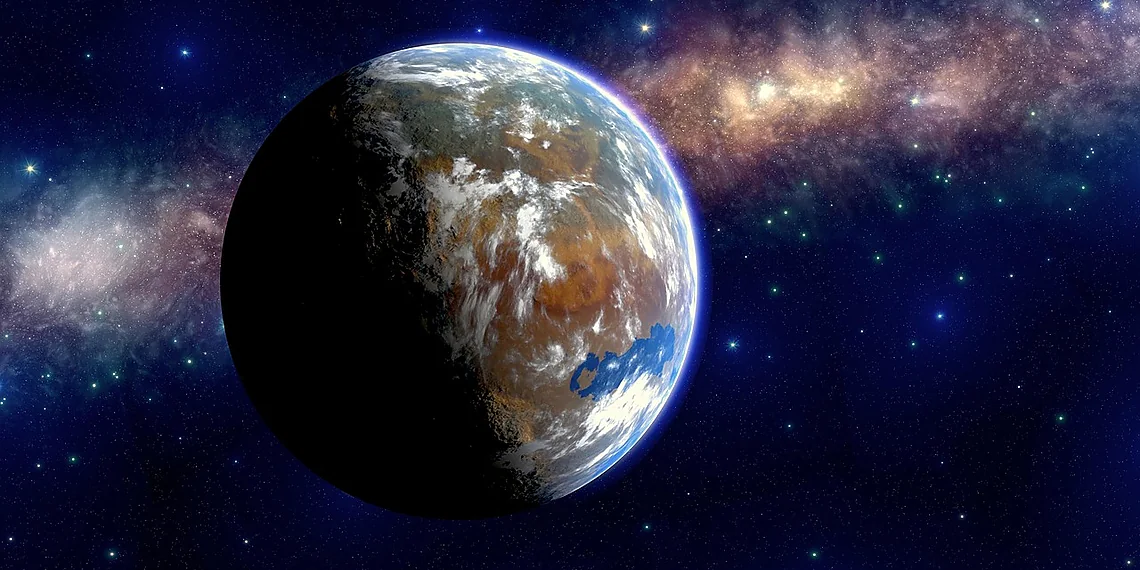


For years, our understanding of planets beyond our solar system has been largely limited to identifying them as faint points of light – distant specks hinting at worlds we could barely imagine. Now, a revolutionary technique is poised to shatter that perception, transforming abstract data into vibrant, three-dimensional visualizations of exoplanet atmospheres. Imagine moving beyond simple detection and beginning to truly *see* these alien landscapes, layer by layer.
This isn’t science fiction; it’s the dawn of a new era in astronomical observation. Scientists are developing increasingly sophisticated methods for 3D exoplanet mapping, allowing us to probe atmospheric composition, temperature profiles, and even potential weather patterns with unprecedented detail. This breakthrough moves us closer than ever before to understanding whether these distant worlds could harbor life.
The implications extend far beyond mere scientific curiosity; this technology promises to refine our search for habitable planets and reshape our place in the universe. By utilizing advanced spectroscopic analysis combined with cutting-edge computational modeling, researchers are building detailed models that reveal the complex structures within exoplanet atmospheres – a process fundamentally changing how we approach exoplanet mapping.
The Breakthrough Technique: Light Curves in 3D
The creation of a 3D atmospheric map for an exoplanet isn’t achieved through direct imaging – these worlds are simply too far and faint. Instead, the groundbreaking technique relies on a sophisticated application of transit photometry, enhanced by the unparalleled sensitivity of instruments like the James Webb Space Telescope (JWST). Transit photometry involves meticulously measuring the slight dimming of a star’s light as an exoplanet passes in front of it, an event known as a ‘transit.’ These dips in brightness are incredibly subtle – often less than 1% – and require highly precise measurements taken over extended periods. Initial analysis focuses on extracting these transit signals from the noise of stellar activity and instrumental effects, establishing the planet’s orbital period and size with remarkable accuracy.
But simple transit photometry only provides a one-dimensional view – the change in brightness over time. The real breakthrough comes from analyzing *how* that brightness changes as the exoplanet moves across the star’s face. Different wavelengths of light are absorbed or reflected differently by atmospheric gases, and these variations become apparent during the transit. For example, if a specific gas is concentrated on one side of the planet, its absorption will be more pronounced during that part of the transit. By precisely measuring how the amount of starlight at different wavelengths changes *throughout* the entire transit event – accounting for the exoplanet’s rotation as it passes – scientists can begin to build up a vertical profile of atmospheric composition.
This is where JWST’s capabilities become crucial. Its near-infrared and mid-infrared instruments offer unprecedented spectral resolution, allowing astronomers to dissect the starlight with incredible detail. By combining these wavelength-dependent brightness changes with models of exoplanet atmospheres and rotation rates (often derived from other observations), researchers can reconstruct a three-dimensional map showing how temperature, composition, and altitude vary across the planet’s surface. Essentially, they are creating a ‘weather map’ based on subtle variations in light – a process requiring complex data processing and sophisticated atmospheric modeling to interpret these signals accurately.
The resulting 3D maps aren’t just aesthetically impressive; they provide invaluable insights into exoplanet climates, atmospheric dynamics, and even the potential for habitability. For WASP-18b, this technique revealed distinct temperature zones and regions of varying chemical composition – demonstrating that even gas giants can possess complex and layered atmospheres. As JWST continues to gather data on more exoplanets, we can anticipate a surge in similarly detailed 3D atmospheric maps, ushering in a new era of exoplanet discovery and deepening our understanding of worlds beyond our own solar system.
Transit Photometry: Seeing Through Starlight

The foundation of exoplanet mapping, particularly when utilizing techniques like those employed by the James Webb Space Telescope (JWST), rests on a method called transit photometry. This technique observes the slight dimming of a star’s light as an orbiting planet passes in front of it – what’s referred to as a ‘transit.’ The amount of light blocked directly correlates with the size of the exoplanet relative to its star, allowing astronomers to initially determine planetary radius. More crucially for atmospheric mapping, these transits aren’t perfectly uniform; variations in brightness during the transit reveal information about the planet’s atmosphere.
Data collection involves incredibly precise measurements of starlight over extended periods. Space telescopes like Kepler and TESS pioneered this method, but JWST’s infrared capabilities offer significantly enhanced sensitivity. The telescope records these changes in brightness as a ‘light curve,’ essentially a graph plotting stellar flux (brightness) against time. Initial analysis focuses on identifying periodic dips in the light curve – indicating regular transits – and characterizing their shape. Subtle asymmetries or variations within each transit event are then flagged for more detailed investigation.
These subtle brightness fluctuations occur because different wavelengths of light interact differently with the exoplanet’s atmosphere. For example, certain molecules absorb specific infrared wavelengths. As the planet moves across the star’s face during a transit, varying amounts of these atmospheric components lie along our line of sight, leading to changes in the observed brightness at those wavelengths. By meticulously analyzing these wavelength-dependent variations, astronomers can begin to infer the composition and structure of an exoplanet’s atmosphere – the crucial first step towards creating a 3D map.
WASP-18b: The First 3D Map
The exoplanet mapping revolution has officially begun, with WASP-18b taking the unprecedented title of the first world to receive a full three-dimensional atmospheric map. This landmark achievement, enabled by the James Webb Space Telescope (JWST), moves us beyond simple observations and into an era where we can begin to truly understand the complex weather systems operating on planets orbiting distant stars. The initial maps reveal variations in temperature and distinct atmospheric regions – offering a glimpse into the dynamic processes shaping these alien environments.
WASP-18b itself is no ordinary planet; it’s classified as a ‘hot Jupiter,’ a type of exoplanet that shares characteristics with our own Jupiter but orbits incredibly close to its star. Located approximately 400 light years from Earth, WASP-18b boasts a size roughly twice that of Jupiter and a scorching temperature exceeding 2,200 degrees Celsius (around 4,000 degrees Fahrenheit). Its proximity to its parent star results in an extremely short orbital period – just over nine Earth days. The intense heat and relatively large size of hot Jupiters make them ideal candidates for this pioneering exoplanet mapping technique; the strong temperature gradients create easily detectable signals as they transit their stars.
The process behind creating WASP-18b’s 3D map is ingenious. Scientists meticulously tracked minute changes in brightness as the planet passed *behind* its star – an event known as a secondary eclipse. These subtle fluctuations reveal how light filters through different layers of the atmosphere, allowing researchers to infer temperature and composition variations across the entire planetary sphere. By combining these observations from multiple wavelengths, they were able to construct a three-dimensional model that provides unprecedented detail about this distant gas giant.
A Scorching Gas Giant
WASP-18b is a ‘hot Jupiter,’ a type of exoplanet significantly larger than our own Jupiter but orbiting incredibly close to its star – in this case, just 0.03 astronomical units (AU). This proximity results in extreme conditions; the planet’s temperature can reach upwards of 2,200 degrees Celsius (4,000 degrees Fahrenheit). Its diameter is roughly twice that of Jupiter, and it completes an orbit around its star every 8.5 Earth days. The intense heat causes many heavy elements to vaporize, creating a highly inflated atmosphere.
The composition of WASP-18b’s atmosphere is complex and still being investigated, but initial observations suggest the presence of water vapor, sodium, potassium, and potentially even heavier metals like iron in gaseous form. This unusual chemical makeup contributes to its unique spectral signature, which makes it an attractive target for atmospheric mapping techniques. The planet’s relatively large size also means a greater volume of atmosphere is present, providing more data points for analysis.
Hot Jupiters like WASP-18b are particularly well-suited for this groundbreaking 3D exoplanet mapping technique because their close proximity to their stars allows astronomers to observe subtle changes in brightness as they transit. These minute variations reveal information about the atmosphere’s structure and composition, which wouldn’t be detectable on more distant or smaller planets.
What Does the 3D Map Reveal?
The newly created 3D atmospheric map of WASP-18b isn’t just a pretty picture; it’s a treasure trove of data revealing unprecedented details about this scorching gas giant. What stands out most strikingly is the dramatic temperature gradient across the planet. The map highlights stark differences in heat distribution, with some regions significantly hotter than others – variations as high as 300 degrees Celsius (540 degrees Fahrenheit). This isn’t simply a matter of solar exposure; it suggests complex atmospheric dynamics at play and hints at powerful winds transporting heat around the globe.
Beyond temperature alone, the map has allowed scientists to identify distinct layers within WASP-18b’s atmosphere. These layers aren’t uniform bands but exhibit varying compositions and temperatures, a feature that provides valuable clues about the planet’s formation and evolution. The upper layers appear incredibly hot and turbulent, while deeper regions show signs of cooler, more stable conditions. Analyzing these layered structures helps us understand how different chemical processes might be occurring at various altitudes within the atmosphere – from photochemical reactions to condensation of exotic compounds.
Perhaps most excitingly, these temperature variations and atmospheric layering suggest the presence of weather patterns on WASP-18b, albeit unlike anything we experience on Earth. The observed shifts in brightness as the planet transits its star are indicative of winds that likely exceed speeds of 8,000 kilometers per hour (5,000 mph). This extreme windscape is reshaping our understanding of how gas giants function and challenges existing models of planetary atmospheres. It’s a stark reminder that exoplanet mapping isn’t just about identifying planets; it’s about unveiling the intricate weather systems governing these distant worlds.
The significance of this breakthrough in exoplanet mapping extends far beyond WASP-18b itself. By demonstrating the feasibility and power of this technique, astronomers have opened a new window onto the atmospheres of other exoplanets – potentially including those that might harbor conditions suitable for life. Each future map promises to deepen our understanding of planetary diversity and bring us closer to answering fundamental questions about our place in the universe.
Temperature Gradients & Atmospheric Layers

The 3D exoplanet mapping technique applied to WASP-18b has revealed striking temperature gradients across its atmosphere. The data shows significant differences in heat distribution; for example, the dayside is significantly hotter than the nightside, with temperatures varying by as much as 200 Kelvin (roughly -53°C). This extreme thermal contrast suggests powerful winds are actively redistributing heat around the planet, attempting to equalize the temperature difference. These winds, estimated to reach speeds exceeding 8,000 kilometers per hour, are far faster than previously predicted for such a hot gas giant.
Furthermore, the map has allowed scientists to identify distinct atmospheric layers within WASP-18b’s envelope. The observations indicate an upper atmosphere characterized by intense heat and rapid movement, transitioning into a middle layer where temperature variations become more complex. A lower atmospheric region appears relatively stable compared to the chaotic conditions above. These layered structures suggest a dynamic interplay of processes like radiative heating, convection, and potentially even chemical reactions occurring at different altitudes.
The observed temperature variations and distinct layers offer valuable insights into WASP-18b’s overall dynamics and atmospheric composition. The extreme heat gradient points towards strong atmospheric currents and energy transport mechanisms, while the layered structure may be indicative of complex chemical processes or interactions with stellar radiation. Future observations using this mapping technique on other exoplanets will help us understand a broader range of planetary atmospheres and potentially reveal clues about how these worlds formed and evolved.
The Future of Exoplanet Exploration
The ability to create three-dimensional maps of exoplanet atmospheres represents a monumental leap forward in our exploration of worlds beyond our solar system. This innovative technique, pioneered with observations of WASP-18b using the James Webb Space Telescope, moves us far beyond simply detecting an exoplanet’s existence; it allows us to characterize its environment in unprecedented detail. By tracking minute brightness fluctuations as a planet transits behind its star – what’s known as transit spectroscopy – astronomers can now discern temperature variations, wind patterns, and even the distribution of different chemical compounds across vast distances.
Looking ahead, the potential applications for this exoplanet mapping technique are truly transformative. While initial studies have focused on ‘hot Jupiters’ like WASP-18b—gas giants orbiting extremely close to their stars—the methodology holds promise for expanding our reach. Future observations will likely target hundreds more hot Jupiters, building a statistical understanding of atmospheric processes common across this class of exoplanets. More exciting still is the prospect of adapting these techniques to analyze smaller, cooler planets – those that might resemble Earth and potentially harbor liquid water.
The discovery of novel atmospheric phenomena is almost guaranteed as we apply this mapping approach to a wider range of exoplanets. We could uncover unexpected chemical compositions, bizarre weather systems driven by unique stellar interactions, or even evidence of previously unknown physical processes shaping planetary atmospheres. Ultimately, refining these techniques will contribute significantly to our understanding of planetary habitability – helping us identify worlds that might possess conditions conducive to life.
This new era of exoplanet exploration isn’t just about finding more planets; it’s about truly *understanding* them. The ability to visualize and analyze the three-dimensional structure of their atmospheres will unlock a wealth of knowledge, allowing us to test our theories of planetary formation and evolution, and bringing us closer than ever before to answering the fundamental question: are we alone?
Mapping Hundreds More Worlds
The success in mapping WASP-18b’s atmosphere opens exciting possibilities for applying this technique to other hot Jupiters – gas giants that orbit extremely close to their stars. Many similar planets have already been identified, and the ability to create 3D atmospheric maps allows scientists to compare temperature distributions, chemical compositions, and wind patterns across a wider range of these worlds. This comparative analysis will significantly improve our understanding of how different stellar environments influence exoplanet atmospheres and drive weather phenomena.
Looking further into the future, researchers are working on adapting this method for smaller, cooler planets – those more closely resembling Earth or other terrestrial bodies. While the signal changes are far subtler from these smaller worlds, advancements in telescope sensitivity and data processing techniques could eventually allow us to map their atmospheres as well. Such observations would be invaluable in identifying potential biosignatures – indicators of life – and assessing planetary habitability.
Ultimately, 3D exoplanet mapping promises a revolution in our understanding of planetary formation and evolution. By characterizing the atmospheric dynamics and chemical processes on these distant worlds, we can gain crucial insights into how planets form, what factors contribute to their long-term stability, and whether any might possess conditions suitable for life. This technique moves us beyond simply detecting exoplanets; it allows us to begin truly exploring them.
The advancements we’ve explored truly mark a pivotal moment in our quest to understand worlds beyond our own solar system, shifting from theoretical possibilities to tangible observations. We’ve witnessed how sophisticated techniques are allowing us to move past simple detection and begin constructing detailed profiles of exoplanet atmospheres and even hinting at surface features – a crucial step towards identifying potentially habitable environments. The ability to perform comprehensive exoplanet mapping offers an unprecedented opportunity to analyze planetary compositions, temperatures, and cloud structures with remarkable precision. This isn’t just about finding planets; it’s about characterizing them in ways previously unimaginable, opening entirely new avenues for scientific inquiry and pushing the boundaries of what we consider possible. Further refinements in instrumentation and observational strategies promise even more detailed revelations in the years to come, reshaping our understanding of planetary formation and evolution across the galaxy. The future is bright with potential discoveries as technology continues to evolve alongside human curiosity. To delve deeper into this exciting field, we encourage you to explore the incredible work being done by the James Webb Space Telescope – its observations are continuously revolutionizing our knowledge of these distant worlds. Learn more about JWST’s ongoing missions and keep an eye out for announcements regarding future exoplanet exploration endeavors; your journey into understanding the cosmos starts here!
Discoveries like these inspire us to look beyond Earth and contemplate the vastness of the universe, reminding us that we are part of something truly extraordinary. The techniques driving this new era in exoplanet research represent a remarkable convergence of engineering ingenuity and scientific ambition, promising breakthroughs that will continue to shape our understanding for generations. We’ve only scratched the surface of what’s possible with advanced telescopes and innovative data analysis methods.
Continue reading on ByteTrending:
Discover more tech insights on ByteTrending ByteTrending.
Discover more from ByteTrending
Subscribe to get the latest posts sent to your email.







