
For decades, scientists have chased an elusive phantom dancing within our sun’s corona – a phenomenon that defied easy explanation and hinted at immense untapped energy. The mystery surrounding these coronal structures has captivated researchers, fueling countless studies and sparking intense debate about the fundamental processes driving our star. Now, a groundbreaking new study is finally shedding light on this long-standing puzzle, revealing previously unknown details about how these dynamic features are generated and behave.
The research team’s findings focus specifically on what we now understand to be complex patterns of energy transfer within the corona, including observations related to powerful bursts of electromagnetic radiation – essentially, intense solar waves. Their sophisticated modeling techniques have allowed them to simulate coronal activity with unprecedented accuracy, revealing a surprising mechanism at play and offering compelling evidence for a previously overlooked connection between the sun’s surface and its outer atmosphere.
But this isn’t just about satisfying scientific curiosity; the implications are potentially transformative. Understanding these processes could unlock entirely new avenues for harnessing solar energy far beyond what we currently achieve with photovoltaic panels, perhaps even allowing us to tap into the raw power of coronal events in a controlled manner. The future might hold possibilities previously relegated to science fiction – and it all starts with unraveling the secrets hidden within our sun’s corona.
The Hunt for Solar Waves
For decades, scientists have theorized about the existence of powerful magnetic waves rippling through the sun’s corona – known as Alfvén waves. These aren’t sound or light waves; they’re disturbances in plasma that travel along magnetic field lines, carrying energy outward from the Sun. Proposed as early as the 1940s by physicist Hannes Alfvén (for whom they are named), these waves were initially envisioned as a potential mechanism for transferring solar energy to the heliosphere and beyond, helping explain why the corona is far hotter than the sun’s surface. However, directly observing these elusive waves has proved incredibly challenging, representing one of the longest-standing mysteries in solar physics.
The difficulty lies primarily in their scale and speed. Alfvén waves are typically tiny – much smaller than the resolution of early telescopes – and move at incredibly high velocities, often exceeding hundreds of kilometers per second. Imagine trying to photograph a fleeting ripple on an ocean during a massive storm; that’s roughly analogous to the challenge scientists faced in capturing these solar phenomena. Previous observations were indirect, relying on inferential data which left room for interpretation and couldn’t definitively confirm their existence as predicted.
Early attempts involved analyzing the behavior of plasma within the corona, looking for telltale signs of wave-like motion. However, disentangling Alfvén waves from other complex processes – like turbulence and magnetic reconnection events – proved to be a formidable task. The sheer complexity of the solar corona, with its constantly shifting magnetic fields and dynamic plasma flows, made it exceptionally difficult to isolate and identify the signature of these specific torsional waves. This quest has spurred significant advancements in observational techniques and theoretical modeling over the years.
The recent breakthrough, utilizing data from NASA’s Solar Dynamics Observatory (SDO), represents a pivotal moment because researchers were able to specifically target and observe small-scale torsional Alfvén waves for the first time. The improved resolution and advanced analysis techniques finally allowed them to distinguish these subtle wave patterns from background noise, validating decades of theoretical work and opening up new avenues for understanding how energy is transported throughout our star.
Decades of Searching: The Elusive Alfvén Wave

For decades, scientists theorized that the sun’s corona – its outermost atmospheric layer – is heated and energized by magnetic waves known as Alfvén waves. Named after physicist Hannes Alfvén, these waves are fundamentally disturbances that travel along a magnetic field line, much like a wave traveling down a stretched rope. Imagine shaking one end of a taut rope; the disturbance moves along the rope’s length—that’s conceptually similar to how an Alfvén wave propagates through the sun’s magnetized plasma.
The search for direct evidence of these waves has been extraordinarily challenging. Unlike water waves, Alfvén waves are incredibly small-scale, often only tens of kilometers across. They also move at speeds approaching that of the solar wind – millions of kilometers per hour! This combination of tiny size and extreme velocity makes them exceptionally difficult to observe with traditional telescopes, which struggle to resolve such fleeting phenomena.
Early theoretical models suggested Alfvén waves were a major contributor to coronal heating, but their indirect influence was hard to distinguish from other processes. Consequently, proving their existence required developing new observational techniques and highly sensitive instruments capable of capturing these minute disturbances as they ripple through the sun’s corona. The recent breakthrough represents a culmination of decades-long efforts to finally ‘see’ these elusive waves.
Breakthrough Observation & Data Analysis
For decades, solar physicists have theorized about the existence of torsional Alfvén waves rippling through the sun’s corona – vast magnetic waves capable of transferring energy and potentially influencing solar activity. These elusive waves, first predicted in the 1940s, remained stubbornly out of reach due to their incredibly small scale and subtle signatures. Now, a groundbreaking new study published this week provides the first direct observational evidence of these waves, marking a significant leap forward in our understanding of the sun’s complex dynamics.
The breakthrough hinges on recent advancements in telescope technology. Researchers utilized data primarily from the Daniel K. Inouye Solar Telescope (DKIST), a state-of-the-art facility boasting unprecedented resolution and sensitivity. DKIST’s ability to observe the corona with such detail allowed scientists to isolate and track the subtle twisting motions characteristic of torsional Alfvén waves, something previously obscured by noise and limitations in older instruments. Prior observations often blurred these signals into background fluctuations; DKIST’s enhanced capabilities have effectively removed that veil.
What makes this discovery truly unique is not just the confirmation of their existence, but also the scale at which these waves are occurring. Earlier theoretical models suggested Alfvén waves would be much larger and more easily detectable. This new data reveals a population of smaller-scale torsional waves operating closer to the sun’s surface than previously imagined. This challenges existing solar models and opens up avenues for investigating how energy is transported throughout the corona, potentially unlocking insights into phenomena like solar flares and coronal mass ejections.
The team employed sophisticated data analysis techniques to distinguish these wave signatures from other processes occurring in the corona. They focused on observing minute rotations within magnetic field lines – a hallmark of torsional Alfvén waves – and developed algorithms to filter out extraneous signals. This rigorous methodology strengthens the validity of their findings, solidifying this observation as a pivotal moment in solar physics research and offering exciting new possibilities for future investigations into the sun’s energy transfer mechanisms.
New Instruments, Clearer Signals
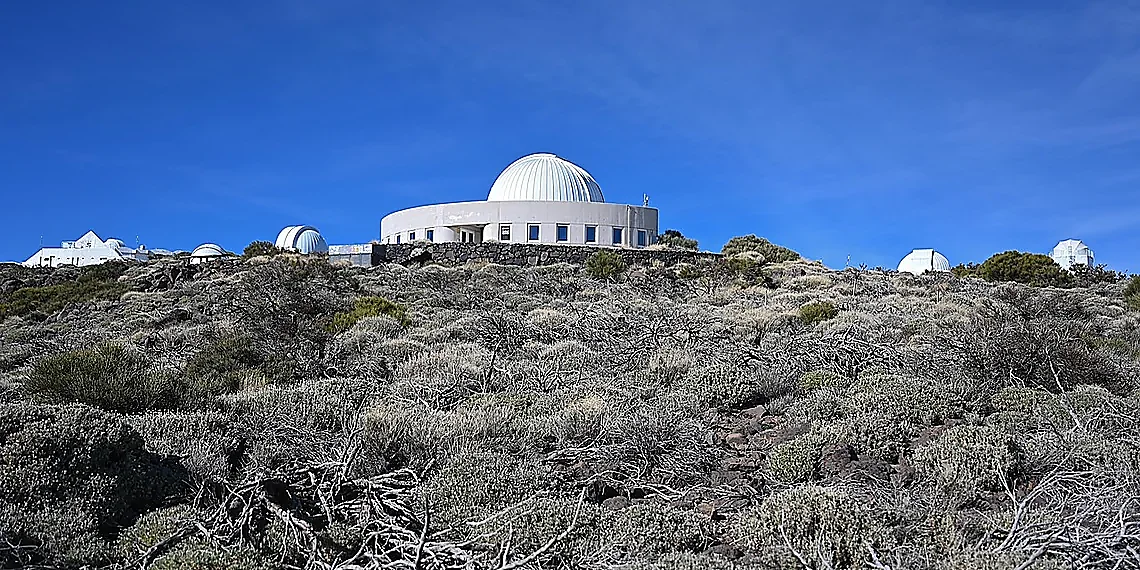
For decades, scientists theorized the existence of torsional Alfvén waves rippling through the sun’s corona – magnetic disturbances that could potentially hold clues to how energy is transported outwards from the Sun’s interior. Detecting these waves proved incredibly difficult due to their small size and subtle nature. Prior attempts were hampered by limitations in telescope resolution and sensitivity, often blurring signals or mistaking them for other phenomena. The recent breakthrough hinged on significant advancements in instrumentation allowing for much clearer observation.
A key instrument enabling this discovery was the Daniel K. Inouye Solar Telescope (DKIST), located in Hawaii. DKIST’s unprecedented spatial resolution – it can resolve features as small as 20 kilometers on the sun’s surface – allowed researchers to distinguish the subtle twisting motions characteristic of torsional Alfvén waves. Furthermore, specialized data analysis techniques were developed to filter out background noise and isolate these faint signals from other magnetic activity occurring within the corona. These methods involved sophisticated algorithms designed to identify patterns consistent with wave behavior.
Beyond DKIST, improvements in adaptive optics technology across multiple ground-based observatories also played a crucial role. Adaptive optics correct for atmospheric distortions that can blur telescopic images, effectively sharpening the view of the sun. Combined with improved spectrographic analysis – which allows scientists to study the composition and movement of solar material based on the wavelengths of light emitted – these technological advancements finally provided the clarity needed to definitively identify torsional Alfvén waves.
Understanding Solar Corona Dynamics
The sun’s corona, that ethereal halo visible during total solar eclipses, has long baffled scientists. It exists at temperatures millions of degrees hotter than the sun’s surface (the photosphere), a phenomenon known as the ‘coronal heating puzzle.’ For decades, researchers have struggled to explain how energy is transported from the relatively cool interior of the Sun to this extremely hot outer atmosphere. Conventional models couldn’t account for such drastic temperature differences, leaving a significant gap in our understanding of solar physics.
Enter Alfvén waves – magnetic disturbances that propagate through plasma, much like ripples on water. These waves have been theorized as potential energy carriers since the 1940s, but directly observing them has proven incredibly challenging. They’re small-scale and subtle, often obscured by other solar activity. Recent groundbreaking research has finally provided the first direct evidence of these torsional Alfvén waves within the sun’s corona, marking a pivotal moment in our quest to unravel the coronal heating mystery.
The newly observed waves are twisting, rope-like disturbances that travel along magnetic field lines extending from the Sun’s surface into the corona. Scientists believe that as these waves propagate outwards, they repeatedly bend and snap, converting their energy into heat through a process called ‘turbulent cascade.’ This cascading effect, like a series of smaller collisions, is thought to contribute significantly to the coronal heating by transferring energy upwards and increasing the temperature of the plasma.
This discovery doesn’t just solve a decades-old puzzle; it opens new avenues for research. Understanding how these solar waves function could lead to a deeper understanding of other astrophysical phenomena involving magnetic fields and plasma, potentially even informing future technologies that harness solar energy in novel ways. While practical applications are likely far off, the fundamental knowledge gained is invaluable.
The Corona Heating Puzzle
For decades, scientists have been baffled by a perplexing phenomenon: the Sun’s corona—the outermost layer of its atmosphere—is dramatically hotter than its surface (the photosphere). The photosphere hovers around 6,000 degrees Celsius, while the corona routinely reaches temperatures exceeding one million degrees Celsius. This stark temperature difference violates basic physics principles; heat naturally flows from hot to cold, so how does the corona maintain such extreme warmth without a continuous external energy source?
One leading hypothesis involves Alfvén waves, which are magnetic disturbances that propagate through plasma—a superheated state of matter where electrons are stripped from atoms. These waves, first theorized in the 1940s, act like ripples traveling along magnetic field lines extending from the Sun’s interior into the corona. As they oscillate and interact with the surrounding plasma, they’re believed to transfer energy outwards, contributing to the coronal heating puzzle.
Recent research has provided the first direct observational evidence of small-scale torsional Alfvén waves within the solar corona. Using advanced imaging techniques, scientists have detected these elusive magnetic waves, lending significant support to the theory that they play a crucial role in transferring energy and maintaining the corona’s exceptionally high temperatures. Further study of these waves could unlock even deeper insights into the Sun’s dynamics and potentially reveal new avenues for understanding other astrophysical systems.
Future Implications & Potential Energy?
The groundbreaking discovery of torsional Alfvén waves in the sun’s corona isn’t just a triumph for astrophysics; it sparks intriguing possibilities for our future energy needs and technological safeguards. While directly converting these solar waves into usable power remains firmly within the realm of science fiction, understanding their behavior could revolutionize how we approach solar energy collection. Currently, solar farms rely on capturing photons – light particles – but a deeper comprehension of coronal dynamics, including wave propagation and interaction with magnetic fields, might reveal new avenues for harvesting energy from the sun’s immense radiative output. Imagine, potentially, systems that are more efficient at capturing dispersed solar radiation or even exploiting subtle variations in the corona’s magnetic field.
Beyond direct power generation, these waves offer a unique window into space weather prediction. Solar flares and coronal mass ejections (CMEs) – powerful bursts of energy that can disrupt satellites, communication networks, and even power grids here on Earth – are often preceded by complex wave patterns within the corona. By studying the characteristics of torsional Alfvén waves, scientists could potentially develop more sophisticated models to forecast these disruptive events with greater accuracy and lead time. This would allow for proactive measures to protect critical infrastructure and minimize potential damage.
Research moving forward will likely focus on several key areas. Firstly, refining observational techniques to map the distribution and behavior of these solar waves across the entire corona is crucial. Secondly, developing advanced numerical simulations that can accurately model wave propagation through the complex magnetic field environment of the sun is essential. Finally, exploring how these waves interact with other coronal phenomena – like reconnection events leading to flares – will be vital for understanding their role in driving space weather. The pursuit of these answers could unlock unexpected technological advancements.
Ultimately, while the immediate impact may seem distant, this discovery highlights the interconnectedness of fundamental scientific research and future technology. It’s a powerful reminder that even seemingly esoteric findings in fields like astrophysics can have profound implications for our lives on Earth – from improving solar energy efficiency to safeguarding our increasingly technologically dependent society.
Beyond Discovery: Harnessing Solar Power?
The recent confirmation of torsional Alfvén waves in the sun’s corona, while a fundamental scientific achievement, also hints at exciting possibilities for future technological advancements. Directly converting these waves into usable electricity remains an extremely distant prospect due to their diffuse nature and immense scale. However, understanding the physics governing their formation, propagation, and dissipation can inform improvements in existing solar energy collection methods. For instance, detailed models of coronal magnetic fields – which are essential for understanding Alfvén wave behavior – could potentially be used to optimize the placement and design of future solar farms, maximizing energy capture based on predicted activity.
A deeper understanding of these waves also promises significant advancements in space weather prediction. Solar flares and coronal mass ejections (CMEs), often associated with disturbances in the corona including Alfvén waves, can severely impact Earth’s technological infrastructure – from satellite communications to power grids. By improving our ability to model and predict the behavior of these magnetic waves, we could develop more accurate early warning systems for space weather events, allowing operators to take preventative measures and mitigate potential damage. Current models are often limited in their ability to accurately forecast CME arrival times and intensities.
Future research directions will likely focus on correlating observed Alfvén wave characteristics with specific solar phenomena, such as flares and CMEs. This necessitates developing more sophisticated instruments capable of resolving the fine-scale structure of the corona and tracking these waves over extended periods. Combining observational data with advanced computer simulations – incorporating the newly understood physics of Alfvén waves – is crucial to unlock the full potential for both improving solar energy technologies and safeguarding our technological assets in space.

The research presented undeniably shifts our perspective on the Sun’s corona, suggesting a potential for harnessing energy in ways we previously considered science fiction. While practical applications are still distant, understanding these powerful coronal events and their intricate relationship to phenomena like solar waves opens up exciting avenues of investigation across multiple scientific disciplines. The sheer scale of energy involved is humbling, prompting us to reconsider our current reliance on terrestrial resources and the possibilities that lie beyond our planet. We’ve only scratched the surface of what we can learn from these dynamic processes; imagine a future where space-based infrastructure utilizes coronal energy, revolutionizing power generation and interstellar travel. This discovery isn’t just about understanding the Sun; it’s about unlocking new potential for humanity’s progress and expanding our reach into the cosmos. The implications extend far beyond astrophysics, impacting fields like materials science and engineering as we strive to develop technologies capable of withstanding such extreme conditions. It’s a thrilling time to be exploring the universe, and this research serves as a powerful reminder that the greatest discoveries often lie just beyond our current understanding. To delve deeper into these captivating topics, explore resources from NASA, NOAA’s Space Weather Prediction Center, and reputable scientific journals – your journey of discovery starts now!
There’s never been a more compelling reason to look up and wonder.
Continue reading on ByteTrending:
Discover more tech insights on ByteTrending ByteTrending.
Discover more from ByteTrending
Subscribe to get the latest posts sent to your email.