
The container orchestration landscape is constantly evolving, demanding continuous adaptation from developers and operators alike. We’re thrilled to dive into the latest iteration of that evolution – Kubernetes v1.34! This release isn’t just another incremental update; it represents a significant leap forward in stability, performance, and developer experience. Inspired by the poetic imagery of wind and will, this version embodies resilience and purposeful direction within complex cloud environments.
The ‘Wind & Will’ theme reflects the team’s focus on improving responsiveness to change while maintaining unwavering control over deployments. Expect enhancements that streamline workflows, bolster security postures, and offer greater flexibility in managing your containerized applications. We’ll be exploring several key features that contribute to this vision, from improved scheduling capabilities to refined network policies.
Kubernetes v1.34 brings a wealth of improvements under the hood and introduces new functionalities designed to simplify operations for both seasoned Kubernetes professionals and those just beginning their journey. Let’s unpack what makes this release so compelling and how it can benefit your organization’s cloud strategy.
Related Post

Release Theme and Logo
Kubernetes v1.34 arrives with a captivating release theme: ‘Of Wind & Will.’ This isn’t just a catchy phrase; it’s a deliberate metaphor reflecting the ongoing journey of Kubernetes development – a journey frequently fraught with challenges but ultimately propelled forward by the collective determination and ingenuity of our community. The ‘wind’ represents the unpredictable forces and complexities inherent in distributed systems, the ever-shifting landscape of technology, and the constant need to adapt. ‘Will,’ on the other hand, embodies the unwavering dedication, perseverance, and collaborative spirit that allows us to navigate these challenges and push Kubernetes forward.
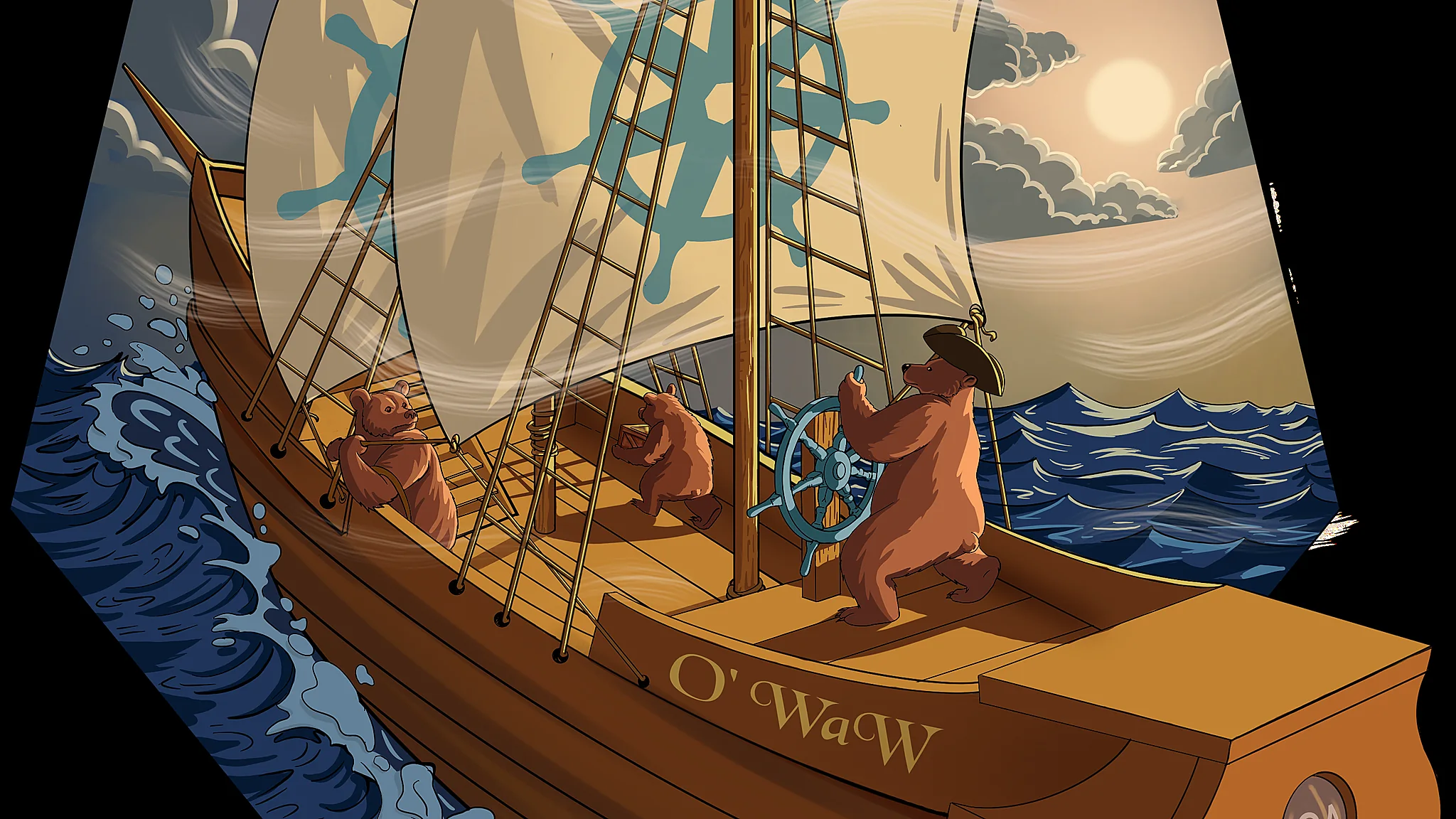
The visual representation accompanying this theme is equally rich in symbolism. The logo depicts a sturdy ship battling against powerful winds, guided by a steadfast helm. Bears are incorporated into the design as well, representing strength, resilience, and the ability to overcome obstacles – qualities essential for tackling complex engineering problems and building robust infrastructure. This imagery powerfully encapsulates the core message: Kubernetes’ continued success relies on our collective effort to steer through turbulent times, leveraging both technical prowess (‘will’) and adaptability in the face of change (‘wind’).
The choice of a ship navigating wind isn’t accidental; it speaks to Kubernetes’ role as a crucial vessel carrying modern applications across complex infrastructures. The helm symbolizes control and direction – highlighting the community’s responsibility in guiding the platform’s evolution. Ultimately, ‘Of Wind & Will’ serves not just as an aesthetic element, but as a reminder of the collaborative spirit that defines Kubernetes and the unwavering commitment needed to maintain its position at the forefront of container orchestration.
By embracing this thematic approach, the Kubernetes project aims to acknowledge the hard work involved in each release while simultaneously inspiring continued community engagement and innovation. The ‘Of Wind & Will’ theme and logo are more than just branding; they represent a shared understanding of the challenges we face and the collective power we possess to overcome them.
The ‘Of Wind & Will’ Concept
The Kubernetes v1.34 release adopts the evocative theme ‘Of Wind & Will,’ a concept deeply rooted in perseverance and collective effort. The name references the challenges inherent in complex software development, particularly within a project as vast and dynamic as Kubernetes. ‘Wind’ symbolizes the unpredictable forces – technical hurdles, evolving requirements, and unforeseen complexities – that constantly buffet the development process.
Conversely, ‘Will’ represents the unwavering determination and collaborative spirit of the Kubernetes community. It acknowledges the dedication and ingenuity required to navigate these challenges and ultimately deliver a stable, reliable platform for container orchestration. The theme isn’t simply about overcoming obstacles; it celebrates the strength found in shared purpose and the power of collective action.
The accompanying logo visually reinforces this duality. The design incorporates elements that suggest both movement (representing ‘Wind’) and steadfastness (‘Will’), ultimately symbolizing Kubernetes’ ability to adapt and endure through ongoing development and community contributions. It aims to capture the essence of what makes Kubernetes successful: a resilient system built on the dedication of countless individuals.
Visual Representation
The Kubernetes v1.34 release adopts the theme “Of Wind & Will,” reflected in a striking new logo that blends powerful symbolism. The image features a bear, representing strength, resilience, and the community’s unwavering commitment to Kubernetes. A ship sailing amidst swirling winds visually embodies the ever-evolving nature of container orchestration and navigating complex deployments.
The wind itself is a central metaphor, symbolizing both the challenges faced in managing modern infrastructure and the adaptability required for continuous innovation within the Kubernetes ecosystem. The helm prominently displayed on the ship signifies direction, control, and the ability to steer through these dynamic conditions – aligning with Kubernetes’ role as a guiding force for developers.
Ultimately, “Of Wind & Will” and its corresponding logo represent Kubernetes’ ongoing journey of growth, resilience, and the community’s collective determination to navigate the complexities of cloud-native technologies. The bear’s steadfastness combined with the ship’s navigation speaks to the project’s power and enduring relevance.
Spotlight on Key Updates
Kubernetes v1.34, playfully themed “Of Wind & Will,” delivers a robust set of enhancements designed to streamline operations and bolster security across diverse environments. This release builds upon the strong foundation established by previous iterations, showcasing the continued commitment to quality and community-driven innovation. With 58 total improvements – 23 graduating to Stable, 22 entering Beta, and 13 in Alpha – v1.34 offers a compelling upgrade path for users seeking enhanced functionality and improved resource management.
A standout feature of this release is the graduation of Dynamic Resource Allocation (DRA) to Stable status. This significant milestone brings substantial benefits, particularly for managing resources like GPUs and NICs. DRA allows Kubernetes clusters to dynamically allocate these specialized hardware resources based on pod requirements, leading to more efficient utilization and reduced operational overhead. Previously requiring complex workarounds, this now-stable feature simplifies the process of provisioning and scaling workloads that rely on dynamic hardware allocation, marking a major step forward for resource optimization.
Security receives a notable boost with the Beta introduction of Projected ServiceAccount tokens for kubelet image credential providers. This change addresses a critical security concern by replacing long-lived credentials with short-lived, audience-bound tokens during image pulls. By limiting the scope and lifespan of these tokens, v1.34 significantly reduces the attack surface associated with compromised credentials, offering improved protection against unauthorized access to container images – a vital improvement for any Kubernetes deployment.
Looking towards future development, Kubernetes v1.34 also introduces Alpha support for KYAML (Kubernetes YAML), a new dialect of YAML specifically designed for Kubernetes configurations. KYAML aims to address common pitfalls associated with standard YAML, such as schema drift and validation inconsistencies. By enforcing stricter structure and providing enhanced tooling, KYAML promises to deliver safer, more predictable, and ultimately easier-to-manage Kubernetes configuration files – laying the groundwork for a potentially transformative shift in how we define our deployments.
Stable: The core of DRA is GA
Kubernetes v1.34 marks a significant milestone for Dynamic Resource Allocation (DRA), as it officially graduates from Beta to Stable status. DRA provides a standardized way for Kubernetes nodes to expose resource information, allowing device plugins – specifically those managing GPUs and Network Interface Cards (NICs) – to dynamically register their capabilities with the kubelet. This eliminates the need for manual configuration and significantly simplifies deployment workflows.
Prior to DRA’s stabilization, deploying applications requiring specialized hardware like GPUs or high-performance NICs often involved complex device driver installations and static resource assignments. With DRA in Stable, these plugins can now advertise their available resources directly to Kubernetes, enabling automated scheduling of workloads that precisely match the required hardware profile. This leads to improved resource utilization, reduced operational overhead, and greater flexibility in deploying diverse application types.
The graduation of DRA reflects considerable community effort and signifies its readiness for widespread adoption. It’s a core component for modern cloud-native deployments leveraging specialized hardware and paves the way for more intelligent and automated resource management within Kubernetes clusters.
Beta: Projected ServiceAccount tokens for kubelet image credential providers
Kubernetes v1.34 introduces a beta feature focused on enhancing image pull security: Projected ServiceAccount tokens for kubelet image credential providers. Previously, kubelets relied on long-lived credentials or insecure registry configurations to pull container images, creating potential vulnerabilities if these credentials were compromised. This new approach offers a significant step forward in mitigating those risks.
The projected token mechanism leverages short-lived, audience-bound ServiceAccount tokens for image pulls. ‘Audience’ refers to the intended recipient of the token; in this case, it restricts its use specifically for pulling images from container registries. By limiting the scope and lifespan of these tokens, Kubernetes significantly reduces the attack surface should a token be exposed or stolen.
This beta feature provides a more granular control over image pull permissions and strengthens the overall security posture of Kubernetes clusters. It allows administrators to define precisely which ServiceAccounts can access specific container registries for image pulls, promoting the principle of least privilege and reducing the potential impact of credential compromise. Implementation requires configuring the kubelet with the new provider alongside appropriate ServiceAccount token projection settings.
Alpha: Support for KYAML, a Kubernetes dialect of YAML
Kubernetes v1.34 introduces a brand new alpha feature called KYAML, short for Kubernetes YAML. This represents an experimental dialect of YAML specifically designed to enhance the safety and structure of Kubernetes configuration files. Standard YAML, while widely used, can be prone to errors due to its flexible nature; subtle typos or incorrect formatting can lead to deployment failures and unexpected behavior.
KYAML aims to address these challenges by enforcing stricter validation rules and introducing a more declarative style. It leverages the power of Kubernetes’ own admission controllers to validate configurations at creation time, catching potential issues before they impact running workloads. Think of it as a ‘smart’ YAML that’s actively checked for correctness against Kubernetes resource schemas.
Currently in alpha, KYAML is intended for early adopters and those willing to contribute feedback during its development phase. While not yet ready for production use, the project promises to improve the reliability and maintainability of Kubernetes deployments over time by reducing common configuration errors.
Features Graduating to Stable
Kubernetes v1.34, playfully nicknamed “Of Wind & Will,” marks another significant step forward in the platform’s evolution, and a key highlight is the maturation of several previously experimental features into stable status. This release continues Kubernetes’ commitment to delivering incremental improvements with consistent quality, thanks to the dedication of our developers and the active participation of the community. While new alpha and beta functionalities are always exciting indicators of future possibilities, the move of these features from earlier stages signifies a higher level of reliability and readiness for production environments.
Among the 23 enhancements graduating to stable in v1.34 is the improved handling of Job pod creation. Previously, creating replacement pods for Jobs could sometimes lead to resource contention and scheduling inefficiencies. With this stabilization, Kubernetes now employs a more deliberate approach, optimizing resource utilization and ensuring smoother operation for critical batch processing workloads – essentially preventing a frantic rush when a Job needs to be restarted.
Resilience also receives a boost with the stable release of recovery from volume expansion failures. In scenarios where expanding persistent volumes encounters issues – perhaps due to storage provider limitations or network interruptions – Kubernetes now provides more robust mechanisms for gracefully handling these errors and minimizing disruption to running applications. This enhanced fault tolerance is crucial in maintaining high availability, particularly within complex cloud-native deployments.
Finally, the stabilization of VolumeAttributesClass offers a dynamic approach to volume management. This feature enables users to adjust volume parameters – such as IOPS or throughput – after initial provisioning without requiring full volume recreation. This flexibility allows for fine-grained control over storage resources and optimization based on evolving application needs, providing greater agility in managing persistent data.
Delayed creation of Job’s replacement Pods
Kubernetes v1.34 introduces a significant improvement to Job management with the stabilization of ‘Delayed creation of Job’s replacement Pods’. Previously, when a Pod managed by a Job failed, Kubernetes would immediately attempt to create a replacement. This rapid pod creation could lead to resource contention on the node, especially in environments with limited resources or high scheduling pressure.
The new stable feature implements a configurable delay before initiating the creation of replacement pods for failed Jobs. This ‘replacement backoff’ provides valuable time for the scheduler to consider alternative workloads and potentially avoid over-committing resources to a single Job. It also allows nodes to recover from transient issues that might cause initial pod failures.
By introducing this delay, Kubernetes v1.34 enhances scheduling efficiency and reduces the likelihood of resource exhaustion during Job execution. This feature is particularly beneficial in environments with dynamic workloads or where resource availability fluctuates.
Recovery from volume expansion failure
Kubernetes v1.34 introduces a significant enhancement to cluster resilience regarding persistent volume expansion failures. Previously, if a volume expansion operation failed during the resize process (e.g., due to storage backend issues), Kubernetes would often enter an inconsistent state, potentially leading to pod evictions or application downtime. This new stable feature provides a more graceful handling of these failures.
The improved mechanism now allows the kubelet to detect and recover from volume expansion failures without requiring immediate pod restarts or cluster-wide disruptions. The kubelet will attempt to retry the expansion operation based on configured parameters, and if retries fail, it transitions the volume to an ‘ExpansionFailed’ state. This clearly signals the failure and prevents further operations until the underlying problem is resolved.
This feature represents a maturation of previously experimental functionality and marks a crucial step towards more robust persistent storage management within Kubernetes environments. Users can now expect greater stability and reduced operational overhead when dealing with volume expansion events, contributing to overall application reliability.
VolumeAttributesClass for volume modification
Kubernetes v1.34 introduces a new feature called VolumeAttributesClass, marking its graduation from Alpha to Stable. This feature provides a mechanism for dynamically adjusting volume parameters at runtime without requiring pod restarts or complex scripting. Previously, modifying volume properties often necessitated recreating volumes and rescheduling pods, leading to downtime and disruption.
VolumeAttributesClass allows administrators to define sets of attributes that can be applied to PersistentVolumes (PVs). These attributes can control aspects like encryption settings, access modes, or performance tiers. When a pod requests a volume, it can specify which VolumeAttributesClass should be applied, enabling the dynamic adjustment of these parameters based on workload requirements.
Essentially, this feature decouples volume configuration from static definitions, offering greater flexibility and automation in managing storage resources within Kubernetes clusters. The stable status of VolumeAttributesClass signals its readiness for widespread adoption and production use cases.
New Features in Beta
Kubernetes v1.34, playfully themed ‘Of Wind & Will,’ continues the project’s tradition of iterative improvement and community-driven development, boasting 22 new features now in Beta – a significant step closer to general availability. These Beta features represent substantial progress towards enhancing Kubernetes’ capabilities and streamlining operational workflows. While Stable features garner much attention, these Beta additions offer early adopters a chance to test and provide feedback, shaping the future direction of the platform. This release highlights the ongoing commitment to refining core functionalities and introducing innovative solutions.
One particularly exciting advancement in Beta is the ability to define resource requests and limits at the Pod level rather than on a per-container basis. Previously, managing resources required granular configuration for each container within a pod, adding complexity and potential for inconsistencies. This change simplifies resource management, allowing operators to easily allocate resources based on the overall needs of the application running in the pod. It also offers more flexibility in how resources are utilized across multiple containers sharing a single Pod specification.
Another notable Beta feature is the introduction of streaming informers for list requests. Kubernetes often deals with large lists of resources, and retrieving these lists can be a performance bottleneck, especially under high load. Streaming informers address this by allowing data to be returned incrementally instead of waiting for the entire list to be assembled. This significantly improves both the responsiveness and stability of Kubernetes components when handling resource listings, leading to a smoother user experience and reduced risk of timeouts or errors.
The move to Beta signifies these features have undergone considerable testing and refinement within the Kubernetes community. While they are considered stable enough for broader experimentation, users should still be aware that APIs may evolve before reaching general availability. Feedback during this Beta phase is crucial in ensuring a seamless transition when these features eventually graduate to Stable status, contributing directly to the ongoing evolution of Kubernetes v1.34 and beyond.
Pod-level resource requests and limits
Kubernetes v1.34 introduces a significant enhancement regarding resource management: the ability to define resource requests and limits directly at the Pod level instead of solely per container within the Pod. Previously, managing resources often involved specifying them for each individual container, leading to potential complexity and inconsistencies across deployments. This new beta feature offers a streamlined approach, simplifying resource allocation and improving overall cluster efficiency.
Defining resources at the Pod level simplifies configuration as it consolidates these settings into a single location. This reduces redundancy and makes it easier to understand and modify resource requests for entire workloads. Furthermore, this change facilitates improved scheduling decisions by the Kubernetes scheduler, allowing it to more accurately assess the total resource needs of a Pod when determining placement across nodes.
While currently in Beta, this feature represents an important step towards simplifying Kubernetes administration and optimizing resource utilization. Users are encouraged to experiment with this approach in non-production environments to familiarize themselves with its benefits and prepare for wider adoption as it progresses toward general availability.
Streaming informers for list requests
Kubernetes v1.34 introduces streaming informers for list requests, a new Beta feature designed to significantly improve performance and stability when retrieving large lists of Kubernetes resources. Traditionally, list operations would fetch the entire dataset into memory before returning results, which could be problematic with thousands or even millions of objects.
Streaming informers change this behavior by delivering resource entries incrementally as they become available from the API server. This eliminates the need to load the complete list into memory at once, reducing latency and preventing out-of-memory errors that can sometimes occur during large list operations. The client receives data in chunks, allowing for more responsive interactions and better overall system resilience.
This Beta feature is particularly beneficial for tools and controllers that frequently interact with extensive resource lists, such as dashboards, monitoring systems, or operators managing complex deployments. While still under development, streaming informers represent a key step towards optimizing Kubernetes’ scalability and responsiveness in increasingly demanding environments.
New Features in Alpha
Kubernetes v1.34, playfully themed “Of Wind & Will,” brings with it a fresh wave of enhancements, and as always, a selection of exciting new features in Alpha are available for early adopters to explore and provide valuable feedback. These experimental additions represent the cutting edge of Kubernetes development, offering glimpses into potential future capabilities while allowing the community to shape their direction. While still subject to change, participating in Alpha testing is crucial for ensuring these features mature effectively and meet the evolving needs of users.
One particularly noteworthy Alpha feature introduced in v1.34 revolves around Pod Certificates for mTLS authentication. This enhancement aims to provide a more robust and secure identity mechanism within Kubernetes clusters. Currently, mutual TLS (mTLS) often relies on complex configurations and external certificate management systems. Pod Certificates simplify this process by allowing pods to generate and manage their own X.509 certificates directly, streamlining the setup and improving security posture for services requiring mTLS.
The implementation leverages a new Kubernetes API that manages these certificates, integrating seamlessly with existing pod lifecycle management. This approach promises increased flexibility and reduced operational overhead compared to traditional methods while also supporting more granular certificate policies. Remember, as an Alpha feature, expect potential breaking changes and limitations – thorough testing in non-production environments is highly recommended before considering broader adoption.
Beyond Pod Certificates, several other Alpha features are available for experimentation within v1.34. We encourage those interested in contributing to the future of Kubernetes to dive into the official release notes and documentation, explore these early implementations, and share their experiences with the development team. Your feedback is invaluable as we work together to refine these features and shape the ongoing evolution of the platform.
Pod certificates for mTLS authentication
Kubernetes v1.34 introduces a new alpha feature focused on enhancing mutual TLS (mTLS) authentication within the cluster: pod certificates. This approach moves away from relying solely on token-based authentication, offering a more robust identity mechanism for pods.
Traditionally, Kubernetes relies heavily on bearer tokens for pod authentication. Pod certificates leverages X.509 certificates to provide stronger authentication guarantees. The kubelet automatically requests and rotates these certificates from the control plane, simplifying certificate management and improving security posture compared to manual certificate provisioning.
Currently in alpha, this feature allows administrators to define a Certificate Signing Request (CSR) approval webhook that can validate and approve certificate requests before they are issued to pods. This provides increased control over which pods receive certificates and helps ensure the integrity of the authentication process. Early adopters are encouraged to test and provide feedback on this experimental functionality.
Graduations, Deprecations and Removals
Kubernetes v1.34, playfully nicknamed ‘Of Wind & Will,’ continues the project’s commitment to iterative improvement and community collaboration. While packed with 58 enhancements – a significant number of which are graduating to stable status – this release also necessitates attention for those maintaining existing Kubernetes deployments. This section focuses on the crucial changes involving graduations, deprecations, and removals, ensuring smooth transitions and avoiding potential disruptions as you upgrade.
A key area of change revolves around cgroup driver management. Manual configuration of the cgroup driver is now deprecated in favor of automated detection. Previously, administrators often needed to explicitly specify which cgroup driver their nodes should use. This requirement added complexity and maintenance overhead. With this deprecation, Kubernetes will automatically determine the appropriate driver based on the node’s operating system, simplifying deployment and reducing potential configuration errors. Users are strongly encouraged to migrate away from manual configurations as soon as possible to take advantage of this streamlined approach.
Beyond cgroup drivers, several other features have been deprecated or removed across various Kubernetes components. These changes aim to refine the platform’s architecture and eliminate outdated functionality. A full list can be found in the official release notes, but it’s critical that operators review these carefully to understand the impact on their workloads and plan for necessary adjustments. Ignoring these deprecations could lead to issues after upgrading.
Ultimately, Kubernetes v1.34 represents a continued evolution of the platform. While the new stable features offer exciting possibilities, responsible upgrades require careful consideration of the deprecations and removals outlined in this release. Proactive planning and testing are essential for ensuring a seamless transition and maximizing the benefits of this latest iteration.
Manual cgroup driver configuration is deprecated
Kubernetes v1.34 marks a significant shift in how the cluster manages container resource allocation through cgroups. Previously, administrators could manually configure the cgroup driver used by Kubernetes. This manual configuration involved specifying which driver (like `systemd`, `cgroupfs`, or `none`) should be employed for managing containers’ resources.
With v1.34, this explicit manual configuration is deprecated. The rationale behind this change is to streamline cluster setup and maintenance while improving reliability. Kubernetes now automatically detects the appropriate cgroup driver based on the underlying operating system and container runtime environment. This automated detection simplifies deployment and reduces potential for misconfiguration.
While manual configuration remains functional in v1.34, its use is strongly discouraged and will be removed entirely in a future release (v1.37). Users relying on manual cgroup driver selection should transition to the automated detection mechanism as soon as possible to avoid disruption when the feature is eventually removed.
The journey through Kubernetes v1.34 reveals a powerful confluence of enhancements designed to streamline operations and boost developer productivity. From improved scheduling capabilities to refined security features, this release clearly demonstrates the ongoing commitment to evolving container orchestration. We’ve seen significant strides in areas like device plugin stability and enhanced support for custom resource definitions, indicating a focus on both core functionality and extensibility. The team’s dedication shines through, delivering improvements that will resonate across diverse deployment scenarios – whether you’re managing small clusters or sprawling enterprise environments. As we move forward, these refinements build upon the foundation of Kubernetes, solidifying its position as the leading platform for modern application delivery. Understanding how Kubernetes v1.34 addresses current challenges and paves the way for future innovation is crucial for anyone invested in cloud-native technologies. For a comprehensive breakdown of all changes and new features, be sure to dive into the official release notes; they’re packed with technical details and valuable insights. To learn more about these updates directly from the engineers who built them, join us at our upcoming virtual event where we’ll provide a live walkthrough and Q&A session. Finally, contribute to the vibrant Kubernetes community – share your experiences, ask questions, and help shape the future of container orchestration by joining our forums and Slack channels; your input matters!
Explore the full scope of what’s new in Kubernetes v1.34 here: [Link to release notes]. Register now for our deep-dive event featuring expert insights: [Link to event registration]. Engage with fellow users and contribute to the conversation on our community platforms: [Link to community participation channels].
Source: Read the original article here.
Discover more tech insights on ByteTrending ByteTrending.
Discover more from ByteTrending
Subscribe to get the latest posts sent to your email.