Understanding Space Weather and Its Impact
Space weather, driven by solar activity such as coronal mass ejections (CMEs), poses a growing threat to our increasingly technology-dependent society. Geomagnetic storms resulting from these events can disrupt satellite communications, damage power grids, and even impact aviation. Predicting the arrival time and intensity of these storms is crucial for mitigating their effects; however, current forecasting methods face significant challenges.
The New Simulation: A More Detailed Approach
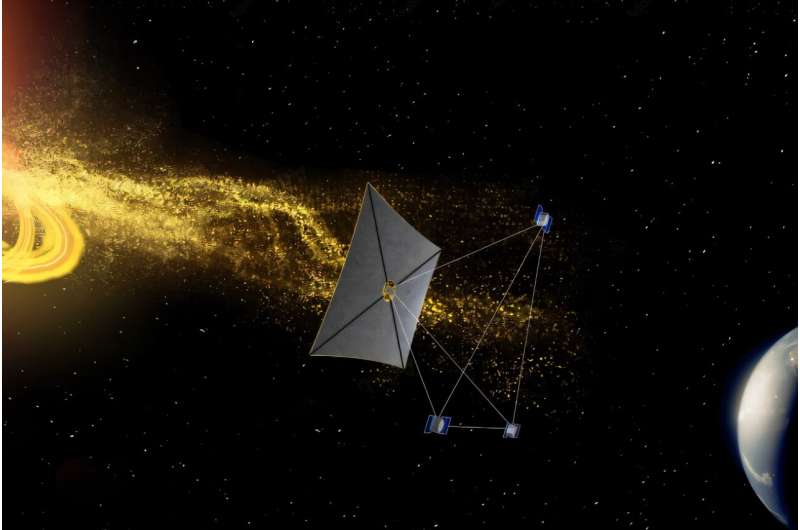
Researchers at the University of Michigan have developed a sophisticated simulation aimed at better understanding CME behavior. Unlike previous models, this new simulation incorporates a greater level of detail regarding the complex magnetic field structures within CMEs. These intricate fields play a vital role in how a CME interacts with the Earth’s magnetosphere and ultimately influences geomagnetic activity. For example, these simulations are essential for accurate space weather forecasting.
Key Findings and Limitations
- Complex Magnetic Fields Matter: The simulation highlighted the critical role of intricate magnetic field configurations within CMEs. These structures significantly impact how energy is transferred to Earth’s magnetosphere, often in unpredictable ways.
- Current Forecasting Struggles: The detailed simulation revealed a significant discrepancy between predicted CME arrival times and actual observed events when considering these complex magnetic fields. Current models often oversimplify the internal structure of CMEs, leading to inaccurate forecasts. Therefore, more advanced techniques are needed for effective space weather prediction.
- Hardware Limitations Exposed: Perhaps most importantly, the researchers discovered that current space-based sensors are not adequately equipped to capture the fine-scale details needed to fully characterize CME magnetic fields. The simulation exposed a critical gap – we need better observational data to improve forecasting accuracy. Consequently, investment in new technologies is vital.
The research team used advanced computational techniques to model the CMEs and their interactions with Earth’s magnetosphere, providing valuable insights into the underlying physics of space weather events.
Improving Space Weather Forecasting: A Multi-faceted Approach
Addressing this forecasting weakness requires a two-pronged approach. First, we need to continue developing more sophisticated simulation models that account for complex magnetic field structures. Second, and equally importantly, we must invest in advanced space-based instrumentation capable of accurately measuring these fields. Furthermore, improving our understanding of the dynamics of space weather is paramount.
Future Directions
- New Satellite Missions: Future missions could be designed specifically to observe CME magnetic fields with higher resolution than currently possible.
- Data Assimilation Techniques: Improved techniques are needed to incorporate real-time observational data into simulation models, allowing for more accurate and timely forecasts.
- Machine Learning Applications: Machine learning algorithms could be trained on vast datasets of simulated and observed CME data to identify patterns and improve prediction accuracy. In addition, machine learning can help refine space weather models.
Ultimately, a better understanding of space weather is crucial for protecting our technological infrastructure and ensuring the safety of astronauts in space. Notably, accurate forecasts rely on comprehensive data and advanced modeling techniques.
Conclusion: A Call for Enhanced Observation and Modeling
The University of Michigan’s simulation provides compelling evidence that current space weather forecasting methods are falling short due to limitations in both modeling complexity and observational capabilities. By acknowledging this weakness and investing in improved simulations and advanced sensing hardware, we can significantly enhance our ability to predict and mitigate the potentially devastating impacts of solar storms. Indeed, continued research into space weather is essential for safeguarding our future.
Source: Read the original article here.
Discover more tech insights on ByteTrending.
Discover more from ByteTrending
Subscribe to get the latest posts sent to your email.