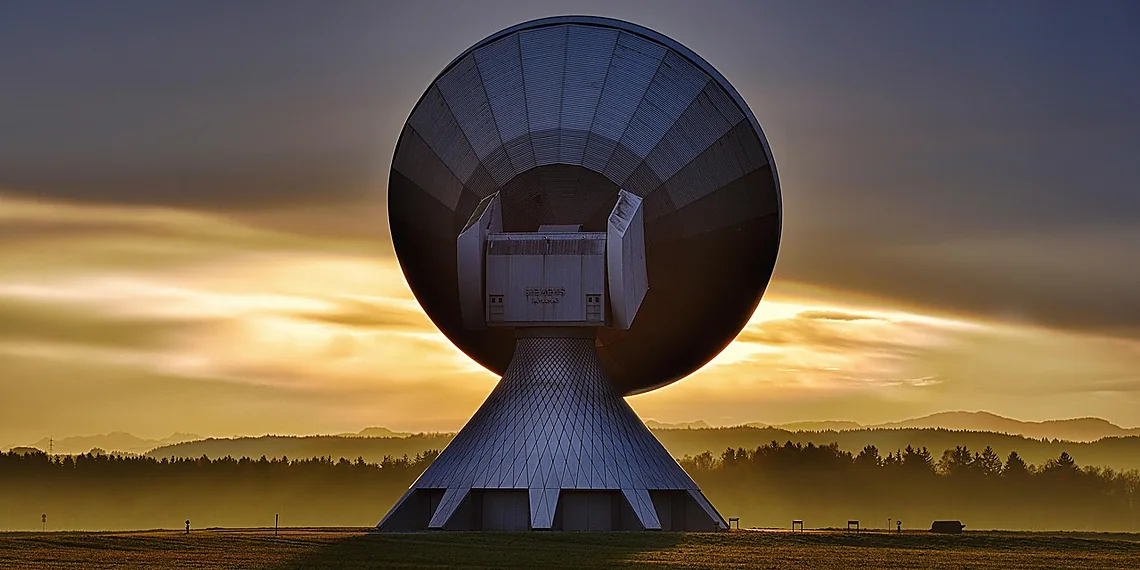

Ever been traveling abroad and struggled to get a signal on your phone, constantly searching for that elusive roaming connection? That feeling of frustration – the dropped calls, slow data speeds, and general disconnect – is surprisingly similar to what NASA’s faced when communicating with spacecraft far from Earth.
Currently, our reliance on traditional deep-space communication relies heavily on large ground antennas and fixed orbital relay stations, creating bottlenecks that limit bandwidth and introduce significant delays, especially for missions venturing beyond Mars.
But what if we could create a network of interconnected satellites acting as ‘digital stepping stones’ across the solar system? NASA’s Pathfinder for Exploitation of Technology (PExT) is poised to do just that, representing a monumental leap forward in how we connect with our robotic explorers.
This innovative technology essentially builds robust Space Communication Networks using a constellation of small satellites capable of relaying data between each other and Earth, vastly improving bandwidth and reducing latency for future missions – think instant communication instead of waiting minutes or even hours for a response.


The Problem with Current Space Communication
For decades, space missions have operated under a surprisingly restrictive communication model. Unlike your smartphone effortlessly hopping between cell towers – roaming, as it’s known – NASA spacecraft are typically tethered to dedicated communication infrastructure owned and operated by government agencies like NASA itself, or international partners. This reliance on specific networks means missions are essentially locked into pre-determined pathways for transmitting data back to Earth, limiting flexibility and often incurring significant costs. Building and maintaining these specialized networks requires massive investment, tying up resources that could potentially be directed towards other aspects of space exploration.
The current system presents several challenges beyond just the financial burden. Launch windows are frequently dictated by network availability, hindering mission timelines and responsiveness to unexpected discoveries. If a particular government network is experiencing issues or undergoing maintenance, it can directly impact a mission’s ability to transmit crucial data – potentially delaying scientific findings or even jeopardizing equipment health. Furthermore, as commercial space activities expand exponentially, the demand for bandwidth far outstrips what these traditional networks can provide, creating bottlenecks and limiting access.
This dependency also restricts experimentation with new communication technologies. Integrating innovative approaches often requires navigating complex bureaucratic hurdles and adapting to established protocols within these government-controlled systems. The lack of a more open and flexible infrastructure stifles innovation and prevents NASA from fully leveraging the burgeoning capabilities offered by commercial space companies who are rapidly developing advanced satellite constellations and alternative communication pathways.
Ultimately, this rigid system represents a significant limitation on future space exploration endeavors. The need for greater agility, cost-effectiveness, and access to diverse communication options has become increasingly critical as we look towards expanding our presence beyond Earth.
Dedicated Networks & Limited Options

Currently, most NASA missions, along with those from other national space agencies like ESA or JAXA, rely heavily on dedicated communication infrastructure. These are essentially bespoke networks built and maintained by the agency for its exclusive use. Think of it as a private phone line specifically for spacecraft – you can only call if you’re using that particular service provider.
This reliance presents significant challenges. Building and maintaining these networks is incredibly expensive, often requiring substantial investment in ground stations and satellite relays around the globe. Furthermore, missions are locked into the capabilities and schedules dictated by the owning agency; switching communication pathways or rapidly scaling bandwidth can be difficult and time-consuming, hindering mission adaptability.
The inflexibility extends to commercial opportunities as well. Private companies looking to launch their own satellites often face a barrier – they must either build their own costly infrastructure or negotiate access to existing government networks which can be restrictive in terms of usage rights and pricing. This limits innovation and slows the expansion of space-based services.
Introducing PExT: The ‘Roaming’ Solution
Imagine your cellphone effortlessly switching from Verizon to T-Mobile as you travel – that’s essentially what NASA is now making possible for deep space missions with its Polylingual Experimental Terminal, or PExT. This groundbreaking technology demonstration acts like a ‘space roaming’ device, allowing spacecraft to seamlessly transition between different communication networks, both government-owned and commercial. Until recently, spacecraft were largely locked into specific networks, limiting flexibility and potentially hindering mission success if those networks experienced outages or congestion. PExT is changing that paradigm, opening up new possibilities for future exploration.
At the heart of PExT’s functionality lies network agility – its ability to dynamically switch between communication channels. This isn’t a simple matter of flipping a switch; it involves sophisticated software-defined radio (SDR) technology. SDR allows the terminal to adapt its transmission and reception parameters on the fly, essentially ‘speaking different languages’ depending on which network is available. Think of it as having multiple radios built into one device, each configured for a specific communication protocol – NASA’s Deep Space Network or a commercial provider like SpaceX’s Starlink, for example.
The beauty of PExT isn’t just about redundancy; it’s about optimization and resilience. By leveraging commercial networks, missions can potentially access higher bandwidth, lower latency connections, and more flexible scheduling options than previously available. This increased connectivity could be crucial for transmitting high-resolution data from distant planets or supporting real-time communication with astronauts on lunar surfaces. The PExT demonstration is a vital step towards establishing truly robust and adaptable space communication networks.
Ultimately, PExT represents a significant shift in how we approach deep space communications. It moves us away from reliance on single, government-controlled infrastructure toward a more distributed and commercially integrated system – mirroring the evolution of terrestrial telecommunications. This technological advancement promises to not only enhance existing missions but also pave the way for ambitious future endeavors further into our solar system and beyond.
How PExT Works – Network Agility
The core of PExT’s ‘roaming’ capability lies in its software-defined radio (SDR) architecture. Traditional space communication systems are typically locked to specific frequencies and protocols dictated by government agencies like NASA’s Deep Space Network. PExT, however, uses flexible SDR technology, essentially a programmable radio that can be reconfigured via software to operate on different frequency bands and utilize various modulation schemes – the ‘language’ used for sending data. This allows it to adapt to diverse communication systems.
This adaptability is crucial because commercial space networks are rapidly expanding, offering potentially faster speeds and lower costs compared to relying solely on government infrastructure. PExT can dynamically switch between these networks without interrupting a mission’s data flow. Imagine a spacecraft needing to transmit critical sensor readings; if the Deep Space Network is experiencing congestion or unavailable, PExT can seamlessly transition to a commercially available satellite constellation like Starlink or OneWeb.
The software that controls this switching process analyzes network availability and performance in real-time. It prioritizes connections based on factors like data rate, latency, and signal strength. This intelligent decision-making ensures the mission maintains reliable communication regardless of which network it’s utilizing – a significant step towards more resilient and flexible space exploration.
Benefits & Future Implications
The advent of NASA’s Polylingual Experimental Terminal (PExT) technology is poised to revolutionize how we approach future space missions, offering substantial benefits beyond the limitations of traditional communication methods. Think of it as enabling ‘roaming’ for spacecraft – just like your phone seamlessly switches between cellular networks, PExT allows mission assets to dynamically connect with various government and commercial communication pathways. This flexibility directly translates into significant cost reductions; rather than relying solely on expensive, dedicated NASA infrastructure, missions can leverage a wider pool of available resources, optimizing bandwidth usage and minimizing operational expenses.
Increased mission flexibility is another key advantage unlocked by PExT. Current deep-space missions often face constraints dictated by the availability of specific communication windows with Earth or designated relay satellites. With the ability to hop between networks—utilizing commercial constellations like Starlink or Kuiper alongside NASA’s Deep Space Network—missions gain unprecedented freedom in scheduling data transmissions and adjusting operational strategies. This dynamic connectivity also enhances resilience; if one network experiences an outage, PExT allows for immediate switching to an alternative, ensuring continuous communication flow and preventing mission-critical data loss.
Looking ahead, this technology paves the way for entirely new types of space missions previously deemed impractical or too costly. Consider lunar surface operations – a rover equipped with PExT could maintain contact with Earth even when positioned behind lunar terrain, utilizing local commercial satellites for relay. Similarly, Martian exploration becomes significantly more viable; while direct communication from Mars faces substantial delays and bandwidth limitations, PExT’s ability to leverage diverse networks creates opportunities for establishing orbiting relay infrastructure or utilizing opportunistic communication windows – drastically improving data rates and responsiveness.
Beyond the immediate benefits, PExT’s success signifies a broader shift towards commercialization within the space sector. By demonstrating the viability of interoperable communication networks, NASA is fostering collaboration with private companies and encouraging innovation in space-based services. This collaborative approach promises to accelerate the pace of space exploration and unlock unprecedented possibilities for scientific discovery and human expansion beyond Earth.
Beyond Earth Orbit: Deep Space Possibilities

The development of NASA’s Polylingual Experimental Terminal (PExT) represents a paradigm shift in deep space communication capabilities. Traditionally, missions venturing beyond low-Earth orbit have relied heavily on dedicated government networks like the Deep Space Network (DSN). PExT’s ability to seamlessly switch between various communication channels – including commercial satellite constellations – unlocks unprecedented flexibility and potentially significant cost savings for future endeavors. This ‘roaming’ capability means probes and habitats in distant locations are no longer solely dependent on a single, often congested, resource.
Consider lunar missions. Establishing a permanent base on the Moon would necessitate a robust communication infrastructure. PExT could allow lunar assets to leverage commercial networks – like those offered by SpaceX’s Starlink or Amazon’s Kuiper – for backup connectivity or even primary communications during periods of high DSN demand. Similarly, Martian exploration benefits enormously; relaying data from rovers and future human habitats on Mars is challenging due to the vast distance. PExT enables mission planners to utilize a wider array of available networks, increasing bandwidth and resilience against potential disruptions.
Looking further ahead, this technology paves the way for missions even deeper into our solar system. While commercial networks currently have limitations in coverage and latency at extreme distances, ongoing advancements are continually expanding their reach. PExT’s adaptability ensures that future probes exploring asteroids or venturing towards Jupiter can dynamically adjust to available communication resources, maximizing data return and mission success without being constrained by the availability of the DSN.
Commercial Space & the New Era of Connectivity
The burgeoning commercial space sector is rapidly reshaping how we explore beyond Earth, and a key enabler of this transformation is increasingly reliable and flexible communication infrastructure. For years, NASA and other governmental space agencies have primarily relied on dedicated government-owned networks for mission communications. However, the rise of private companies like SpaceX, Amazon’s Kuiper, and others offering satellite constellations has created an opportunity to leverage commercial capabilities – a shift that necessitates new approaches to connectivity.
NASA’s Polylingual Experimental Terminal (PExT) technology demonstration exemplifies this paradigm shift. Much like your smartphone seamlessly roams between cellular networks, PExT allows spacecraft to switch between government and commercial communication channels, ensuring continuous contact even as missions traverse different regions or encounter network limitations. This capability is crucial for increasingly complex and long-duration space exploration endeavors, from lunar missions to potential Mars settlements.
The implications of technologies like PExT extend far beyond NASA itself. By opening up access to diverse communication providers, PExT creates a potentially lucrative market for commercial satellite operators. Imagine government agencies or research institutions choosing the ‘best’ network – whether it’s SpaceX’s Starlink, Amazon’s Kuiper, or another provider – based on cost, coverage, and performance. This fosters competition amongst these commercial providers, driving innovation and ultimately lowering costs for everyone involved in space exploration.
While established players like SpaceX hold a significant advantage due to their existing satellite constellations, the rise of PExT-like technologies could also level the playing field somewhat, providing opportunities for newer entrants. The future likely involves a hybrid model where NASA and other government agencies will increasingly integrate commercial communication networks into their mission planning, creating a dynamic and competitive landscape that accelerates the pace of space exploration.
A Boost for Commercial Providers?
NASA’s recent demonstration of the Polylingual Experimental Terminal (PExT) represents a potentially significant boon for commercial satellite providers like SpaceX’s Starlink and Amazon’s Kuiper. PExT allows spacecraft to seamlessly switch between different communication networks – traditionally a capability exclusive to government missions using NASA’s Deep Space Network. This ‘space roaming’ functionality opens up new opportunities for commercial operators, allowing them to potentially host government payloads or research data relays without requiring dedicated infrastructure on each provider’s network.
The current landscape sees SpaceX and Kuiper aggressively building out their Low Earth Orbit (LEO) constellations, offering increased bandwidth and lower latency. PExT’s capability could make these commercial networks even more attractive to agencies like NASA or the European Space Agency (ESA), who currently face capacity constraints on government-owned systems. Imagine a research probe transmitting data via Starlink for initial analysis, then switching to Kuiper for higher bandwidth transmission – PExT facilitates precisely this kind of flexible operation.
While SpaceX and Amazon are the frontrunners in LEO constellation development, other providers like OneWeb also stand to benefit. The ability to interoperate across networks reduces vendor lock-in for government and research missions, fostering competition and potentially driving down costs. However, successful implementation will depend on standardization efforts and agreements between NASA and commercial providers regarding access protocols and data security – areas that are currently under development.
The development of PExT represents a monumental leap forward, promising to reshape how we interact with spacecraft venturing further than ever before.
Its ability to transmit data at unprecedented speeds and efficiency directly addresses some of the most significant bottlenecks currently facing deep-space exploration efforts.
Imagine real-time collaboration between scientists on Earth and astronauts on Mars – PExT brings that possibility closer to reality, fundamentally altering our approach to scientific discovery and problem-solving in remote environments.
This breakthrough highlights a crucial evolution within Space Communication Networks, moving beyond traditional limitations to embrace the demands of increasingly complex missions and ambitious goals for interplanetary travel. The implications extend far beyond just data transfer; they touch on everything from robotic autonomy to human presence in space – truly transformative potential is unfolding before us now. We’re witnessing not just an upgrade, but a paradigm shift in how we connect with our ventures beyond Earth’s orbit. The future of exploration hinges on these advancements and the continued innovation within this field. It’s clear that NASA’s commitment to pushing boundaries will continue to yield remarkable results for years to come. The possibilities are exhilarating and point towards an era where interplanetary communication is seamless and instantaneous, unlocking new levels of scientific understanding and inspiring generations of explorers. The potential for discovery fueled by technologies like PExT is simply immense, promising a deeper comprehension of our universe than ever before imagined. This isn’t just about sending signals; it’s about building bridges across the cosmos, fostering collaboration, and expanding humanity’s reach amongst the stars. The ongoing evolution of these networks will be instrumental in facilitating future missions and maximizing scientific return.
Continue reading on ByteTrending:
Discover more tech insights on ByteTrending ByteTrending.
Discover more from ByteTrending
Subscribe to get the latest posts sent to your email.