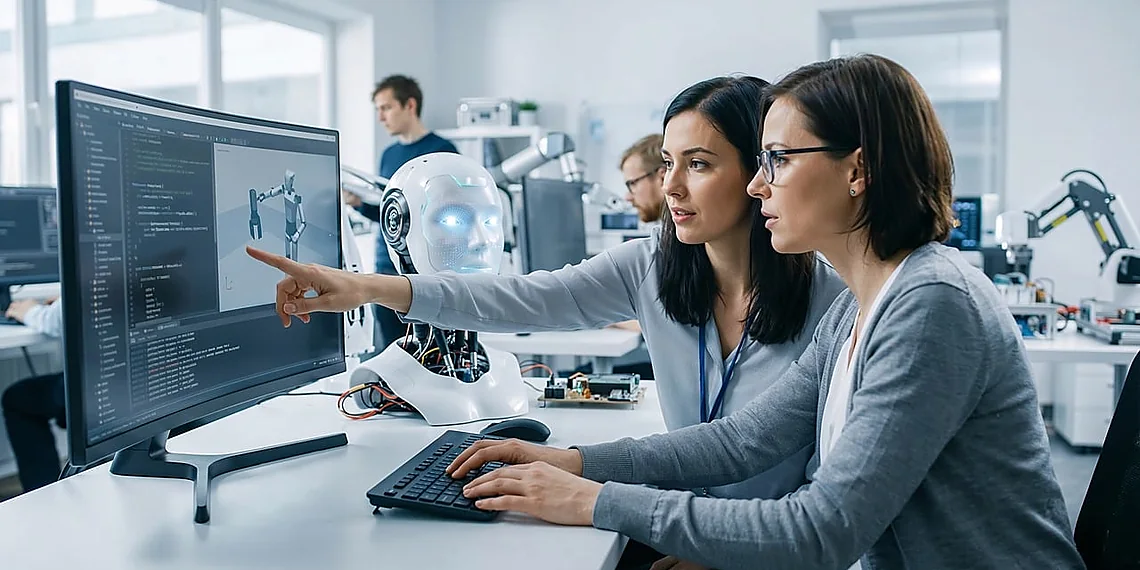

The line between our digital and physical realities is blurring faster than ever, fueled by advancements in robotics, computer vision, and machine learning. For years, we’ve explored these technologies largely in isolation – crafting sophisticated algorithms or designing intricate robotic arms without fully considering how they’d seamlessly integrate into the complex tapestry of human life and work. Now, a powerful new field is emerging to address this very challenge: Physical AI. It represents more than just combining existing technologies; it signifies a fundamental shift towards intelligent systems that actively perceive, understand, and interact with the world around them in meaningful ways.
Physical AI isn’t solely about building robots that can perform tasks; it’s about creating agents – whether robotic or embodied software – that possess adaptability, intuition, and the ability to learn from their environment alongside humans. This involves tackling challenges like robust perception in unpredictable settings, safe and intuitive human-machine interaction, and the development of truly autonomous decision-making capabilities within dynamic physical spaces. The focus is increasingly on how these systems can augment human abilities, not simply replace them.
Consider Diligent Robotics’ Moxi, a hospital assistant robot designed to handle logistical tasks, freeing up nurses for direct patient care; it exemplifies the potential of Physical AI to address real-world needs with practical solutions. Moxi’s success highlights the growing recognition that truly impactful AI requires a grounding in physical reality and a deep understanding of human workflows. We’re witnessing the exciting transition from theoretical concepts to tangible applications, promising a future where intelligent systems become integral partners in our daily lives.
The Lifecycle of Physical AI
Bringing Physical AI systems to life isn’t a simple feat; it’s a carefully orchestrated lifecycle involving intricate steps from initial data acquisition to continuous deployment in the real world. The process begins with gathering raw, often messy, data representing the physical environment. This frequently involves deploying an array of sensors – cameras for visual perception, LiDAR or radar for depth sensing, force/torque sensors for tactile feedback, and inertial measurement units (IMUs) for tracking motion. This data is then meticulously labeled and curated; imagine annotating thousands of images to teach a robot what a ‘door handle’ looks like or precisely defining the movements needed to grasp an object safely. The quality of this initial dataset directly dictates the performance and robustness of the eventual Physical AI system, making robust data acquisition strategies absolutely critical.

Once sufficient labeled data is compiled, it’s fed into machine learning models – often a combination of deep neural networks for perception (understanding what’s around) and reinforcement learning or imitation learning for control (deciding how to act). Training these models isn’t without its challenges. ‘Noisy’ sensor readings due to lighting variations or occlusions, plus the sheer number of edge cases encountered in dynamic environments (a spilled drink on the floor, a misplaced object), require sophisticated techniques like data augmentation and robust loss functions. Furthermore, simulations are often used to generate synthetic data and accelerate learning before deploying models into the physical world – this helps address scenarios that might be rare or dangerous to experience directly.
The next crucial stage is edge deployment – getting the trained model onto a device capable of real-time interaction with the environment. This isn’t typically done on powerful cloud servers; instead, specialized hardware like GPUs and custom ASICs are used within the physical system itself (e.g., onboard a robot). This ‘edge’ processing minimizes latency – essential for responsive actions – and allows operation even when network connectivity is unreliable. Optimizing models for these resource-constrained environments involves techniques like quantization and pruning, reducing model size and computational complexity without sacrificing accuracy.
Finally, the lifecycle isn’t complete with deployment; it enters a continuous feedback loop. As the Physical AI system interacts with the world, its actions and their outcomes are constantly monitored and logged. This new data is then used to retrain and refine the models, improving performance over time and adapting to changing conditions. Diligent Robotics’ Moxi exemplifies this perfectly: through millions of deliveries in hospitals, its navigation and manipulation skills have been continuously honed based on real-world feedback, creating a truly adaptive and intelligent healthcare assistant.
Data Acquisition & Model Training

The foundation of any physical AI system lies in acquiring comprehensive real-world data. This typically involves a suite of sensors including cameras (RGB, depth), LiDAR, microphones, tactile sensors, and inertial measurement units (IMUs). For example, to train a robot arm for grasping objects, numerous demonstrations are recorded using these sensors, capturing the joint angles, object positions, force feedback, and visual information associated with successful grasps. Similarly, autonomous navigation systems rely on camera data for semantic segmentation (identifying lanes, pedestrians, obstacles) and LiDAR for creating 3D maps of the environment. The sheer volume of this data—often terabytes per training run—is a significant logistical challenge.
This raw sensory input is rarely pristine; it’s often ‘noisy,’ containing errors from sensor limitations, lighting conditions, or unexpected events. Data augmentation techniques are frequently employed to artificially expand the dataset and improve model robustness by simulating variations like changes in viewpoint or occlusion. Furthermore, physical AI systems face a unique challenge: edge cases. These represent rare but critical scenarios—a child unexpectedly running into the path of an autonomous vehicle or a dropped tool obstructing a robot’s workspace. Identifying and incorporating these edge cases into training data is crucial for safety and reliable operation, often requiring specialized simulation environments and human-in-the-loop feedback.
The collected and processed data fuels various machine learning models, ranging from deep neural networks (for perception tasks like object recognition) to reinforcement learning algorithms (for control policies). Supervised learning approaches are common initially, where the model learns to mimic expert demonstrations. However, physical AI often progresses to reinforcement learning, allowing the system to refine its actions through trial and error in simulated or real-world environments. This iterative process of data collection, model training, deployment, and feedback loop refinement is what allows physical AI systems like Diligent Robotics’ Moxi to continuously improve their performance and adapt to new challenges.
Edge Deployment & Continuous Learning
The deployment of Physical AI isn’t a simple matter of pushing a trained model to the cloud; it demands strategic placement at the ‘edge’ – close to where physical interactions occur. This edge deployment is absolutely critical for achieving the low latency required for real-time decision making and responsive action. Imagine a robotic arm performing delicate surgery or an autonomous vehicle navigating complex traffic; any delay caused by transmitting data to a distant server and back could have catastrophic consequences. Consequently, Physical AI systems are increasingly reliant on powerful, yet compact, edge devices capable of handling significant computational loads directly within the physical environment.
However, deploying sophisticated AI models onto resource-constrained edge devices presents inherent trade-offs. While larger, more complex models generally deliver higher accuracy and nuanced understanding, they also demand greater processing power and memory – resources often limited on edge hardware. This necessitates careful model optimization techniques like quantization, pruning, and knowledge distillation to shrink model size without sacrificing too much performance. The ideal solution involves a delicate balance: maximizing AI capabilities while respecting the constraints of the deployment environment. Furthermore, specialized hardware accelerators (like GPUs or TPUs) are becoming increasingly common in edge devices specifically designed for Physical AI workloads.
Beyond initial deployment, true Physical AI thrives on continuous learning and adaptation. This requires establishing robust feedback loops where data collected from real-world interactions is used to refine the model over time. For example, Moxi, Diligent Robotics’ hospital delivery robot, constantly collects data about its navigation performance, object recognition accuracy, and interaction success rates. This data isn’t discarded; it fuels ongoing training processes that allow Moxi to learn from its mistakes, adapt to changing environments (like rearranged hospital layouts), and improve its overall efficiency—ultimately contributing to those impressive 1.2 million deliveries and significant time savings for healthcare staff.
Latency remains a key consideration throughout this continuous learning process. While periodic model updates are essential, transmitting large datasets back to the cloud for retraining can reintroduce latency issues. Therefore, techniques like federated learning – where models are trained locally on edge devices and only aggregated insights are shared – are gaining traction. This allows for decentralized learning that minimizes data transmission and maintains responsiveness while steadily improving the Physical AI system’s understanding of its physical surroundings.
Real-Time Processing at the Edge
Many Physical AI applications, like autonomous robots navigating dynamic environments or smart factory systems responding to immediate conditions, demand incredibly low latency – the delay between sensing an event and acting upon it. Relying solely on cloud processing introduces unacceptable delays due to network transit times and potential congestion. Imagine a robot arm needing to adjust its grip in real-time; even milliseconds of lag can compromise accuracy and safety. Processing data locally, directly on the ‘edge’ device (the robot itself, a sensor hub, or a nearby gateway), eliminates this dependency on cloud connectivity, ensuring near instantaneous responses crucial for reliable operation.
However, edge devices typically have limited computational resources compared to powerful cloud servers. This necessitates careful consideration of model complexity. While sophisticated deep learning models offer superior accuracy in many cases, they often require more processing power and memory than an edge device can comfortably handle. A trade-off exists: simpler, smaller models may be necessary for real-time performance on the edge, potentially sacrificing some accuracy. Techniques like model quantization (reducing precision) and pruning (removing unnecessary connections) are frequently employed to shrink model size without significant performance degradation.
The rise of specialized hardware – such as dedicated AI accelerators found in many embedded systems – is increasingly blurring this line. These chips offer significantly improved performance-per-watt, allowing for more complex models to be deployed at the edge while maintaining responsiveness and energy efficiency. This trend enables Physical AI systems to become both smarter and faster, continually improving their interaction with the physical world through localized processing and immediate feedback.
Moxi: A Case Study in Healthcare Logistics
Diligent Robotics’ Moxi robot offers a compelling case study in Physical AI, demonstrating how digital intelligence can be seamlessly integrated into real-world logistics operations. Unlike traditional automation focused on repetitive tasks in controlled environments, Moxi navigates the dynamic and unpredictable landscape of a hospital – dodging people, adapting to changing layouts, and interacting with various medical equipment. This requires more than just basic programming; it necessitates a system capable of perceiving its surroundings, planning routes, manipulating objects, and learning from experience—all hallmarks of Physical AI. The robot’s design prioritizes quiet operation and a non-intimidating appearance, crucial for acceptance and collaboration within the clinical setting.
The impact of Moxi is quantifiable and significant. Since its deployment, the robots have collectively completed over 1.2 million deliveries across numerous hospitals. This translates to an estimated saving of nearly 600,000 hours for nurses, technicians, and other clinical staff – time that can be redirected towards direct patient care. These aren’t just simple transport tasks; Moxi handles everything from lab specimens and medications to meals and supplies, often navigating complex routes and interacting with electronic door openers or even retrieving items from locked cabinets using its manipulation capabilities. This efficiency gain isn’t simply about speed; it’s about optimizing workflows and reducing the cognitive load on healthcare professionals.
Moxi’s success hinges on a continuous feedback loop central to Physical AI development. Data collected during each delivery – including sensor readings, navigation paths, object recognition results, and even human interactions – is used to refine its models and improve performance. This isn’t just about correcting errors; it’s about enabling Moxi to anticipate challenges, learn preferred routes based on staff behavior, and adapt to unforeseen circumstances like unexpected obstacles or changes in hospital layout. The team at Diligent Robotics actively incorporates clinician feedback into this iterative process, ensuring the robot continues to meet evolving needs and seamlessly integrates into existing workflows.
Key design choices further contribute to Moxi’s effectiveness. For example, its relatively small size allows it to navigate tight spaces often inaccessible to larger delivery vehicles. The modularity of its design enables easy customization for different hospital environments and tasks. Furthermore, the emphasis on human-robot collaboration – allowing staff to easily redirect or override Moxi’s actions – fosters trust and ensures the robot remains a supportive tool rather than a disruptive force within the healthcare ecosystem. This blend of robust AI capabilities with thoughtful ergonomic and operational design exemplifies the potential of Physical AI to revolutionize industries beyond just logistics.
Transforming Hospital Workflows with Moxi

Diligent Robotics’ Moxi exemplifies how physical AI is revolutionizing hospital logistics. Designed to handle routine tasks like delivering medications, lab samples, and supplies, Moxi operates autonomously within the complex environment of a hospital. It navigates hallways, elevators, and restricted areas, avoiding obstacles and adapting to changing conditions – all driven by sophisticated perception models trained on vast amounts of real-world data. This allows clinical staff, such as nurses and technicians, to focus on direct patient care instead of spending valuable time on transport duties.
The impact of Moxi has been substantial. To date, the robots have completed over 1.2 million deliveries across numerous hospital systems. This translates to an estimated savings of nearly 600,000 hours for clinical staff – a significant reduction in workload and potential burnout. Hospitals employing Moxi report increased operational efficiency and improved resource allocation as tasks are handled reliably and consistently by the robotic workforce.
Crucially, Moxi isn’t intended to replace human workers but rather to collaborate with them. The design emphasizes ease of interaction; staff can easily load items onto Moxi, redirect its path, or provide feedback. This collaborative approach ensures that the robot complements human capabilities and contributes to a more streamlined and efficient healthcare workflow, ultimately enhancing patient care.
The Future of Physical AI
The trajectory of Physical AI promises a shift from specialized applications to widespread integration across numerous sectors. While healthcare has rightfully been a proving ground, demonstrating tangible benefits like Moxi’s success in hospital logistics, the future envisions far broader adoption. Imagine automated quality control in manufacturing powered by robots with advanced visual inspection capabilities, or personalized shopping experiences in retail facilitated by intelligent assistants that understand customer needs and navigate complex store layouts. Agriculture stands to gain significantly from Physical AI-driven precision farming – autonomous vehicles monitoring crop health, optimizing irrigation, and even performing delicate harvesting tasks.
Emerging trends like embodied AI are critical drivers of this expansion. Embodied AI moves beyond simply controlling robots; it focuses on developing agents that learn through interaction with the environment, much like humans do. This necessitates a deeper integration of computer vision, natural language processing, and reinforcement learning to enable robots to not just *see* and *hear*, but also *understand* context and adapt to unforeseen circumstances. We’ll likely see more sophisticated human-robot collaboration, moving away from pre-programmed routines towards dynamic partnerships where humans and AI augment each other’s capabilities – a warehouse worker guiding an autonomous forklift through a narrow aisle, for example.
However, this rapid advancement necessitates careful consideration of the ethical implications. As Physical AI systems become increasingly autonomous and integrated into our daily lives, concerns about job displacement, data privacy, and safety will only intensify. The potential for bias in training data – leading to discriminatory outcomes in areas like hiring or loan applications performed by physical AI agents – demands proactive mitigation strategies. Furthermore, establishing clear lines of responsibility when an autonomous system makes a mistake is paramount; who is accountable when a delivery robot causes an accident? Open dialogue and robust regulatory frameworks will be essential to ensure responsible development and deployment.
Looking further ahead, we can anticipate the convergence of Physical AI with technologies like augmented reality (AR) and digital twins. AR could provide intuitive interfaces for interacting with and programming physical AI systems, while digital twins – virtual replicas of real-world environments – offer powerful platforms for simulation, training, and remote control. The ability to test new algorithms and robot behaviors in a safe, simulated environment before deploying them in the real world will significantly accelerate innovation and reduce risk. Ultimately, the future of Physical AI lies not just in creating intelligent machines, but in building harmonious and beneficial relationships between humans and these increasingly sophisticated systems.
Beyond Healthcare: Expanding Horizons
While healthcare has been a primary proving ground for Physical AI, its impact is poised to extend far beyond hospitals. Manufacturing stands to benefit significantly from intelligent robots capable of complex assembly tasks, quality control inspections using computer vision, and predictive maintenance that minimizes downtime. Imagine automated warehouses where robots not only pick and pack orders but also optimize shelf placement based on real-time demand data or agricultural fields managed by autonomous systems that precisely apply resources like water and fertilizer, maximizing yield while minimizing waste. The core principles of Physical AI – perception, decision-making, and action in a physical environment – are universally applicable.
Emerging trends within Physical AI highlight its increasing sophistication. Embodied AI, where intelligence is deeply intertwined with the robot’s physical form and interaction capabilities, is gaining traction. This moves beyond simply programming actions to enabling robots to learn through exploration and experimentation, adapting their behavior based on sensory feedback. Simultaneously, advancements in computer vision are allowing robots to interpret increasingly complex scenes – identifying subtle defects on a production line or recognizing different types of crops in a field with greater accuracy. The integration of these technologies is fostering more robust and adaptable robotic systems.
However, the wider adoption of Physical AI isn’t without challenges. Ensuring safety remains paramount; as robots operate alongside humans, reliable fail-safes and predictable behavior are crucial. Ethical considerations surrounding job displacement due to automation also demand careful attention and proactive solutions like retraining programs and new economic models. Furthermore, the data requirements for training these systems can be substantial, raising questions about data privacy and equitable access to technology.
The convergence of artificial intelligence and physical systems is no longer a futuristic concept, but a tangible reality reshaping how we interact with our surroundings. We’ve seen how advancements in robotics, computer vision, and sensor technology are fueling this revolution, enabling machines to perceive, understand, and respond to the world around them with increasing sophistication. From automated manufacturing processes to personalized healthcare solutions, the applications are vast and continue to expand exponentially. The potential for increased efficiency, safety, and accessibility across countless industries is truly remarkable.
The rise of Physical AI represents a fundamental shift from passive digital tools to active agents operating within our physical spaces. This isn’t simply about robots performing repetitive tasks; it’s about creating intelligent systems that can adapt to dynamic environments, collaborate with humans seamlessly, and even anticipate needs before they arise. Imagine warehouses optimized for peak performance by robotic fleets learning in real-time or surgical assistants providing unparalleled precision – these are just glimpses of what’s possible.
Looking ahead, the ethical considerations and societal impact of increasingly sophisticated Physical AI will demand careful attention. As machines become more autonomous and integrated into our daily lives, we must proactively address issues related to safety, bias, and job displacement. The ongoing development promises incredible opportunities but also requires a responsible and forward-thinking approach from researchers, policymakers, and the public alike.
To delve deeper into this fascinating field, we’ve compiled a list of resources including academic papers, industry reports, and interactive demos – find them linked at the bottom of this article. We strongly encourage you to explore these materials and begin considering the profound implications of Physical AI for your own work, community, and future.
Continue reading on ByteTrending:
Discover more tech insights on ByteTrending ByteTrending.
Discover more from ByteTrending
Subscribe to get the latest posts sent to your email.