
Disaster response is increasingly complex, demanding rapid and informed decision-making in chaotic environments. Current statistical models, while valuable, often struggle to adapt to the dynamic nature of events like wildfires; they can be rigid, slow to incorporate new data, and lack the nuanced understanding needed for truly effective action. The sheer volume of information – weather patterns, terrain data, real-time sensor readings, evacuation routes – overwhelms traditional methods, leaving responders facing a daunting challenge. We’re reaching a point where simply crunching numbers isn’t enough; we need something more intuitive and adaptable.
Large Language Models (LLMs) have revolutionized fields from content creation to code generation, demonstrating an astonishing capacity for understanding and generating human-like text. Imagine leveraging that power to analyze disaster scenarios and formulate response strategies. However, a critical limitation exists: LLMs inherently lack geographical awareness; they treat all information as abstract data points, oblivious to spatial relationships and the physical world. This ‘geographical blindness’ severely restricts their utility in location-dependent situations like wildfire management.
That’s where things get exciting. A new paradigm is emerging that combines the strengths of both worlds: we’re seeing the rise of geospatial LLM agents – LLMs augmented with a deep understanding of spatial data and geographic context. One promising approach, the Geospatial Awareness Layer (GAL), is designed to bridge this gap, allowing these AI systems to reason about location, distance, and terrain in ways that traditional LLMs simply cannot. GAL promises to unlock unprecedented capabilities for disaster response, offering a path towards faster, more effective interventions.
The Challenge: Why Current Disaster Response Needs an Upgrade
Current disaster response strategies heavily rely on statistical models to predict risk, allocate resources, and guide evacuation efforts. However, these methods frequently fall short when faced with the unpredictable nature of events like wildfires. They often operate based solely on historical data patterns – things like average rainfall or past fire frequency – without considering the complex interplay of factors that contribute to disaster severity. This reliance on raw numbers leads to a significant limitation: poor generalization across different events. A model trained on one type of wildfire in a specific region might be utterly useless when confronted with a new, unusual scenario involving shifting winds, unexpected terrain, or unique vegetation.


The lack of semantic context is another critical flaw. Traditional statistical models treat data as numerical inputs; they don’t ‘understand’ the meaning behind those numbers. For example, a model might identify an area with high fire risk based on vegetation density but fail to account for the presence of nearby power lines or densely populated residential areas. This absence of understanding can result in inaccurate predictions and inefficient resource allocation – imagine sending firefighting crews to a remote, sparsely inhabited zone while ignoring a more critical threat closer to a town. The ‘black box’ nature of these models further exacerbates the problem; it’s often difficult to discern *why* a particular decision was made, hindering trust and accountability.
The need for more intelligent systems is becoming increasingly clear. We require tools that can not only process data but also reason about it, understand its implications, and adapt to changing circumstances. Simply put, we need AI capable of grasping the ‘story’ unfolding during a disaster – the complex narrative woven from weather patterns, terrain features, infrastructure vulnerabilities, and human demographics. This demands a shift away from purely statistical approaches and towards systems that can incorporate contextual knowledge and provide interpretable insights, ultimately leading to faster, more effective, and safer responses.
Limitations of Traditional Statistical Models

Traditional statistical models have long been a cornerstone of disaster response planning, including wildfire prediction and resource allocation. However, these methods often rely on historical data trends and struggle significantly when faced with events that deviate from established patterns. For example, a model trained primarily on wildfires in relatively flat terrain might produce inaccurate predictions or recommend inefficient evacuation routes when confronted with a fire spreading rapidly through mountainous regions – a scenario characterized by unique weather conditions and fuel loads.
A critical limitation of these statistical approaches is their lack of semantic context. Models typically analyze numerical data points (temperature, wind speed, rainfall) without truly understanding *why* those factors are influencing the disaster’s trajectory or impact. This absence of reasoning makes it difficult to diagnose errors when predictions fail and hinders adaptation to evolving circumstances. Consider a scenario where resource allocation is based solely on predicted fire intensity; if the model misses a crucial factor like wind shifts, resources could be directed away from areas that ultimately experience the greatest need.
Furthermore, many statistical models offer limited interpretability – often functioning as ‘black boxes’ that provide outputs without clear explanations for how those results were derived. This opacity makes it challenging for decision-makers to trust and effectively utilize the model’s recommendations, especially in high-stakes situations where lives are at risk. The inability to understand *why* a particular action is suggested prevents iterative improvement of response strategies and fosters reliance on intuition rather than data-driven insights.
Introducing GAL: Grounding LLMs in Geospatial Data
The power of Large Language Models (LLMs) is undeniable, but their ability to reason about the real world has been limited by a fundamental constraint: they operate primarily within the realm of text. Disaster response, however, demands an understanding of geography – where events are happening, what’s at risk, and how resources can be deployed effectively. To address this critical disconnect, researchers have introduced a novel approach called the Geospatial Awareness Layer (GAL), designed to ground LLMs in structured earth data.
At its core, GAL acts as a bridge between text-bound LLMs and geographically rich datasets. Imagine an LLM tasked with assisting in wildfire response; without geographical context, it’s essentially blindfolded. GAL changes that by automatically retrieving and integrating relevant information – infrastructure maps showing roads and power lines, demographic data indicating population density, terrain models highlighting steep slopes or dry vegetation, and real-time weather conditions like wind speed and humidity – all tied to the location of a detected wildfire.
This process culminates in what’s called a ‘perception script,’ a concise summary of the geographical context surrounding an event. Crucially, these perception scripts are ‘unit-annotated,’ meaning data points within them are linked back to their original source and spatial unit (e.g., specific census tract or administrative region). This annotation provides transparency and allows for verification of the information being fed to the LLM, fostering trust in its decisions.
By equipping LLMs with this spatially-aware context, GAL enables them to move beyond simple text analysis and engage in more informed decision-making – generating evidence-based recommendations for evacuation routes, resource allocation, or even predictive modeling. This represents a significant step towards building truly intelligent systems capable of responding effectively to real-world crises.
How GAL Works: From Detections to Contextualized Insights
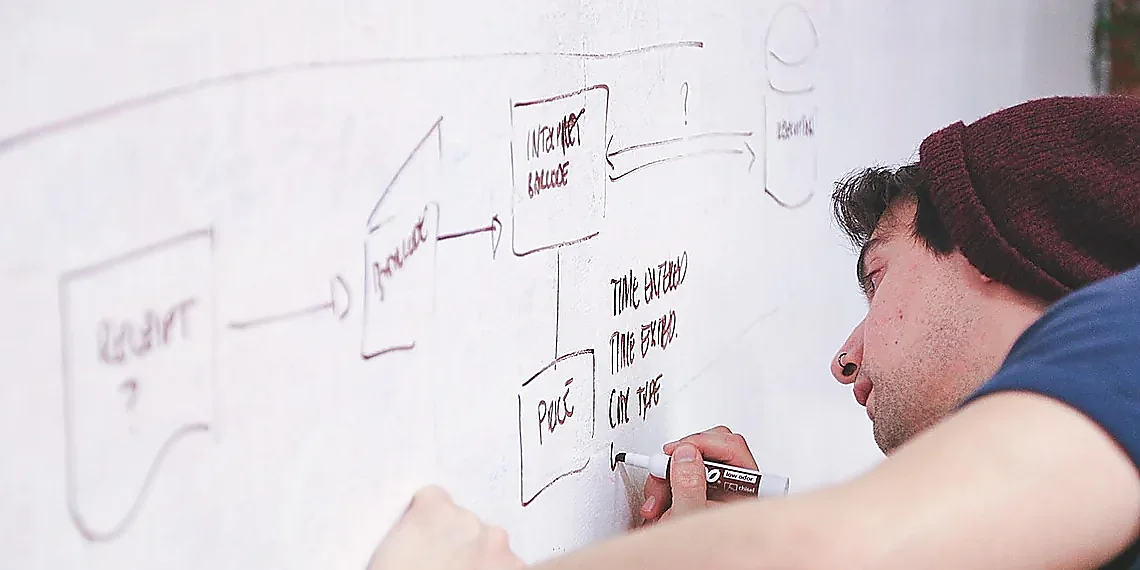
The Geospatial Awareness Layer (GAL) addresses a critical limitation of current disaster response systems: the lack of contextual understanding. Traditional statistical models often struggle to generalize across different events and offer limited interpretability. While Large Language Models (LLMs) excel at few-shot learning, they are inherently text-bound and unable to directly process geographical information. GAL acts as a bridge, connecting LLMs to structured earth data sources like infrastructure maps, demographic datasets, terrain models, and weather forecasts.
The GAL process begins with initial wildfire detections – for example, from satellite imagery or sensor networks. From this starting point, the system automatically retrieves relevant geospatial data. This isn’t simply dumping raw data into an LLM; instead, it’s structured as a ‘perception script.’ These scripts are concise summaries of the surrounding environment, integrating information about roads, population density, elevation changes, and current weather conditions. Crucially, each piece of geographical information within the perception script is ‘unit-annotated,’ meaning it’s linked back to its original data source and spatial extent.
Unit annotations are a key element of GAL’s functionality. They provide traceability and allow for validation of the contextual information presented to the LLM agent. For example, an annotation might specify that a population density figure refers to a specific census block or that a road closure is valid only within a defined timeframe. This detailed linking allows for more robust reasoning and evidence-based decision making by the downstream LLM, ultimately enhancing disaster response capabilities.
Real-World Impact: Wildfire Response & Beyond
The power of geospatial LLM agents (GAL) isn’t just theoretical; it’s demonstrating tangible benefits in real-world scenarios like wildfire response. Traditional disaster management relies heavily on statistical models, which often struggle to account for the nuanced context surrounding an event – a crucial element when lives and property are at risk. GAL addresses this limitation by integrating LLMs with structured earth data, effectively giving them ‘geographic awareness.’ This allows agents to move beyond simple predictions and offer actionable insights grounded in the specifics of each situation.
Consider a wildfire rapidly spreading through a densely populated area. A GAL agent, starting from initial fire detection data, automatically pulls relevant information: population density maps showing vulnerable communities, infrastructure details highlighting critical facilities like hospitals and power plants, terrain models indicating potential spread paths, and real-time weather forecasts predicting wind direction and intensity. This comprehensive picture is then fed to the LLM, enabling it to generate recommendations that would be impossible with traditional methods – for example, prioritizing evacuation routes based on demographic data or suggesting optimal placement of firefighting crews considering both fire behavior and access roads.
The impact extends directly to resource allocation. GAL facilitates evidence-based decisions regarding personnel assignments, budget allocations, and equipment deployment. For instance, the evaluation results showed that agents leveraging GAL significantly improved the accuracy of predicting areas requiring immediate assistance compared to models lacking this geospatial context. This translates into a more efficient use of limited resources – ensuring firefighters are where they’re needed most, minimizing response times, and ultimately protecting lives and property.
Beyond wildfire response, the underlying architecture of GAL is highly adaptable. The principle of grounding LLMs in structured geographic data can be applied to other disaster scenarios like floods, earthquakes, or even humanitarian crises requiring precise logistical planning. This represents a significant step towards creating AI systems that are not only intelligent but also deeply aware of and responsive to the complexities of our physical world.
Evidence-Based Resource Allocation in Action
Geospatial Awareness Layer (GAL) empowers LLM agents to move beyond text-based reasoning by integrating critical geospatial data into their decision-making process, specifically for wildfire response. The system automatically gathers relevant information like population density, road networks, building locations, terrain slope, and current weather conditions from diverse geodatabases based on initial wildfire detections. This contextual information is then structured into a ‘perception script’ – a concise summary of the environment surrounding the fire – which is fed to the LLM agent.
The impact of this enriched context is evident in GAL’s evaluation results regarding resource allocation. For example, when tasked with determining optimal personnel assignments, agents utilizing GAL consistently recommended sending teams prioritizing areas with higher population density and limited road access compared to those relying solely on text-based information. In one scenario, the GAL-enhanced agent correctly identified a vulnerable community requiring immediate evacuation assistance that was missed by the baseline LLM. Furthermore, GAL facilitated more accurate budget allocation recommendations – favoring investments in firebreaks near high-value infrastructure like power stations and hospitals.
Beyond personnel and budget, GAL’s ability to integrate terrain data proves valuable for predicting fire spread and suggesting strategic placement of firefighting equipment. Evaluation showed that agents using GAL could accurately predict the influence of slope on fire propagation, leading to more effective preventative measures. This evidence-based approach, driven by geospatial context, marks a significant improvement over traditional statistical methods which often lack the nuanced understanding of environmental factors crucial for optimal wildfire response.
The Future of Geospatially Aware AI
The introduction of Geospatial Awareness Layers (GAL) marks a significant leap toward truly intelligent disaster response systems. While current statistical models struggle with the nuances of individual events and often lack clear explanations, GAL offers a compelling solution by anchoring Large Language Models (LLMs) to concrete geographic data. This isn’t just about improving wildfire management; it’s a foundational step towards creating AI agents capable of understanding and reacting to complex real-world scenarios in a way that goes far beyond simple pattern recognition.
The potential for GAL extends well beyond wildfires. The core framework – automatically retrieving, integrating, and contextualizing geographically relevant data – is readily adaptable to other disaster types. Imagine flood response where the system pulls in river level gauges, rainfall predictions, elevation models, and population density maps to inform evacuation strategies. Similarly, hurricane preparedness could leverage wind speed forecasts, storm surge projections, infrastructure vulnerability assessments, and demographic information to optimize resource allocation and preemptively protect vulnerable communities. The key lies in defining the relevant geospatial data layers for each specific hazard.
Looking ahead, future research will likely focus on several key areas. Integrating real-time data streams – such as live sensor readings from weather stations and flood gauges – would dramatically enhance GAL’s responsiveness. Furthermore, incorporating drone imagery or satellite data to provide up-to-the-minute situational awareness could be transformative. We can also envision improvements that allow GAL agents to reason more effectively about causal relationships between geographic factors and disaster impacts, leading to more proactive and targeted interventions.
Ultimately, the development of geospatial LLM agents like those enabled by GAL represents a paradigm shift in how we approach disaster management. By combining the reasoning capabilities of LLMs with the rich context provided by structured earth data, we can move towards AI systems that not only react effectively but also anticipate, mitigate, and ultimately build more resilient communities.
Generalizing Beyond Wildfires: Expanding the Scope
The Geospatial Awareness Layer (GAL) framework developed in arXiv:2510.12061v1 demonstrates significant promise beyond wildfire response. The core principles of integrating structured geospatial data with LLMs are broadly applicable to other disaster scenarios characterized by complex environmental factors and human impact. For instance, managing flood events requires understanding river topography, drainage patterns, population density in vulnerable areas, and historical flood maps – all readily available as geodata. Similarly, hurricane preparedness necessitates incorporating coastal elevation models, wind speed forecasts, storm surge predictions, and infrastructure vulnerability assessments. GAL’s ability to automatically assemble relevant data allows for a similar contextual enrichment of LLM agents, enabling more informed decision-making in these diverse situations.
Adapting GAL for flood or hurricane management would largely involve updating the geodatabase connections and defining appropriate perception scripts tailored to the specific hazards. Instead of wildfire detection as an initial input, the system could ingest rainfall data or hurricane track predictions. The unit annotations within the perception script would then reflect parameters relevant to flooding (e.g., water level thresholds) or hurricane impacts (e.g., wind damage risk). The fundamental architecture remains unchanged; it’s the specific data sources and contextualization that require adjustment, offering a relatively straightforward pathway for expanding GAL’s utility.
Future research should focus on enhancing GAL’s real-time capabilities and incorporating multimodal data streams. Direct integration with live weather radar feeds or river gauge telemetry would provide dynamic updates to the agent’s perception. Furthermore, combining GAL with drone imagery analysis – where drones capture post-disaster damage assessments – could significantly improve situational awareness and resource allocation. Exploring methods for quantifying uncertainty in both the geospatial data and the LLM’s reasoning is also critical for building trust and ensuring responsible deployment.

The convergence of large language models and geographic information systems is proving transformative, particularly when applied to critical challenges like wildfire response. We’ve seen firsthand how combining textual understanding with spatial data analysis unlocks unprecedented capabilities for situational awareness, resource allocation, and predictive modeling. This initial foray into leveraging GAL demonstrates a clear path toward more proactive and efficient disaster management strategies, moving beyond reactive measures to anticipatory interventions. The potential extends far beyond wildfires; imagine similar systems optimizing urban planning, managing agricultural resources, or even addressing climate change impacts with unparalleled precision. As we move forward, the development of sophisticated geospatial LLM agents will be crucial in navigating increasingly complex real-world scenarios. This is just the beginning of a wave of innovation where AI truly understands and interacts with our physical world. To fully grasp the scope of this exciting field, we encourage you to delve into the linked research papers and explore the burgeoning literature on geographic AI. Consider how these advancements might shape future applications across various industries and contribute to building more resilient communities worldwide.
Further investigation into the technical nuances of integrating LLMs with geospatial data sources is vital for researchers and practitioners alike. The ability to create truly intelligent systems that can reason about location, context, and consequence promises a revolution in how we interact with our environment. We hope this article has sparked your curiosity and inspired you to contemplate the broader implications of these technologies – from ethical considerations around data privacy to the potential for democratizing access to critical information during emergencies. The future of AI is undeniably intertwined with geography; let’s work together to shape that future responsibly and innovatively.
Continue reading on ByteTrending:
Discover more tech insights on ByteTrending ByteTrending.
Discover more from ByteTrending
Subscribe to get the latest posts sent to your email.