
For decades, our understanding of the universe’s origins has been profoundly shaped by observations of its afterglow – a faint radiation known as the Cosmic Microwave Background. This ancient light, released just 380,000 years after the Big Bang, provides an unparalleled snapshot of the early cosmos, revealing subtle temperature fluctuations that seeded the structures we see today. It’s essentially the furthest back in time we’ve been able to directly ‘look’, a monumental achievement in astrophysics.
However, this very tool presents a significant challenge: it acts as a cosmic veil, obscuring even earlier epochs of the universe’s history. The CMB effectively blocks our view, preventing us from directly observing what occurred during the crucial period of inflation and the formation of the first stars and galaxies. Scientists have long considered this an insurmountable limitation, a fundamental barrier to unlocking deeper secrets.
But now, groundbreaking research is suggesting potential pathways to circumvent this obstacle. Innovative theoretical frameworks and experimental techniques are emerging that propose methods for detecting subtle polarization patterns or gravitational wave signatures imprinted *before* the CMB’s release. These approaches offer tantalizing glimpses beyond what was previously thought possible, promising a revolutionary leap in our ability to probe the universe’s infancy.
Understanding the CMB Barrier
The Cosmic Microwave Background (CMB) is arguably one of the most important discoveries in cosmology, serving as a snapshot of the early universe and providing crucial evidence supporting the Big Bang theory. Imagine the universe shortly after its birth – an incredibly hot, dense plasma where light couldn’t travel freely; it was constantly scattering off charged particles. As the universe expanded and cooled, around 380,000 years after the Big Bang, electrons and protons combined to form neutral hydrogen atoms. This ‘recombination’ event allowed photons (light) to finally decouple from matter, effectively freeing them to stream across the cosmos.

This released radiation is what we now observe as the CMB – a faint afterglow permeating all of space. It’s not just any light; it represents the furthest back in time we can directly ‘see’ using electromagnetic radiation. The CMB isn’t perfectly uniform, exhibiting tiny temperature fluctuations that hold invaluable information about the density variations in the early universe, which ultimately seeded the formation of galaxies and large-scale structures we observe today. These subtle differences were meticulously mapped by missions like WMAP and Planck, providing a wealth of data for cosmologists to analyze.
However, this very property – its existence – presents a significant barrier. Because the CMB arose from an opaque era, it acts as a cosmic curtain, preventing us from directly observing anything that happened *before* those first 380,000 years. Any light emitted from earlier epochs is simply absorbed and scattered by the dense plasma that existed before recombination, effectively making them invisible to our telescopes operating on conventional wavelengths. It’s like trying to see through a thick fog – what lies beyond remains shrouded.
While direct observation of the universe’s earliest moments is currently impossible due to this CMB ‘wall,’ scientists are actively exploring alternative methods. These include searching for subtle polarization patterns within the CMB itself, looking for gravitational waves from the inflationary epoch (a period of rapid expansion immediately after the Big Bang), and developing entirely new observational techniques that might circumvent this fundamental limitation – hinting at a future where we can potentially peek beyond what currently seems impenetrable.
The Echo of Creation
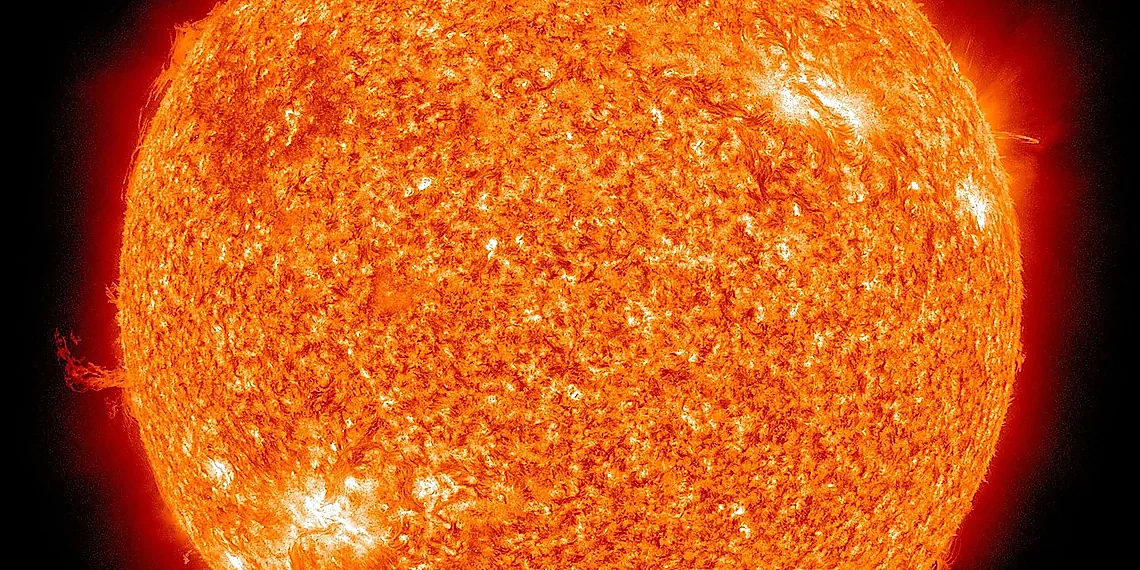
The Cosmic Microwave Background (CMB) represents a crucial landmark in our understanding of the universe’s history. Often described as the ‘afterglow’ of the Big Bang, it’s the residual radiation emitted approximately 380,000 years after the event. Prior to this epoch, the universe existed as an incredibly hot and dense plasma where photons (light particles) were constantly scattered by free electrons, preventing light from traveling freely.
As the universe expanded and cooled, it eventually reached a point where electrons could combine with protons to form neutral hydrogen atoms. This process, known as recombination, allowed photons to decouple from matter and stream freely through space for the first time. The CMB is essentially this ‘first light’ of the universe, stretched by expansion into microwaves – hence its name.
The significance of the CMB lies in the wealth of information it holds about the early universe. Its temperature fluctuations (tiny variations in its intensity) reveal details about the density and distribution of matter at that time, providing vital clues for understanding structure formation, dark matter, and the overall geometry of the cosmos. However, because photons can’t travel faster than light, the CMB acts as a barrier; we cannot directly observe anything that occurred before it was released.
Gravitational Lensing: A Potential Key
The cosmic microwave background (CMB) acts as a fundamental barrier to our direct observation of the early universe. It’s like looking through fog – everything beyond that point is hidden from view. However, Einstein’s theory of general relativity offers a tantalizing loophole: gravitational lensing. This phenomenon occurs when massive objects, such as galaxies or clusters of galaxies, warp spacetime itself. Imagine placing a bowling ball on a stretched rubber sheet; it creates a dip that bends anything rolling nearby – light behaves similarly.
Gravitational lensing doesn’t just bend light; it can also magnify and distort images from behind the lensing object. This means if a massive galaxy cluster lies between us and the CMB, its gravity could act as a natural telescope, bending and amplifying light originating *from beyond* that cosmic fog. In essence, we might be able to ‘see’ structures and galaxies that existed during those first 380,000 years, which are normally completely obscured by the CMB’s radiation. The distorted images would appear stretched, magnified, and potentially multiple copies of the same object, offering a unique window into an otherwise inaccessible epoch.
While this concept is incredibly promising, significant challenges remain. Separating the lensed signal from the lensing galaxy’s own light and distortions requires extremely precise measurements and sophisticated data analysis techniques. Current limitations include the rarity of suitable alignments – finding massive objects precisely positioned to act as gravitational lenses for CMB sources is statistically infrequent. Furthermore, accurately modeling the complex distribution of dark matter within these lensing structures is crucial for correctly interpreting the distorted images, a task that introduces considerable uncertainty.
Despite these hurdles, ongoing and future surveys like the Vera C. Rubin Observatory’s Legacy Survey of Space and Time (LSST) are poised to dramatically increase our ability to detect and characterize gravitational lenses acting on the CMB. As we refine our techniques and gather more data, this method holds immense potential for unveiling the secrets hidden within the cosmic microwave background, offering unprecedented glimpses into the universe’s infancy.
Bending Light Across Time
Gravitational lensing is a phenomenon predicted by Einstein’s theory of General Relativity where massive objects warp spacetime, effectively bending the path of light traveling nearby. Imagine placing a heavy ball on a stretched rubber sheet; it creates a dip that causes smaller objects rolling past to curve inwards. Similarly, galaxies and galaxy clusters act as gravitational lenses, distorting and magnifying the light from objects located further behind them. This distortion isn’t just about shifting images; it can create multiple images of the same background source, stretch its appearance into arcs or rings (known as Einstein Rings), and significantly increase its brightness.
Crucially, this lensing effect offers a potential pathway to observe structures that lie beyond the cosmic microwave background (CMB). The CMB acts like a wall of light, obscuring anything emitted before approximately 380,000 years after the Big Bang. However, if an extremely massive object – a galaxy cluster significantly more massive than our own Milky Way – lies between us and a source even further beyond the CMB, its gravitational lensing can effectively magnify and distort that ancient light, bringing it into view. This allows astronomers to potentially observe galaxies or other structures from an era previously inaccessible through direct observation.
Despite the promise, observing these ‘lensed’ objects behind the CMB is extraordinarily challenging. The signal is incredibly faint, requiring extremely sensitive telescopes and sophisticated data analysis techniques to distinguish the magnified light from noise. Furthermore, accurately modeling the lensing effect itself – understanding the mass distribution of the foreground lens – is complex and introduces uncertainties that can affect interpretations. Current limitations include a scarcity of suitable, massive lenses aligned precisely with distant background sources, alongside the computational power needed to process the vast amounts of data generated by these observations.
21cm Cosmology: Listening for Ancient Hydrogen
The Cosmic Microwave Background (CMB) has long been our most distant view into the universe, a snapshot taken roughly 380,000 years after the Big Bang. But what about before that? How can we peer beyond this seemingly impenetrable wall of light and directly observe the very early epochs of cosmic history? Enter 21cm cosmology – an incredibly promising technique that allows us to ‘listen’ for radio signals emitted by neutral hydrogen, a substance which dominated the universe *before* the CMB even formed. This offers a revolutionary potential: probing the so-called ‘Dark Ages’ and the epoch of reionization, periods largely inaccessible through traditional observations.
The key lies in a phenomenon known as ’21cm radiation.’ Neutral hydrogen atoms possess a property that causes them to emit radio waves at a specific wavelength – 21 centimeters. During the early universe, this hydrogen was abundant, and its spin states were influenced by the gravitational fields and other processes occurring around it. By measuring tiny shifts in the frequency of these 21cm signals, scientists can map out the distribution of neutral hydrogen across vast cosmic distances and learn about conditions that existed when the universe was still in its infancy – far earlier than what the CMB reveals.
However, detecting these faint 21cm signals is an immense challenge. Our own galaxy emits copious amounts of radio noise, and foreground emissions from distant quasars also swamp the signal. Extracting the genuine cosmological information requires incredibly sophisticated techniques and powerful instruments. Current and future experiments, like the Square Kilometre Array (SKA), are specifically designed to tackle these challenges, employing advanced filtering methods and observing from multiple locations to subtract out contaminating signals. The SKA’s immense scale promises an unprecedented window into the early universe.
The potential rewards of successful 21cm cosmology are transformative. It could help us understand how the first stars and galaxies formed, how reionization occurred (when the universe transitioned from neutral hydrogen to ionized gas), and even shed light on mysteries surrounding dark matter and dark energy. While still in its early stages, this field represents a bold new frontier in cosmological research, poised to rewrite our understanding of the universe’s origins.
The Universe’s First Radio Signals
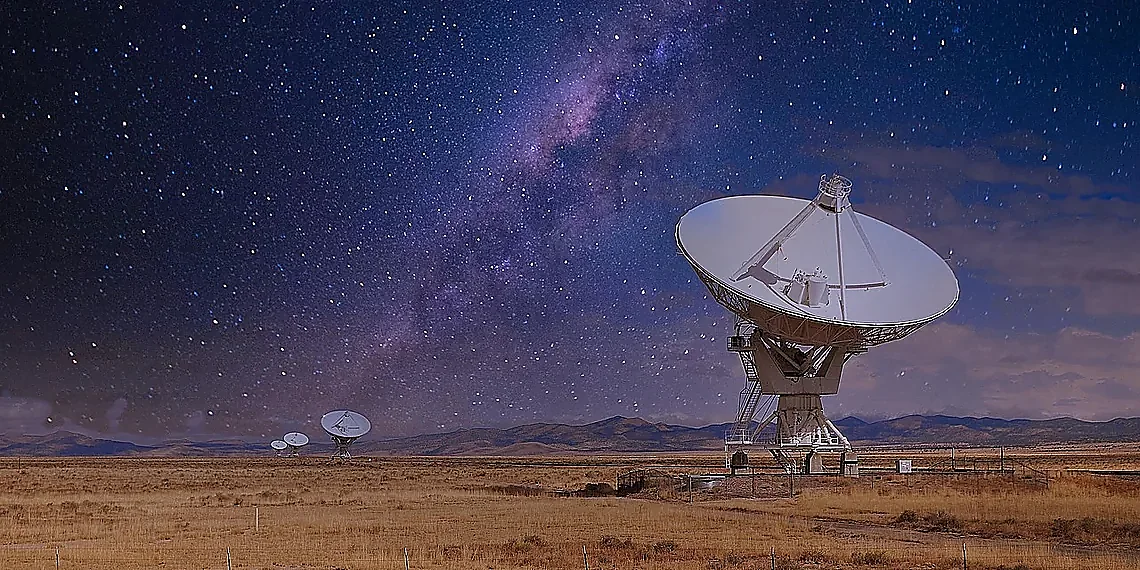
After the Big Bang, the Universe was a hot, dense plasma where matter and radiation were tightly coupled. As it expanded and cooled, roughly 380,000 years after the Big Bang, electrons and protons combined to form neutral hydrogen atoms. This era, known as the Epoch of Reionization, marks a crucial period in cosmic history, but is currently beyond our direct observational reach due to the opacity of the early universe. However, neutral hydrogen emits radio waves at a specific frequency – 21 centimeters (or 1420 MHz) – through a quantum mechanical process involving its electron spin. This ’21cm radiation’ offers a potential window into this otherwise inaccessible epoch.
Detecting these faint 21cm signals is incredibly challenging. The signal strength is extremely weak, and it’s buried within a cacophony of radio interference from Earth-based sources like satellites, cell phones, and even terrestrial electronics. Furthermore, foreground emission from our own Milky Way galaxy and distant extragalactic sources emits radio waves at similar frequencies, mimicking the cosmological 21cm signal. Sophisticated techniques are required to filter out these contaminants, including careful calibration, data analysis, and observing from locations with minimal radio interference.
Several ambitious experiments are underway or planned to tackle these challenges and map the early Universe through 21cm cosmology. These include the Hydrogen Epoch of Reionization Array (HERA), the Dark Ages Radio Experiment (DARE), and crucially, the Square Kilometre Array (SKA). SKA, when fully operational, will be a revolutionary telescope with unprecedented sensitivity and resolution, promising to provide an unparalleled view of the Universe’s first radio signals and shedding light on the Epoch of Reionization.
Future Prospects and Unanswered Questions
The cosmic microwave background (CMB) represents a formidable barrier to directly observing the Universe’s earliest moments, but scientists are relentlessly pursuing ingenious methods to peek ‘beyond’ it. Current research focuses on exploiting subtle phenomena that might carry information from before this epoch. One exciting avenue is searching for gravitational waves generated during an inflationary period shortly after the Big Bang – ripples in spacetime itself. While these primordial gravitational waves haven’t been definitively detected, ongoing and planned experiments like CMB-S4 are designed with unprecedented sensitivity to pinpoint their faint signature, potentially offering a direct glimpse into conditions far earlier than those reflected by the CMB.
Technological advancements are crucial for pushing beyond existing observational limits. Next-generation telescopes aren’t just larger; they’re incorporating revolutionary technologies. For example, millimeter-wave detectors are becoming increasingly sensitive, allowing scientists to probe fainter signals from distant structures and potential pre-CMB phenomena. Furthermore, sophisticated data analysis techniques – including advanced machine learning algorithms – are essential for sifting through the noise and extracting meaningful information from these incredibly subtle datasets. The development of new observing strategies, such as combining CMB data with measurements of galaxy distributions, is also proving valuable.
Beyond gravitational waves, researchers are exploring other indirect probes. Some theories suggest that exotic particles or interactions in the early Universe could have left a detectable imprint on the polarization patterns within the CMB itself, or even subtly affected the distribution of matter we observe today. These ‘anomalies’ might reveal clues about processes occurring before recombination. The James Webb Space Telescope (JWST), while primarily designed for observing distant galaxies, also contributes by providing increasingly precise measurements of high-redshift objects and potentially revealing unexpected structures that could shed light on conditions preceding the CMB era.
Looking ahead, a truly transformative breakthrough might come from entirely new approaches we haven’t even conceived yet. Perhaps there are subtle effects on fundamental constants or the nature of dark matter/energy that offer unique windows into the very early Universe. While directly observing before 380,000 years remains extraordinarily challenging, the ongoing dedication and innovation within cosmology suggest that our understanding of the universe’s infancy will continue to evolve in surprising and profound ways.
Peering Deeper: The Next Generation of Telescopes
Current telescopes like the James Webb Space Telescope (JWST) offer unprecedented infrared views of the early universe, but they are still fundamentally limited by the cosmic microwave background (CMB). The CMB acts as a ‘wall’ of radiation, obscuring light from even earlier epochs. Future missions are being designed to circumvent this limitation through several innovative approaches. These include utilizing gravitational lensing – where massive objects warp spacetime and magnify light from distant sources – and searching for faint polarization signals imprinted on the CMB itself, which could carry information about events occurring before recombination.
One particularly ambitious project is the Next Generation Very Large Array (ngVLA), a planned radio telescope that will provide an extremely detailed map of the 21-cm signal. This signal originates from neutral hydrogen and offers a potential window into the ‘Dark Ages’ – the period between the CMB release and the formation of the first stars. Other proposals include space-based interferometers like Faint Angular Consensus High-Resolution Aligned Telescope (FACHAR), which would combine data from multiple satellites to achieve extremely high resolution at millimeter wavelengths, allowing for more precise observations of early galaxy formation. These next-generation instruments will require advanced signal processing techniques and sophisticated noise reduction strategies.
If successful, these endeavors could reveal details about the universe’s infancy previously thought inaccessible. We might observe the very first stars and galaxies forming, shedding light on how dark matter halos collapsed and seeded structure in the cosmos. Detecting subtle variations in the CMB polarization could also provide clues about inflationary epoch – a period of incredibly rapid expansion immediately after the Big Bang – potentially confirming or refining existing cosmological models and offering insights into physics at energy scales far beyond anything achievable with particle accelerators.
The journey beyond the initial glimpses provided by the Cosmic Microwave Background has revealed a breathtaking tapestry of cosmic structures and phenomena, each offering new clues about our universe’s infancy.
From gravitational lensing mapping dark matter distributions to the intricate dance of galaxies across vast distances, these recent discoveries fundamentally reshape our models of early structure formation.
The precision with which we can now measure redshift fluctuations and analyze primordial gas clouds underscores a golden age for cosmology, pushing the boundaries of what we thought possible just decades ago.
While the Cosmic Microwave Background remains a foundational pillar in understanding the universe’s initial conditions, these subsequent observations are allowing us to piece together a far more detailed narrative of its evolution – one filled with unexpected twists and tantalizing mysteries yet to be solved. These advancements confirm that our early theoretical frameworks continue to evolve alongside new data, demanding constant refinement and innovative approaches to analysis. The sheer volume of information being gathered necessitates interdisciplinary collaboration and the development of even more sophisticated instrumentation to fully interpret it all. Ultimately, these efforts demonstrate humanity’s relentless pursuit of understanding our place within this grand cosmic drama. To stay abreast of these incredible breakthroughs, we encourage you to actively follow developments in both cosmology and radio astronomy – subscribe to journals, engage with online communities, and keep an eye on announcements from leading research institutions; the universe is constantly revealing its secrets, and the next major discovery could be just around the corner.
Continue reading on ByteTrending:
Discover more tech insights on ByteTrending ByteTrending.
Discover more from ByteTrending
Subscribe to get the latest posts sent to your email.