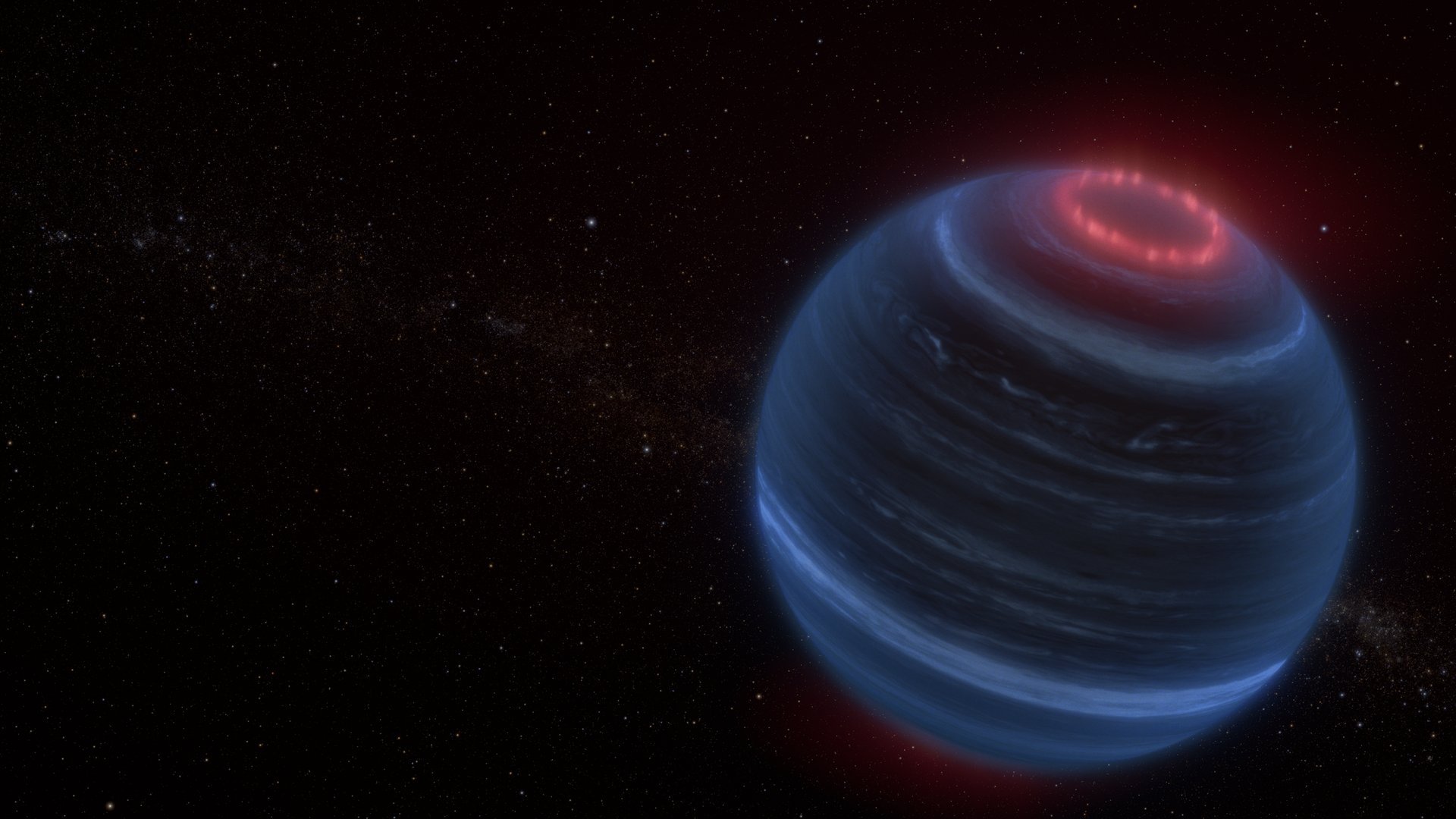

The detection of phosphine has recently generated considerable excitement within the astronomical community. Initially driven by its controversial presence in Venus’s atmosphere—leading to speculation about potential biological origins—phosphine is, notably, more commonly observed in larger gas giants and brown dwarfs, which are objects larger than Jupiter but lack the mass for sustained hydrogen fusion. Prior to this discovery, we hadn’t yet directly detected phosphine within a brown dwarf’s atmosphere beyond our solar system. However, a recent paper, available as a pre-print on arXiv, details how researchers utilized data from the James Webb Space Telescope (JWST) to achieve this first detection, simultaneously uncovering the reason for its prior elusiveness: the object’s high metallicity.
Understanding Brown Dwarfs and the Significance of Phosphine Detection
Brown dwarfs occupy a unique position in the cosmos, existing between planets and stars. They are too massive to be considered planets but lack sufficient mass to initiate sustained nuclear fusion. Consequently, they radiate residual heat and light from their formation. Furthermore, understanding these objects is crucial for refining our models of planetary system evolution.
Brown Dwarf Characteristics and Formation
These ‘failed stars’ typically form through the collapse of gas clouds similar to those that create planets and stars. However, they lack the density needed to ignite hydrogen fusion. As a result, brown dwarfs cool down over time, gradually dimming in brightness. Moreover, their atmospheres are complex environments with unique chemical compositions.
The Intriguing Chemistry of Phosphine
On Earth, phosphine (PH3) is a relatively rare molecule primarily associated with anaerobic biological processes—environments devoid of oxygen. Its presence on Venus sparked considerable speculation regarding potential microbial life within its cloud layers, though this interpretation remains highly debated due to the possibility of abiotic origins. Therefore, finding it in brown dwarfs offers an opportunity to study its formation mechanisms outside of terrestrial contexts.


JWST’s Pioneering Detection and Overcoming Observational Challenges
The research team leveraged JWST’s extraordinary infrared capabilities to observe a brown dwarf designated 2MASS J153408.69+245157.0, situated relatively close at approximately 37 parsecs (120 light-years) from Earth. Previously, detecting phosphine in brown dwarfs proved challenging due to their high metallicity—a significantly higher abundance of elements heavier than hydrogen and helium. This metallic richness obscures the spectral signature of phosphine, making its isolation exceptionally difficult.
How JWST’s Advanced Technology Enabled the Discovery
JWST’s unparalleled sensitivity and infrared resolution enabled researchers to successfully filter out noise from the brown dwarf’s abundant metallic compounds. As a result, they were able to pinpoint the faint signal of phosphine within its atmosphere. In addition, JWST’s ability to observe at specific wavelengths was critical for differentiating phosphine from other spectral features.
Implications and Future Directions in Exoplanet Research
This groundbreaking discovery represents a pivotal advancement in exoplanet research. It unequivocally demonstrates JWST’s capacity to detect trace molecules even within intricate, chemically rich environments characteristic of brown dwarfs. Furthermore, this success will inform future searches for biosignatures on a broader range of exoplanets.
- Refined Search Strategies: This achievement will guide the refinement of search parameters for phosphine and other potential biosignatures across diverse exoplanetary systems.
- Deeper Understanding of Atmospheric Processes: Studying how phosphine forms in brown dwarf atmospheres can illuminate the chemical processes prevalent in these objects, which may also offer insights into planetary atmospheric dynamics.
- Expanding Our Biosignature Toolkit: While not a definitive indicator of life, the detection of phosphine expands our toolkit for identifying environments with potential habitability beyond Earth.
The research team anticipates that future observations using JWST will further elucidate the distribution and abundance of phosphine in brown dwarfs, yielding invaluable insights into their atmospheric chemistry and evolutionary pathways.
Source: Read the original article here.
Discover more tech insights on ByteTrending.
Discover more from ByteTrending
Subscribe to get the latest posts sent to your email.