
Robotic arms are rapidly changing the landscape of space exploration and beyond. As humans increasingly venture further into the solar system, reliable and adaptable tools become paramount for conducting research, establishing bases, and ensuring astronaut safety. The demand for robotic arms is increasing as space exploration expands, offering significant opportunities for innovation and development in this field. The SuperLimbs project perfectly exemplifies this trend.
Erik Ballesteros’ story underscores the critical role of hands-on experience and a passion for engineering in driving innovation. Born and raised in Spring, Texas, just outside Houston, Ballesteros was captivated by NASA’s space shuttle program from a young age. Frequent visits to Johnson Space Center (JSC) – where the public can witness astronauts testing prototypes and practicing operations for the International Space Station – ignited his ambition to contribute to human space exploration. His time spent observing the astronaut training facility, imagining himself on the other side of those gates, ultimately shaped his career trajectory.
Today, Ballesteros is a PhD student in mechanical engineering at MIT, and has already made good on his childhood goal. Before coming to MIT, he interned on multiple projects at JSC, working in the training facility to help test new spacesuit materials, portable life support systems, and a propulsion system for a prototype Mars rocket. He also helped train astronauts to operate the ISS’ emergency response systems. The utilization of robotic arms in space missions is becoming increasingly vital for enhanced safety and operational efficiency.
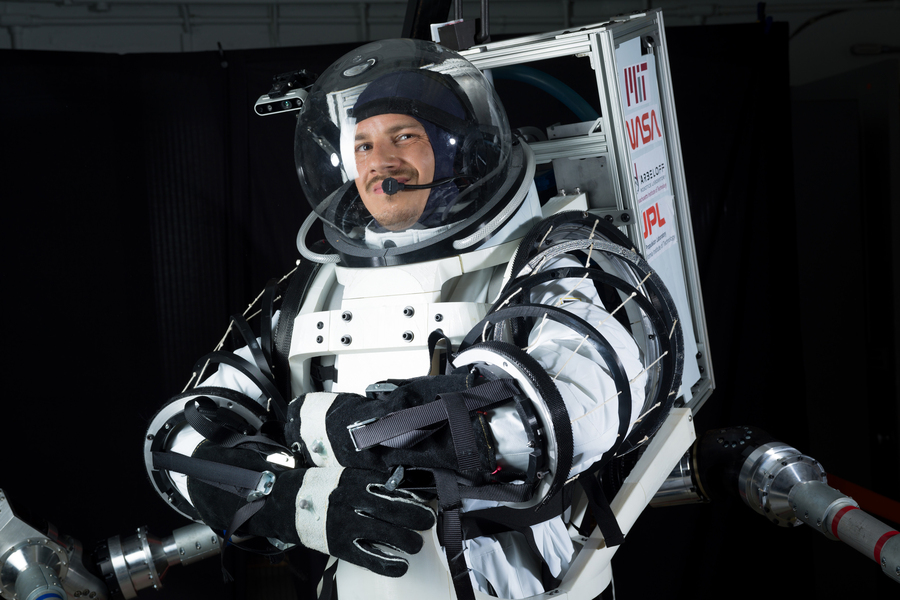
The SuperLimbs project – developed by Ballesteros and his advisor Harry Asada – represents a significant leap forward in this area. This innovative system comprises a pair of wearable robotic arms that extend from a backpack, similar to the fictional Inspector Gadget or Doctor Octopus (“Doc Ock,” to comic book fans). The purpose of these arms is to provide assistance to astronauts if they were to fall, and also to allow them to crab-walk around a spacecraft’s exterior as an astronaut inspects or makes repairs. This technology has enormous potential for future space missions.

The design is being refined in collaboration with engineers at the NASA Jet Propulsion Laboratory, with plans to introduce it to astronauts at JSC within the next year or two for practical testing and user feedback. Ballesteros emphasizes that success isn’t built by the actions of one, but rather it’s built on the shoulders of many – highlighting the importance of strong connections in fostering innovation. Connections — ones that you not just have, but maintain — are so vital to being able to open new doors and keep great ones open.
Robotic arms are crucial for tasks requiring precision, strength, or endurance – conditions that astronauts frequently face during space missions. This technology also plays a significant role in automating hazardous operations, reducing risk and improving overall mission success. Furthermore, the ability of robotic arms to perform repetitive or physically demanding tasks frees up astronauts to focus on more complex scientific investigations and exploration activities. The development of these systems is not only advancing our capabilities in space but also inspiring new generations of engineers and scientists.
Getting a jumpstart was crucial for Ballesteros. As a kid, he counted down the minutes until the end of school, when he could go home to play video games and watch movies, “Star Wars” being a favorite. He also loved to create and had a talent for cosplay, tailoring intricate, life-like costumes inspired by cartoon and movie characters. In high school, he excelled in robotics competitions, designing and building robots that tackled complex challenges. This passion for engineering and problem-solving laid the foundation for his future career. The demand for robotic arms is increasing as space exploration expands, offering significant opportunities for innovation and development in this field.
Source: Read the original article here.
Discover more tech insights on ByteTrending.
Discover more from ByteTrending
Subscribe to get the latest posts sent to your email.